Disclosure: airfryerkitchensupply.com is reader-supported. When you buy through links on our site, we may earn an affiliate commission at no extra cost to you.
Where to buy
Every product in this guide to the best built charcoal grills was verified as a current Amazon listing before inclusion, or is clearly marked as a recommendation without a link where no listing could be confirmed with confidence. Models in this category are sold in several sizes, finishes and model years, so use the links below to check the current price on Amazon and confirm the exact configuration before ordering.
Quick links to the picks in this guide: Weber Master-Touch Charcoal Grill, 26-Inch, Black; PK Grills PK360 Cast Aluminum Charcoal Grill, Graphite; Weber Performer Charcoal Grill, 22-Inch; Char-Griller AKORN Kamado Charcoal Grill and Smoker, 20-Inch; Weber Original Kettle Premium Charcoal Grill, 22-Inch; Dyna-Glo X-Large Premium Dual Chamber Charcoal Grill (DGN576SNC-D).
Search for the best built charcoal grills and you are really asking which charcoal grills are constructed well enough to still be cooking evenly in ten or fifteen years. Build is the specification underneath every other specification: a kettle with thin, flexing steel and a wobbly lid cannot hold a steady temperature no matter how carefully you arrange the coals, while a rigid, well-sealed grill makes fire management feel easy because the grill itself is not leaking heat and air in random places.
This guide judges the mainstream charcoal market on construction first. The criteria are the ones that decide service life: the weight and rigidity of the cooking vessel, whether the body is porcelain-enamelled steel, cast aluminium or insulated steel, how the lid seats, how the grates are made, how ash is removed without dismantling the grill, and whether replacement parts exist for the wear items. Six grills pass that test at six different sizes and budgets, and each review says plainly where its maker spent money and where it saved.
One honest framing note: none of these is a welded custom pit, and none should be judged as one. The question is which factory builds behave best over years of weekly use — sealing consistently, resisting rust at the predictable weak points, and staying repairable. Judged that way, the field separates quickly, and the six below are the strongest answers currently listed.
A note on what this guide is not: it is not a ranking of the biggest grates or the longest feature lists. Two of the six picks are deliberately compact, because their builders spent the money on the vessel instead of the acreage. If your instinct says a grill twice the size must be twice the grill, the ownership evidence in these reviews argues otherwise — and the fifteen-year arithmetic in the guide sections makes the case in full.
In this guide
Quick Picks
Weber Master-Touch Charcoal Grill, 26-Inch, Black — Best Overall: The big kettle done properly: a rigid porcelain-enamelled bowl and lid, a hinged plated-steel grate and one-touch ash sweeping, in the size that finally fits a whole brisket or two-zone cooking for a crowd. — Check the current price on Amazon
PK Grills PK360 Cast Aluminum Charcoal Grill, Graphite — Best Built, Period: A cast aluminium capsule that cannot rust out, with four-point venting that gives unusually precise control — the grill most likely to be handed down rather than replaced. — Check the current price on Amazon
Weber Performer Charcoal Grill, 22-Inch — Best for Everyday Convenience: The proven 22-inch porcelain-enamelled kettle mounted in a work-table cart — the build quality of the classic, with the ergonomics of a gas grill station. — Check the current price on Amazon
Char-Griller AKORN Kamado Charcoal Grill and Smoker, 20-Inch — Best Insulated Build: Triple-wall insulated steel around cast iron grates: kamado heat retention and fuel economy at a fraction of ceramic money, and light enough to move without help. — Check the current price on Amazon
Weber Original Kettle Premium Charcoal Grill, 22-Inch — Best Value in a Proven Build: The benchmark kettle with the premium touches that matter — hinged grate, built-in thermometer and the One-Touch ash system — at the friendliest price in this guide. — Check the current price on Amazon
Dyna-Glo X-Large Premium Dual Chamber Charcoal Grill (DGN576SNC-D) — Best for Two-Zone Control: A dual-chamber barrel with separate fire control on each side — the build choice for cooks who run two temperatures at once and want a big steel grill that can do it. — Check the current price on Amazon
How These Picks Were Chosen
Each candidate was checked against the current Amazon catalogue connection, and only listings whose returned title matched the exact model were linked. Construction claims in this guide are limited to what the verified listing states — vessel material, size, grate type and named systems — plus the long public track record of each design. Where a specification could not be verified, it was left out rather than guessed.
The shortlist deliberately spans the three honest ways to build a charcoal grill well: heavy porcelain-enamelled steel kettles, a cast aluminium capsule, and an insulated steel kamado. Each approach trades weight, price and heat behaviour differently, and the reviews explain those trades instead of pretending one construction wins everywhere.
Grills were excluded if their current listing could not be verified, if the design depends on thin folded steel at the fire line, or if ash handling requires tipping the grill — a daily annoyance that also accelerates wear. Portability was not penalised where the brief is genuinely portable, but portable grills had to be honestly built for that job rather than merely small.
One more selection note deserves recording: several famous-name charcoal grills were left out not because they are poor, but because their current listings could not be verified to the standard this guide requires — an unverifiable listing is treated as no listing. Where a household’s heart is set on such a model, the inspection framework in this guide’s later sections is the right tool to judge the individual example in front of you.
The 6 Best Built Charcoal Grills

Weber Master-Touch Charcoal Grill, 26-Inch, Black — Best Overall
Check the current price on Amazon
The 26-inch Master-Touch is what the classic kettle becomes when nothing is downsized. The porcelain-enamelled steel bowl and lid are stiff enough that the lid seats with a consistent metal-to-metal feel all the way round, the Tuck-Away holder keeps the hot lid parked instead of laid on the ground, and the One-Touch cleaning system sweeps ash into a removable catcher with a lever instead of a shovel. For buyers who want one charcoal grill for a decade, this is the default answer.
Strengths
- Porcelain-enamelled bowl and lid resist rust and heat discolouration far better than painted steel
- One-Touch ash sweeping and a closed catcher make the dirtiest job a ten-second task
- 26-inch grate gives true two-zone room — a full fire on one side, a genuine indirect zone on the other
Trade-offs
- It is a large, heavy kettle that wants a permanent patio spot rather than regular moving
- Replacement grates and parts are widely available but the big grate costs more than 22-inch equivalents
- No insulation, so winter cooks burn noticeably more charcoal than a kamado
| Specification | Detail |
|---|---|
| Size | 26-inch charcoal grill |
| Finish | Porcelain-enamelled, black |
| Lid handling | Tuck-Away lid holder |
| Ash system | One-Touch cleaning system |
Build quality shows in the details you touch every cook. The lid handle, the vent damper and the ash lever all operate without the flex and rattle that betray thin stampings, and the hinged cooking grate lets you add coals mid-cook without lifting food off the grill. The enamel is the long-term story: it is fused to the steel, so the chips and scratches that start rust on painted grills mostly stay cosmetic here, especially if the grill lives under a cover.
As a cooker, the extra diameter is transformative rather than incremental. A 26-inch kettle holds a full packer brisket flat, runs a snake of coals around the perimeter for hours, or sears for eight people without crowding. It is not the most fuel-efficient grill in this guide and it will never match a kamado in January, but as an all-round, repairable, parts-supported charcoal grill, nothing else here is as complete.
A final practical note: the 26-inch size also changes accessory economics in your favour — the big kettle is the one most likely to justify a rotisserie or a cast-iron grate upgrade over its life, because the capacity makes those tools earn their storage space.
Heat management tip for the big kettle: its size makes the snake method exceptionally stable, because the coal ring is long enough that each section burns in a large, well-insulated-feeling volume of air.
Best for: households wanting one long-life charcoal grill for both weeknight grilling and weekend low-and-slow / Not suited for: apartment balconies or anyone who must move the grill after every cook

PK Grills PK360 Cast Aluminum Charcoal Grill, Graphite — Best Built, Period
Check the current price on Amazon
The PK360 attacks the build question from a completely different direction: instead of coating steel against rust, it casts the entire cooking capsule in aluminium, a material that simply does not rust. The capsule shape, with vents at both ends low and high, creates a controllable convection flow that grills and smokes with a precision steel kettles struggle to match. It is the connoisseur’s answer to ‘best built’ — smaller than the big kettle, and priced like it knows it.
Strengths
- Cast aluminium capsule is effectively immune to the rust that ends steel grills’ lives
- Four-vent layout gives fine, repeatable control of both intake and exhaust
- Capsule shape works as a genuine smoker as well as a grill, with even convection
Trade-offs
- Cooking area is modest next to the 26-inch kettle — this is a quality-over-quantity grill
- Premium pricing puts it in kamado territory without kamado insulation
- The design is low and compact, which not everyone likes after a tall kettle
| Specification | Detail |
|---|---|
| Body | Cast aluminium capsule |
| Colour | Graphite |
| Use | Grill and smoker, portable format |
Aluminium also changes the thermal behaviour. The capsule heats evenly, holds a steady temperature once the vents are set, and cools without the hot-spot drama of thin steel. Owners who compete in steak cookoffs have favoured this design for decades for exactly that controllability, and the modern PK360 keeps the capsule while adding a more practical stand and workspace than the original 1950s design offered.
Judge it as a lifetime purchase. There is no enamel to chip, no fire bowl to burn through, and the parts that do wear — grates, vents, gaskets — are simple and replaceable. If your cooking is mostly for two to six people and you value control and permanence over acreage, the PK360 is the best-built charcoal grill in this guide by the strictest definition of the words.
Owners consistently report the same ownership pattern with the PK: it becomes the grill for the cooks that matter — the Saturday steaks, the carefully managed ribs — while lesser grills handle overflow. That is a compliment to its control, and a hint that its size is its only real boundary.
The capsule’s shape has a party trick worth knowing: with vents set for indirect flow, it roasts a chicken with a convection evenness that rivals an oven, then sears the next course without missing a beat.
Best for: serious grillers cooking for smaller groups who want a grill that cannot rust out / Not suited for: large-party cooks who need maximum grate area per session

Weber Performer Charcoal Grill, 22-Inch — Best for Everyday Convenience
Check the current price on Amazon
The Performer takes the standard 22-inch kettle — porcelain-enamelled bowl and lid, One-Touch ash cleaning — and mounts it in a cart with a proper work surface. That sounds like a small thing until you have juggled tongs, a chimney and a tray of chicken around a freestanding kettle for a summer. The build story is the same durable kettle, but the cart turns it into a workstation, and for many households that is the version that actually gets used three times a week.
Strengths
- Same porcelain-enamelled kettle construction as the standalone classic, with full parts support
- Built-in work table solves the where-do-I-put-things problem that plagues kettle cooking
- Cart format keeps the grill stable and at a comfortable working height
Trade-offs
- The cart footprint is larger than a tripod kettle, so measure your patio corner
- Table and frame add parts that need the same cover-and-care routine as the kettle itself
- 22-inch grate is right for most families but tight for very large indirect cooks
| Specification | Detail |
|---|---|
| Size | 22-inch charcoal grill |
| Format | Cart-mounted with work table |
| Finish | Black |
Everything said about kettle construction applies here: fused enamel over steel, a lid that seats consistently, ash swept by lever into a catcher. The Performer’s difference is behavioural. A grill with a table, tool hooks and a home corner gets lit more often, and a grill that gets lit more often is the best-built grill in the only sense that finally matters — it is still earning its place in year ten.
Choose it over the 26-inch Master-Touch if your typical cook is four to six people and you value the workstation; choose the bigger kettle if indirect capacity is your priority. Either way you are buying into the deepest replacement-parts ecosystem in charcoal grilling, which is itself a build-quality argument: a grill you can always repair is a grill you never have to replace.
The Performer’s cart also solves a storage subtlety: charcoal, chimney and tools live at the grill rather than in a garage queue, which removes the small frictions that quietly decide whether a weeknight cook happens at all.
Cart owners should use the table’s underside: a hook strip there keeps the chimney, gloves and brush at the grill, completing the station the Performer promises.
Best for: regular weeknight grillers who want kettle durability with gas-grill ergonomics / Not suited for: minimalists with tight storage who would rather have a compact standalone kettle

Char-Griller AKORN Kamado Charcoal Grill and Smoker, 20-Inch — Best Insulated Build
Check the current price on Amazon
Ceramic kamados are the traditional ‘built’ answer in charcoal, but they are heavy and priced accordingly. The AKORN reproduces the kamado’s essential construction — an insulated, sealed cooking chamber — in triple-wall steel, which keeps the heat-retention and fuel-economy advantages while cutting both weight and price dramatically. Cast iron grates, a locking lid and a removable ash pan complete a design that holds low smoking temperatures and searing heat with equal calm.
Strengths
- Triple-wall insulation holds temperature with remarkably little charcoal, in all seasons
- Cast iron cooking grates sear properly and are a durable, reseasonable surface
- Steel construction shrugs off the knocks that would crack a ceramic body
Trade-offs
- Insulated steel still needs cover discipline — water sitting in seams is its long-term enemy
- Temperature overshoots take time to come back down, as with any efficient kamado
- Cart and side shelves are functional rather than luxurious at this price
| Specification | Detail |
|---|---|
| Size | 20-inch kamado |
| Body | Triple-wall insulated steel |
| Grates | Cast iron |
| Role | Grill and smoker |
The AKORN’s party trick is range. The same sealed, insulated chamber that idles at smoking temperature for hours on a small load of lump charcoal will also climb to genuine steak-searing heat, and the cast iron grate puts that heat into the food. For buyers in cold climates, insulation is not a luxury: an uninsulated kettle in January burns fuel fighting the weather, while the AKORN barely notices it.
Longevity care is simple but non-negotiable: keep it covered, keep the ash pan emptied, and touch up any paint chip on the exterior before it becomes a rust bloom. Treated that way, the steel kamado delivers most of the ceramic experience for years. Treated carelessly, it will rust like any steel grill — the insulation buys performance, not invincibility.
For smoking specifically, the AKORN’s efficiency changes the fuel budget of a long cook dramatically — a single modest load of lump can carry a shoulder through hours that would need repeated additions in an uninsulated grill.
In the AKORN, lump charcoal is the fuel that suits the design best — it lights fast in the insulated chamber and its low ash output protects the airflow the efficiency depends on.
Best for: all-season cooks who want kamado efficiency and temperature range without ceramic weight or price / Not suited for: set-and-forget buyers unwilling to keep a steel grill covered and ash-free

Weber Original Kettle Premium Charcoal Grill, 22-Inch — Best Value in a Proven Build
Check the current price on Amazon
If the Master-Touch is the kettle perfected and enlarged, the Original Kettle Premium is the kettle perfected at its original size. Porcelain-enamelled bowl and lid, a hinged cooking grate for mid-cook coal additions, a lid thermometer, and the One-Touch cleaning system that separates the Premium from the basic model. It is the grill against which every other charcoal grill’s build is quietly measured, because examples from decades ago are still cooking in backyards everywhere.
Strengths
- Porcelain enamel over steel is the most proven durable finish in charcoal grilling
- Hinged grate and One-Touch ash system remove the classic kettle annoyances
- Unmatched parts and accessory support — every wear item is replaceable indefinitely
Trade-offs
- 22 inches fills up fast when grilling and going indirect at the same time
- Legs and wheels are functional, not luxurious; it prefers a level patio
- No insulation, so fuel use rises in cold and wind
| Specification | Detail |
|---|---|
| Size | 22-inch charcoal grill |
| Finish | Porcelain-enamelled, black |
| Extras | Built-in lid thermometer, hinged grate |
| Ash system | One-Touch cleaning system |
The Premium’s value case is actuarial. Spread its price over the fifteen-plus years these kettles routinely serve — with a replacement grate and a set of dampers along the way — and it is among the cheapest ways to grill well that exists. The build is not exotic; it is simply correct, everywhere, with tolerances that make the lid seal and the vents work the same in year ten as in week one.
For most households this is the sensible best-built answer: big enough for family grilling and a respectable indirect zone, small enough to store and move, and supported forever. Step up to the 26-inch Master-Touch for capacity, or to the PK360 for rust-proofing, only when those specific needs are real.
This is also the easiest grill in the guide to buy used with confidence: the construction is so inspectable — enamel condition, grate state, damper movement — that a five-minute check tells you the truth about any individual example.
The Premium’s hinged grate is the feature owners cite most after a year: adding coals or rearranging them mid-cook, without a grate-lifting ritual, changes how ambitious weeknight cooks are willing to be.
Best for: most households — the proven, repairable, fairly priced default / Not suited for: cooks who regularly feed eight or more from the grill at once
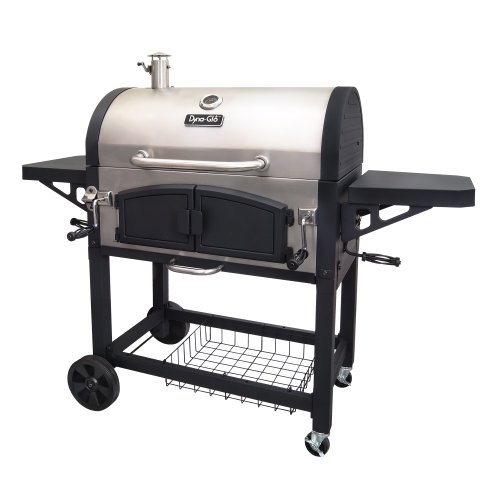
Dyna-Glo X-Large Premium Dual Chamber Charcoal Grill (DGN576SNC-D) — Best for Two-Zone Control
Check the current price on Amazon
Barrel grills live or die by their steel and their fire management, and the Dyna-Glo X-Large Premium addresses both with a dual-chamber design: two separate charcoal areas that can run at different temperatures, or combine for one very large cook. For the griller who wants to sear on one side while vegetables finish gently on the other — without owning two grills — this is the built-for-control option in the guide.
Strengths
- Dual chambers give genuine two-temperature cooking in a single grill
- Large-format steel barrel suits big batches and whole-muscle cooks
- Separate fire access makes mid-cook refuelling cleaner than single-chamber barrels
Trade-offs
- A big steel barrel needs cover discipline and seasonal care to stay rust-free
- More seams and doors than a kettle means more places to check for smoke leaks
- It is a patio fixture, not a portable — plan its home before it arrives
| Specification | Detail |
|---|---|
| Format | X-Large dual chamber charcoal grill |
| Model | DGN576SNC-D |
Judge a barrel by what happens at the fire line: that is where thin steel warps, paint burns away and rust starts. The dual-chamber layout spreads heat across two smaller fires rather than one huge one, which is kinder to the steel and to the food. Keep the interior seasoned with cooking oil, empty ash promptly — ash holds moisture against steel — and the grill rewards the routine with years of service.
Choose the Dyna-Glo when your cooking style is the deciding factor: frequent two-zone work, big family batches, and a preference for barrel ergonomics over kettle tradition. It asks a little more maintenance than an enamelled kettle and gives back a style of control kettles cannot match.
One caution on assembly: a dual-chamber barrel rewards patience. Panels aligned square at build time keep doors seating and dampers honest; a rushed, racked assembly leaks at every seam the design gave you.
For the Dyna-Glo, dedicate the chambers by habit — left hot, right gentle, or the reverse — and the dual-fire discipline becomes automatic within a few cooks.
Best for: two-zone cooks and big-batch grillers who maintain their equipment / Not suited for: buyers wanting the lowest-maintenance grill possible
Comparison Table
| Pick | Badge | Key spec | Best for |
|---|---|---|---|
| Weber Master-Touch Charcoal Grill, 26-Inch, Black | Best Overall | 26-inch porcelain-enamelled kettle, One-Touch ash system | households wanting one long-life charcoal grill for both weeknight grilling and weekend low-and-slow |
| PK Grills PK360 Cast Aluminum Charcoal Grill, Graphite | Best Built, Period | Cast aluminium capsule, four-vent control | serious grillers cooking for smaller groups who want a grill that cannot rust out |
| Weber Performer Charcoal Grill, 22-Inch | Best for Everyday Convenience | 22-inch enamelled kettle in a work-table cart | regular weeknight grillers who want kettle durability with gas-grill ergonomics |
| Char-Griller AKORN Kamado Charcoal Grill and Smoker, 20-Inch | Best Insulated Build | Triple-wall insulated steel kamado, cast iron grates | all-season cooks who want kamado efficiency and temperature range without ceramic weight or price |
| Weber Original Kettle Premium Charcoal Grill, 22-Inch | Best Value in a Proven Build | 22-inch porcelain-enamelled kettle, hinged grate | most households — the proven, repairable, fairly priced default |
| Dyna-Glo X-Large Premium Dual Chamber Charcoal Grill (DGN576SNC-D) | Best for Two-Zone Control | Dual-chamber barrel, two independent fire zones | two-zone cooks and big-batch grillers who maintain their equipment |
How to Choose the Best Built Charcoal Grills for Your Cooking
The first construction decision is the vessel material, and each option in this guide represents an honest answer. Porcelain-enamelled steel — the Weber kettles — fuses glass to steel, giving a finish that resists rust and heat for decades with nothing more than a cover and occasional cleaning. Cast aluminium, in the PK360, removes rust from the equation entirely and adds superb vent control, at a premium price and a modest grate size. Insulated steel, in the AKORN, buys kamado efficiency and cold-weather performance, and asks for cover discipline in return. Painted plain steel, found on budget barrels, is the only genuinely short-lived choice: fine for a season or two, it is not what the word ‘built’ means.
Size the grill to your largest regular cook, not your largest imaginable one. A 22-inch kettle handles family grilling and a modest indirect zone; the 26-inch kettle transforms indirect cooking and party capacity. Kamado and capsule grills cook bigger than their diameter suggests because their sealed chambers use the whole volume, but grate area is grate area — count what you actually lay on it.
Finally, judge the ownership details: how ash comes out, whether the grate is hinged, whether the lid parks safely, and whether you can buy a replacement grate, damper or handle in five years. Those unglamorous answers predict your tenth year with the grill far better than any feature list.
Charcoal Grill Construction, Explained: Enamel, Cast Aluminium and Insulation
Enamel is the kettle’s quiet superpower. Because the coating is glass fused at high temperature, it does not peel like paint; it can chip if struck hard, and a chip should be touched up, but the surrounding finish keeps protecting the steel. That is why old kettles look old without being rusty. Cast aluminium needs even less: it oxidises to a dull grey that protects itself, which is why the PK capsule is effectively a lifetime object with replaceable innards.
Insulation changes cooking more than longevity. A kamado’s sealed, insulated chamber sips charcoal and shrugs off winter, which makes it the best tool here for long, low cooks. The trade is responsiveness: an overheated kamado comes down slowly, because the same insulation that keeps heat in keeps it in. Kettles are the opposite — profligate with fuel, quick to respond, and happy to be vented down in minutes.
Whatever the vessel, ash is the enemy left inside it. Ash absorbs moisture from the air and holds it against the fire bowl, and that damp, alkaline layer is what rusts out grills from the inside. The single best longevity habit in this entire guide is emptying ash after every cook once the grill is cold — the One-Touch systems and removable ash pans in these picks exist to make that a habit instead of a chore.
Budget Tiers for a Well-Built Charcoal Grill
Budget framing here is qualitative, because prices move and the keyword carries no fixed tier. At the value end, the Original Kettle Premium proves that ‘well built’ does not require a premium budget — it requires a maker who spends on the vessel and the finish rather than on gimmicks. The mid-range adds size (the 26-inch Master-Touch), convenience (the Performer cart) or insulation (the AKORN), each a clear, single step up in capability.
The premium end — the PK360 — charges for material and permanence: a casting that cannot rust, in a size that suits smaller households. Whether that premium is rational depends entirely on horizon. Over three years it looks expensive; over twenty, it may be the cheapest grill here. Buy for the horizon you actually have: a first home and a growing family point to the kettles; a settled patio and a love of control point to the capsule or the kamado.
What ‘Built’ Costs Over Fifteen Years: A Frank Comparison
Run the ownership arithmetic and the build argument sharpens. A thin painted grill bought cheaply and replaced every three seasons costs, across fifteen years, several times its sticker in repeat purchases — plus the cooking quality tax of warped lids and clogged vents in every one of those seasons. The enamelled kettles in this guide invert that: one purchase, a replacement grate somewhere around year eight, a set of dampers perhaps, and cooking quality that is flat across the whole period. The PK360 removes even the grate-timing question marks by making the vessel itself effectively permanent.
The middle options price their extras honestly. The Performer’s premium over a standalone kettle buys the cart and table — furniture, essentially, that you will use at every cook. The AKORN’s premium buys insulation, which repays in charcoal savings every winter cook and in steadier temperatures every long one. The Dyna-Glo’s buys a second fire chamber. None of these is a decorative surcharge; each maps to a capability you can name, which is the test any upgrade in this category should have to pass.
What you should not pay for, at any tier, is specification theatre: thermometers styled like aircraft instruments, side shelves on grills whose vessels are foil-thin, or burner counts and BTU figures on charcoal grills, where the fuel is the fire you build. In charcoal, the vessel, the vents and the ash path are the product. Everything else is packaging, and this guide has ranked accordingly.
Charcoal, Briquettes and Lump: Fuel for a Well-Built Grill
Fuel choice interacts with build more than beginners expect. Briquettes are manufactured for consistency: they light evenly, burn at a predictable rate, and stack into the tidy snakes and banks that kettle smoking depends on. In a well-sealed grill their steadiness is amplified — the vessel holds the temperature the fuel delivers. Lump charcoal is the opposite personality: irregular, fast-lighting, hot-burning, and variable piece by piece. It rewards the responsive grills — kettles and the PK capsule — where vent adjustments translate quickly into temperature changes.
Quality matters within each type. Cheap briquettes carry fillers that produce excess ash — and ash, remember, is airflow’s enemy and steel’s corrosive blanket. In an insulated kamado like the AKORN, ash management is doubly important because the design’s efficiency means a small ash layer represents a large fraction of its air path. Premium fuel in a well-built grill is not snobbery; it is the combination that lets both perform as designed.
Storage closes the loop: charcoal absorbs moisture from the air, and damp fuel lights badly and burns cool in any grill ever made. Keep it sealed, dry and off a concrete floor. Half the ‘my grill won’t get hot’ complaints in the world are fuel-storage complaints wearing a grill’s name — a well-built grill fed damp charcoal will still underperform, and no construction quality can compensate.
Reading a Charcoal Grill in Person: The Five-Minute Inspection
Lid first: open and close it slowly. A well-built lid travels evenly, seats without a rock, and its handle and hinge feel like one mechanism rather than three parts in negotiation. On kettles, check the seal by looking for daylight gaps at an angle; on the kamado, check the lid’s weight and the gasket line. The lid is the grill’s door, and you will judge its fit at every cook for a decade.
Vents second: work every damper through its full travel. They should move with even resistance and stay where you leave them — a vent that drifts is a temperature that drifts. Third, the grate: lift it. Weight is information. A grate you can flex with two hands will warp at the fire; the grates in this guide are the ones you lift with respect. Fourth, the ash path: operate the cleaning system or remove the pan, and imagine doing it in the dark, in February, with gloves on. That is the real specification.
Fifth, the stand: push the grill firmly sideways at lid height. Flex at the legs or cart becomes wobble at year three and a tipped grill in the worst story a neighbour tells. None of the six picks fails these checks, which is why they are here — but run them on any grill you meet, and the category’s marketing separates itself from its engineering in five minutes.
A Note on Covers, Storage and Second-Hand Buys
The cover question deserves its own paragraph because it is where well-built grills go to be wasted. A cover should go on a cool, dry grill and come off after rain long enough for trapped moisture to escape; a cover sealed over a wet grill is a humidity tent, and even enamel prefers better treatment. Store the grill where its lid does not collect a puddle, and the construction you paid for will do the rest.
Second-hand, these designs are the safest buys in the category — which is itself a build-quality verdict. A used kettle or capsule can be inspected completely in minutes: enamel or casting condition, grate state, damper movement, ash system function. Sellers of thin grills rarely offer ten-year-old examples, because there are none to offer. The second-hand market’s inventory is, in effect, this guide’s conclusion restated by survival.
How to Set Up and Care for a Charcoal Grill So It Lasts
Assembly is your first build-quality inspection. As you put the grill together, check that the lid seats evenly all the way round, that dampers move through their full range without binding, and that every fastener pulls its joint snug without flexing the panel. A grill that starts true stays true; a lid that rocks on day one will leak smoke for a decade. Season cast iron grates — the AKORN’s — with a thin coat of high-heat cooking oil heated through once before the first cook.
For each cook, light charcoal in a chimney rather than with lighter fluid, which leaves flavours no build quality can fix. Bank coals for two zones by default: a hot side for searing and an empty side that acts as a safe harbour for food that is done, flaring, or cooking through gently. That single habit makes every grill in this guide more capable than a bigger grill used flat-out.
After cooking, close the vents to starve the fire, and once the grill is fully cold, empty the ash — lever, pan or scoop — and wipe the grate. Store the grill covered, ideally where rain cannot pool on the lid. Once a season, inspect the fire line and the ash area for rust starting, wire-brush and touch up enamel or paint chips, oil cast iron, and check that dampers and hinges still move freely. Fifteen minutes twice a year is the entire maintenance budget of a well-built grill, and it is what separates the fifteen-year examples from the three-year ones.
Common Buying Mistakes
Buying size instead of construction. A huge thin-steel grill cooks worse and dies younger than a modest well-built one. Spend on the vessel first; grate area second.
Leaving ash in the grill. Damp ash against steel is the number one cause of fire bowls rusting through. Empty it cold, every time.
Skipping the cover. Rain pooling in seams and lids undoes good construction. Every steel grill in this guide assumes a cover.
Judging by the thermometer. Lid thermometers are approximate on every grill. Build quality is in the vessel, vents and ash system — a cheap instant-read thermometer covers the rest.
Using lighter fluid. It flavours food and gums up vents. A chimney starter is faster, cleaner and part of owning a good grill.
Assuming kamado means ceramic. Insulated steel delivers most of the kamado effect at a fraction of the weight and price — but it needs steel-appropriate care, not ceramic assumptions.
Final Recommendation
If you buy one grill from this guide, buy the Weber Master-Touch 26-Inch: it is the most complete combination of proven enamelled construction, capacity and repairability. Buy the PK360 instead if permanence and control outrank size, the AKORN if you cook year-round in a cold climate or love low-and-slow, and the Original Kettle Premium if you want the proven build at the friendliest tier. The Performer suits the regular weeknight griller, and the Dyna-Glo the committed two-zone cook.
Whichever you choose, the pattern is the same: a rigid vessel, a finish that fights rust, ash that leaves easily, and parts that will exist in a decade. Get those four right and the cooking takes care of itself.
A last word on timing: a well-built charcoal grill is one of the few purchases where buying once, properly, is also the cheapest strategy available — cheaper than the second cheap grill, and incomparably cheaper than the third. If the budget forces a choice between the right grill later and the wrong grill now, the kettles’ value pick exists precisely to make ‘later’ unnecessary for most households.
And if you are replacing a grill that disappointed you, name its failure before you shop: rusted fire bowl, seized vents, a lid that never sealed. Your new grill should be the specific answer to that failure. That is what ‘best built’ means at the level of one household — not the most impressive object in the category, but the one whose construction refuses to repeat your last grill’s mistakes.
Related guides in this series: Best Built Charcoal Grills And Smokers Best Built Gas Grills Best Built Bbq Smokers Best Charcoal Grills Best Kamado Grills
Frequently Asked Questions
What makes a charcoal grill ‘well built’?
A rigid cooking vessel in a rust-resistant material — porcelain-enamelled steel, cast aluminium or insulated steel — with a lid that seats evenly, vents that move precisely, grates that are hinged or easily handled, and an ash system you can empty in seconds. Replacement parts availability matters too: a grill you can repair is a grill that lasts.
Is a kamado better built than a kettle?
They are built for different things. A kamado’s insulated, sealed chamber is more fuel-efficient and steadier for long cooks, especially in winter. A kettle is simpler, lighter, quicker to respond and cheaper to own for decades. Neither is universally ‘better built’ — the AKORN and the Weber kettles in this guide are each well built for their design.
How long should a good charcoal grill last?
With ash emptied regularly and a cover used, an enamelled kettle or cast aluminium grill should serve well past ten years, with a grate or damper replaced along the way. Insulated steel kamados last similarly if kept covered and dry. Painted budget steel is the short-lived exception.
Does cast aluminium really not rust?
Correct — aluminium does not rust in the way steel does. It forms a dull protective oxide layer instead. That is why the PK360’s cast capsule is effectively a lifetime component, with only grates, vents and hardware as wear items.
What size charcoal grill should I buy?
For most households, 22 inches is the sweet spot for direct grilling, with the 26-inch kettle worth it if you cook indirectly often or feed crowds. Sealed kamado and capsule designs cook larger than their diameter suggests, but count grate area honestly against your biggest regular cook.
How do I stop my charcoal grill rusting out?
Empty ash once the grill is cold after every cook, keep it covered, touch up enamel or paint chips promptly, and give the fire line a wire-brush and inspection each season. Ash plus moisture is the main killer; remove either and the steel lasts.
Do well-built charcoal grills need special charcoal?
No — but they reward good charcoal visibly. Consistent briquettes for low-and-slow work and quality lump for hot grilling let a sealed, well-vented grill hold the temperatures it was designed to hold. Damp or filler-heavy fuel will undermine any grill, however well built.
Is a well-built charcoal grill worth it for beginners?
Especially for beginners. A grill that seals, vents predictably and clears its own ash removes the variables that make early cooks fail for equipment reasons. Beginners blame themselves for what bad grills do; a well-built grill lets your learning show up in the food, which is how people stay with the hobby.
Can I leave a charcoal grill outside all winter?
Yes, if it is one of the well-built ones and you prepare it: clean it thoroughly, empty all ash, oil any cast iron, and cover it on a dry day. Insulated and enamelled designs shrug winter off; the spring check is dampers, grates and a fresh look at the fire line. Ash left in over winter is the one unforgivable version of this plan.


