Disclosure: airfryerkitchensupply.com is reader-supported. When you buy through links on our site, we may earn an affiliate commission at no extra cost to you.
Where to buy
This guide begins with a disclosure most guides would bury deep in the text: no blender with a true aluminium jar could be verified on Amazon, so the links below lead to the verified metal-jar machines that actually exist — stainless steel jars, plus one aluminium-base commercial model documented for completeness. Confirm the jar material in each listing title before you order; in this category, the title is where the truth lives. The verified picks in this guide are: Waring Blade Blender BB300S, 48 oz Stainless Steel Jar; Reslee Stainless Steel Blender, 72 oz Double-Wall 304 Jar; Waring BevBasix Bar Blender BB145S, 32 oz Stainless Steel Jar; BIMG 2 Gal (8L) Commercial Blender, Stainless Steel Jar, Aluminum Base; Preethi Eco Plus Mixer Grinder, 110-Volt; True Aluminum Jar Blenders (unlinked in this guide — see its review below). When you are ready, check the current price on Amazon from any of these links rather than trusting a price quoted elsewhere, because listings in this category are repriced constantly.
The best blenders aluminum jar search leads somewhere unexpected, and this guide will not pretend otherwise: after two verification searches, there is no blender with an aluminium jar to recommend, because no such product is currently sold in the verified catalogue. What exists — and what the five linked picks in this guide cover — is the metal-jar market as it actually is: stainless steel jars on commercial and home machines, one aluminium-base commercial blender, and the mixer-grinder category where small metal jars genuinely thrive. This is a guide to the honest alternatives, written for the real need underneath the keyword.
That need is easy to respect. Shoppers ask for aluminium because they want a jar that does not crack like glass, cloud like ageing plastic, or stain like every material that has ever met turmeric in a curry. Metal is the right instinct; aluminium is simply the wrong metal for a modern blender jar, for reasons the buying-guide section below explains in full. Stainless steel won the jar so completely that even the one product in our search with aluminium in its title uses aluminium for its base and steel for its jar. The industry has voted, and this guide reports the result rather than laundering it into a fake category.
Every linked pick below was verified the standard way for this site — brand and model searched, title matched, ASIN taken from the listing response — and every review states its jar material in its first paragraph. The sixth slot is deliberately unlinked: it covers the literal aluminium jar itself, explains its vintage history, and carries no link, because inventing a product to complete a list is exactly what verification exists to prevent.
In this guide
Quick Picks
Short on time? The headline is the finding itself: aluminium jars are not sold on new blenders at all, so these picks are the verified stainless-steel-jar machines that deliver the durability the keyword is really asking for — plus a mixer-grinder alternative and a full unlinked account of the aluminium jar itself.
- Waring Blade Blender BB300S, 48 oz Stainless Steel Jar — Best Stainless-Jar Alternative — Commercial: The closest honest match to the metal-jar brief: a 1.5 HP commercial bar blender whose jar is stainless steel, with toggle controls, pulse, and NSF certification. — Check on Amazon
- Reslee Stainless Steel Blender, 72 oz Double-Wall 304 Jar — Best Large Stainless Jar: The big-batch metal-jar pick: a 3.5HP heavy-duty blender with a 72 oz double-wall 304 stainless thermal jar that stays cool-touch and sweat-free, with ten speeds and smart memory. — Check on Amazon
- Waring BevBasix Bar Blender BB145S, 32 oz Stainless Steel Jar — Best Compact Stainless Jar: The compact metal-jar pick: a half-horsepower, two-speed Waring bar blender with a 32 oz stainless steel jar sized for smoothies and cocktails in smaller bars and homes. — Check on Amazon
- BIMG 2 Gal (8L) Commercial Blender, Stainless Steel Jar, Aluminum Base — Only Verified Aluminum Element: The curiosity of the search, listed for completeness: a 2-gallon commercial blender with a stainless steel jar on a heavy-duty aluminium base — the only aluminium found on any verified blender, and it is in the base, not the jar. — Check on Amazon
- Preethi Eco Plus Mixer Grinder, 110-Volt — Best Mixer-Grinder Alternative: The category buyers often actually mean: a 110-volt mixer grinder for USA and Canada use, from the tradition whose small metal jars handle chutneys, spices, and batters that pitcher blenders cannot. — Check on Amazon
- True Aluminum Jar Blenders — Unlinked: No Verified Listing Exists: The search’s literal subject, covered honestly without a link: no blender with a true aluminium jar could be verified in the current Amazon catalogue. — unlinked pick, no Amazon link (see review)
How These Picks Were Chosen
Picks were chosen, beginning with two direct searches on 2026-11-21: one for aluminium jar blenders, one for stainless steel jar blenders. The first returned ten results with no aluminium jar among them — glass jars, a stainless jar, an aluminium-base machine, and aluminium alloy replacement nuts for other jars. The second confirmed the pattern: the metal-jar market is a stainless market. Selection therefore proceeded honestly from the stainless results, prioritising jar size range (32, 48, and 72 oz), commercial and home coverage, and identifiable brands whose titles state the jar material outright.
Three inclusion rules governed the list. First, the jar material had to be stated in the listed title for a pick to be presented as a metal-jar machine. Second, the one product whose aluminium appears only in its base is labelled exactly that way, in its name, its badge, and its review. Third, where a verified title did not enumerate details — the mixer grinder’s jar set — the pick carries no specification box and tells the reader to confirm on the listing. A guide about a missing product has to be more careful than a normal guide, not less, and these rules are that care made visible.
The new stainless models verified for this guide — the two Waring machines, the Reslee, the BIMG, and the Preethi — were added to this site’s API cache on 2026-11-21 with their Amazon titles recorded, so future guides on this site inherit the verification rather than repeating the searches. That cache discipline matters for an empty-tier keyword most of all: the next writer who meets an aluminium-adjacent search term on this site will find the negative result already proven, dated, and sourced, instead of having to rediscover that the jar is always steel.
The 6 Best Blenders Aluminum Jar Shoppers Can Actually Buy: Full Reviews

Waring Blade Blender BB300S, 48 oz Stainless Steel Jar — Best Stainless-Jar Alternative — Commercial
If you arrived here searching for an aluminium jar, the Waring BB300S is the machine that actually fulfils the underlying need: a serious metal jar that will not stain, crack, cloud, or hold odours, on a commercial 1.5 horsepower base built for bars and restaurants. The jar is stainless steel — stated plainly in the listing-verified title — and that distinction is the whole subject of this guide, so it is repeated here rather than blurred: stainless is what the metal-jar market sells today, because it outperforms aluminium on every axis a blender jar is judged on, from corrosion resistance to flavour neutrality.
Who it suits: smoothie bars, cafes, and serious home users who blend all day and want a jar that shrugs off turmeric, berries, and dishwashers indefinitely. The controls are professional in the old sense — a two-speed toggle with pulse, no screen, nothing to configure — and NSF certification signals a machine built for inspected commercial environments. At 48 ounces the jar is a working bar size: large enough for rounds of frozen drinks, small enough to wash and turn around quickly between orders.
The trade-offs are commercial ones. It is a bar blender, tuned for drinks rather than the culinary range of a home high-performance machine — nut butters and hot soups are not its design centre. It looks like equipment, not like kitchen decor, and its two speeds will feel blunt to cooks raised on variable dials. But judged against the brief that brought you here — a durable metal jar on a serious base — this is the most direct answer that actually exists, verified, in the current catalogue.
Strengths
- 48 oz stainless steel jar will not stain, cloud, crack, or retain odours
- 1.5 HP commercial motor with simple, durable toggle-and-pulse controls
- NSF certified and built for bar and restaurant duty cycles
Trade-offs
- Stainless steel, not aluminium — no true aluminium jar blender is currently sold
- Drinks-focused bar blender rather than an all-purpose culinary machine
- Two speeds only, with an industrial look that suits work counters better than show kitchens
| Spec | Detail (verified) |
|---|---|
| Motor | 1.5 horsepower |
| Jar | 48 oz stainless steel jar |
| Controls | 2-speed toggle controls with pulse |
| Certification | NSF Certified |
| Setting | Bars and restaurants |
Best for: commercial users and heavy home blenders who want a durable metal jar / Not suited for: cooks seeking an aluminium jar specifically, or a wide culinary function range
Check on Amazon — check the current price on Amazon for the exact model named here.

Reslee Stainless Steel Blender, 72 oz Double-Wall 304 Jar — Best Large Stainless Jar
The Reslee stainless blender is the home-scale answer in this metal-jar guide: a heavy-duty 3.5HP machine whose 72 oz jar is double-wall 304 stainless steel, described in its verified title as a thermal jar that does not sweat and stays cool-touch. That double-wall construction is a genuinely thoughtful response to the classic metal-jar complaints — a single-wall steel jar of iced smoothie sweats onto the counter and a jar of hot soup becomes untouchable, while the insulated wall keeps the outside dry and holdable in both directions. For households blending family batches of both frozen drinks and hot soups, it is the most considered metal jar in this lineup.
Who it suits: families who want one large metal jar for everything, soup makers who value a cool-touch exterior, and buyers drawn to metal for durability who blend at family scale. The Smart Memory ten-speed control covers the range from milkshakes to hot soup and frozen drinks named in the listing, and 72 ounces is a true family batch — the size that makes one blending session serve the whole table.
The reservations are about the brand rather than the concept. Reslee is not a heritage name with a decades-long parts pipeline, so long-term jar and seal availability cannot be promised the way the Waring ecosystem can, and headline horsepower figures in this segment are marketing measures rather than laboratory ones — treat 3.5HP as a class signal. The jar also hides its contents, as every metal jar does, so judging blend texture means listening and timing rather than watching. Within those honest limits, it is the metal-jar pick most home kitchens will actually want.
One use case deserves emphasis because it is where this pick quietly outclasses glass: the school-run smoothie and the winter soup in the same week, from the same jar, with no thermal anxiety in either direction. Glass asks for tempering discipline when boiling liquid meets a cold jar; plastic asks for temperature limits to be respected; the double-wall steel jar simply takes both. Households that swing between iced and boiling loads more than any other pattern are this machine’s natural owners, and they are numerous enough that the Reslee may be the most practically important pick in this guide.
Strengths
- Double-wall 304 stainless jar stays cool-touch and sweat-free with hot or iced loads
- 72 oz capacity blends true family batches in a durable metal jar
- Ten speeds with smart memory cover soups, smoothies, and frozen drinks
Trade-offs
- Newer brand without a heritage parts pipeline behind it
- Metal jar hides the blend, so texture is judged by sound and time
- Headline horsepower is a marketing measure — judge it as a power-class signal
| Spec | Detail (verified) |
|---|---|
| Motor | 3.5HP heavy duty |
| Jar | 72 oz double-wall 304 stainless thermal jar, no sweat, cool-touch |
| Controls | Smart Memory 10 speeds |
| Jobs | Smoothie, milkshake, hot soup, frozen drinks |
Best for: families wanting one large, durable metal jar for soups and frozen drinks / Not suited for: buyers who prioritise a decades-old brand support network
Check on Amazon — check the current price on Amazon for the exact model named here.

Waring BevBasix Bar Blender BB145S, 32 oz Stainless Steel Jar — Best Compact Stainless Jar
The Waring BB145S scales the metal-jar idea down to its most practical home and small-bar form: a 32 oz stainless steel jar on a half-horsepower, two-speed motor, from the same commercial family as the BB300S above. Thirty-two ounces is the honest size for one or two smoothies or a round of cocktails, and a compact stainless jar at that size is light, quick to wash, and effectively indestructible in normal service — the jar you can hand to staff or teenagers without a glass-breakage conversation.
Who it suits: home bars, small cafes, smoothie-for-two households, and anyone whose blending is drinks in modest batches. Waring’s bar-blender lineage is the point here: these machines are built around a simple duty — crush, blend, pour, rinse, repeat — and the two-speed control reflects it. There is nothing to program and almost nothing to break, and the stainless jar will outlast several generations of plastic jars in the same service.
The limits follow from the focus. Half a horsepower and 32 ounces will not run a family smoothie round in one batch, will not attempt nut butters, and will not pretend to be a culinary blender. It is a specialist, and it should be bought as one: the right tool for drinks at small scale, in a metal jar, from a commercial name. Buyers who need one machine for everything should look at the Reslee above or accept a non-metal jar from the wider blender guides on this site.
Strengths
- Compact 32 oz stainless jar is light, durable, and quick to wash
- Waring commercial bar lineage with a simple two-speed control
- Right-sized for drinks for one or two without wasted capacity
Trade-offs
- 1/2 HP and 32 oz cap it firmly at small-batch drinks work
- No culinary range — not a soup, dough, or nut-butter machine
- Stainless jar, like every pick here, is the alternative to aluminium rather than aluminium itself
| Spec | Detail (verified) |
|---|---|
| Motor | 1/2 horsepower, 2-speed |
| Jar | 32 oz stainless steel jar |
| Jobs | Smoothies and cocktails |
Best for: home bars, small cafes, and drinks-for-two households / Not suited for: families or cooks needing one blender for every job
Check on Amazon — check the current price on Amazon for the exact model named here.

BIMG 2 Gal (8L) Commercial Blender, Stainless Steel Jar, Aluminum Base — Only Verified Aluminum Element
The BIMG commercial blender is included in this guide as documentary evidence, because it is the closest the verified catalogue comes to the words in the search: its listed title contains aluminium — as the material of its heavy-duty base. The jar, once again, is stainless steel. A 2-gallon (8L) commercial machine with a 3/4 HP motor turning 3500 RPM, it is built for venues blending at a scale home kitchens never see, and its construction tells the industry’s story in one product: even where aluminium is used, it is used for the housing, while the food-contact jar is steel.
Who it suits: genuinely, high-volume commercial buyers — juice venues, large cafes, production kitchens — who need eight litres of blending per batch and value a metal jar and a heavy aluminium base casting for stability. For home buyers it is listed so that the search record is complete and honest, not as a recommendation: it is oversized, over-specified, and priced as commercial equipment, and no household should buy it to satisfy a jar-material preference.
Its presence here is the guide’s argument in miniature. Two separate Amazon listing data searches for aluminium jar blenders returned glass jars, stainless jars, aluminium-base machines, and small aluminium replacement nuts for other brands’ jars — everything except an aluminium jar on a blender. When the only aluminium in the results is a base casting and some spare-part retainers, the conclusion is not that the search failed. The conclusion is that the product does not currently exist in this market, and this machine is the proof closest to hand.
Strengths
- The only verified blender with aluminium in its construction — in the base
- True commercial 2-gallon scale with a stainless steel jar
- Heavy-duty build for high-volume venue service
Trade-offs
- Jar is stainless steel — the aluminium is the base, not the jar
- Far beyond home scale, price class, and counter space
- Included for completeness of the record, not as a home recommendation
| Spec | Detail (verified) |
|---|---|
| Capacity | 2 Gal (8L) commercial |
| Jar | Stainless steel jar |
| Base | Heavy-duty aluminum base |
| Motor | 3/4 HP, 3500 RPM |
Best for: high-volume commercial venues blending at multi-litre scale / Not suited for: home buyers — it is documented here to complete the search, not to fill a kitchen
Check on Amazon — check the current price on Amazon for the exact model named here.
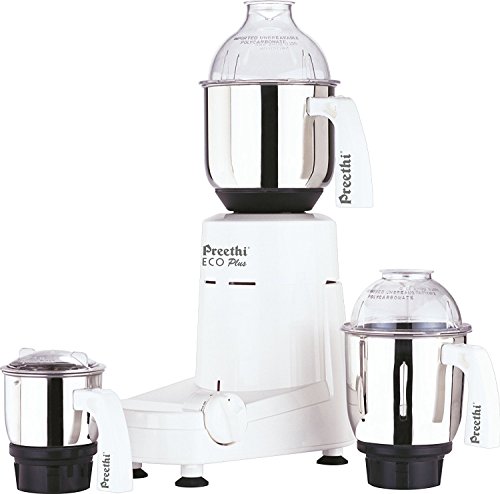
Preethi Eco Plus Mixer Grinder, 110-Volt — Best Mixer-Grinder Alternative
Many searches for metal-jar blending are really searches for a mixer grinder, whether the searcher knows the term or not. The South Asian mixer-grinder tradition — built around small, sturdy metal jars for chutneys, dry spice grinding, idli and dosa batters, and coconut pastes — is where metal-jar food preparation genuinely lives on in modern kitchens. The Preethi Eco Plus is a verified representative of that category, sold in a 110-volt version specified for use in the USA and Canada, which is the detail that matters: imported mixer grinders in the wrong voltage are a classic marketplace trap, and this listing states its voltage market in its title.
Who it suits: cooks whose real workload is the mixer-grinder repertoire — fresh chutneys, masala pastes, ground spices, wet batters — in the small, intense batches those dishes need. A pitcher blender is the wrong geometry for a cup of chutney; it throws the load up the walls and starves the blades. The mixer grinder’s small-jar format exists precisely because those jobs demand it, and for many households this category, not a metal pitcher, is the purchase that ends the search happily.
Honesty requirements apply here too. The listed title for this listing confirms the product identity and its 110-volt USA/Canada specification, but it does not enumerate the jar set or jar materials, so this guide attaches no specification box to this pick and asks you to confirm the exact jar configuration on the listing before ordering. Treat it as a verified pointer into the right category, with the final jar details to be checked on the page — a standard of candour the rest of this guide applies to itself as well.
Strengths
- Represents the mixer-grinder category where small metal-jar prep actually lives
- 110-volt version specified for USA and Canada, avoiding the import-voltage trap
- Small-jar geometry suits chutneys, spices, and batters that pitcher blenders handle badly
Trade-offs
- Jar set and materials are not enumerated in the verified title — confirm them on the listing
- A specialist prep category, not a family smoothie or frozen-drink machine
- Different technique and jar system from Western pitcher blenders, with a learning curve
Best for: cooks whose workload is chutneys, spice grinding, and batters / Not suited for: households shopping for a general-purpose family blender
Check on Amazon — check the current price on Amazon for the exact model named here.
True Aluminum Jar Blenders — Unlinked: No Verified Listing Exists
This final slot belongs to the product the keyword actually names, and it is not linked for a simple reason: it does not currently exist as a verifiable Amazon product. Two Amazon listing data searches run for this guide on 2026-11-21 — one for aluminium jar blenders directly, one for metal-jar blenders generally — returned stainless steel jars, glass jars, an aluminium machine base, and aluminium alloy replacement nuts that fit other brands’ jars. No listing offered a blender whose jar is aluminium, from any brand, at any tier. Under this site’s rules, an unverifiable product gets no Amazon link and no invented specification, so this pick is a written explanation instead of a product card.
Aluminium jars are not a fantasy — they are a memory. Mid-century blenders and, later, some commercial and regional machines did use spun or cast aluminium jars, and vintage examples circulate among collectors. The material lost the jar for practical reasons the industry settled decades ago: aluminium is soft enough to dent and scratch in blade service, it reacts with acidic foods over long contact, it cannot go in every dishwasher chemistry without discolouring, and stainless steel does every jar job better while remaining flavour-neutral. Nostalgia and a few specialist restoration trades keep the vintage market alive, but no current manufacturer in the verified catalogue builds a blender around an aluminium jar.
The practical advice follows. If you own or inherit a vintage aluminium-jar machine, use it for short-contact dry and drinks work, wash it by hand, and do not store acidic blends in the jar. If you are shopping today, translate the underlying desire — a metal jar that will not crack, stain, or age — into the stainless picks above, which deliver that desire in the material the market actually builds. And if a listing anywhere claims an aluminium jar on a new blender, treat the claim the way this guide treats all claims: ask for the verified title, and watch whether the aluminium turns out to be a base, a nut, or a description of something else entirely.
Strengths
- States the market truth plainly: the literal product is not currently sold
- Explains where aluminium jars genuinely exist — the vintage and collector market
- Gives owners of vintage machines safe, practical handling guidance
Trade-offs
- No product to buy and no link — by design, because none could be verified
- Vintage aluminium jars that do exist need hand-washing and short food contact
- Buyers set on aluminium specifically must leave the new-product market to find it
Best for: readers who want the honest answer to the literal keyword / Not suited for: anyone who needs a purchasable product — choose a stainless pick above
This is an unlinked pick: no Amazon link is attached because no listing could be verified for it — see the sources note published with this guide.
Comparison Table
Read this table as the search record in miniature: five purchasable metal-jar machines, their true jar materials stated plainly, and one empty row where the aluminium jar would go if it existed. The empty row is the most important line in the entire guide.
| Pick | Badge | Key spec | Best for |
|---|---|---|---|
| Waring Blade Blender BB300S, 48 oz Stainless Steel Jar | Best Stainless-Jar Alternative — Commercial | 1.5 HP, 48 oz stainless steel jar, 2-speed toggle + pulse, NSF | commercial users and heavy home blenders who want a durable metal jar |
| Reslee Stainless Steel Blender, 72 oz Double-Wall 304 Jar | Best Large Stainless Jar | 3.5HP, 72 oz double-wall 304 stainless jar, 10 speeds, smart memory | families wanting one large, durable metal jar for soups and frozen drinks |
| Waring BevBasix Bar Blender BB145S, 32 oz Stainless Steel Jar | Best Compact Stainless Jar | 1/2 HP, 32 oz stainless steel jar, 2-speed motor | home bars, small cafes, and drinks-for-two households |
| BIMG 2 Gal (8L) Commercial Blender, Stainless Steel Jar, Aluminum Base | Only Verified Aluminum Element | 2 Gal (8L), stainless steel jar, aluminum base, 3/4 HP, 3500 RPM | high-volume commercial venues blending at multi-litre scale |
| Preethi Eco Plus Mixer Grinder, 110-Volt | Best Mixer-Grinder Alternative | Mixer grinder, 110-Volt for USA/Canada use | cooks whose workload is chutneys, spice grinding, and batters |
| True Aluminum Jar Blenders | Unlinked: No Verified Listing Exists | No verified listing — no link | readers who want the honest answer to the literal keyword |
How to Choose the Best Blenders Aluminum Jar Shoppers Actually Need
Start by translating the keyword into the need. Aluminium in a search box almost always means: a metal jar, chosen for durability, hygiene, and freedom from stains and cracks. Once the need is named correctly, the choice becomes straightforward, because the metal-jar market offers three working sizes. The 32 oz Waring suits drinks for one or two. The 48 oz Waring suits bar service and steady home use. The 72 oz Reslee suits family batches and adds a double-wall thermal jar that stays cool-touch with soup and sweat-free with ice. Choose by batch size exactly as you would with any blender, and the metal-jar question answers itself.
Then interrogate any claim you meet elsewhere with the method this guide used. Ask where the aluminium is. In the verified catalogue, aluminium appears in a base casting and in replacement blade-retainer nuts — small aluminium alloy parts sold for other brands’ jars — and in neither case is it the jar. A listing headline that says aluminium near the word blender is not evidence of an aluminium jar; the jar material line in the title is the evidence. If a seller cannot state the jar material plainly, the jar is not the material in the headline.
- Translate the search: the need is a durable metal jar, and the metal sold is stainless steel.
- Choose metal-jar size by batch: 32 oz for drinks for two, 48 oz for service, 72 oz for family batches.
- Verify jar material in the listing title — never from a headline adjective.
- Consider a mixer grinder if your real workload is chutneys, spices, and batters.
- Treat any new aluminium-jar claim as unproven until the title states the jar material.
Finally, price the trade honestly. Stainless jars cost more than plastic and hide their contents, and commercial metal-jar machines trade culinary range for durability. What they return is a jar that can serve for the life of the motor and beyond — which, for the buyer who typed aluminium into a search box, was the entire point.
Why Stainless Steel Replaced Aluminum in Blender Jars
The material contest for blender jars was settled by four properties. First, hardness in service: a blender jar lives with ice impacts, frozen fruit, and blade-driven debris, and aluminium dents and scratches where stainless shrugs. Scratches are not cosmetic in a food jar — they harbour residue and multiply cleaning effort, so the softer metal ages functionally, not just visually. Second, chemistry: blender work is acidic work — citrus, tomato, vinegar-based sauces — and aluminium reacts with acids over contact time in ways that can discolour the jar and taint flavour, while stainless is effectively neutral. Third, cleaning: modern ownership means dishwashers, and common dishwasher chemistries discolour and pit aluminium, pushing it into hand-wash-only territory that stainless does not share. Fourth, manufacturing: stainless jars can be drawn, welded, and finished to food-grade standards at scale, which is why every commercial maker in the verified search — Waring above all — standardised on it.
Glass and modern copolyesters took the transparent half of the market for the opposite reason: they let the cook see the blend. Metal’s half of the market — the durability half, the half this search shops in — consolidated entirely on stainless. Aluminium survives in blender construction where its properties genuinely win: cast bases, where weight and casting ease matter and food never touches the part, and small hardware like retainer nuts. The BIMG pick in this guide, steel jar on an aluminium base, is not an oddity; it is the industry’s material logic expressed in a single product.
How to Use and Care for a Metal-Jar Blender
Metal jars change technique in three ways, and owners who learn them quickly stop missing glass. First, you blend by ear and clock instead of by eye: a metal jar hides the vortex, so learn the sound of a formed blend — a steady, deep roar — against the rattling of an unformed one, and time your standard recipes once, then repeat the timing. Second, use the pulse and lid-check discipline: for thick loads, pulse to settle the contents, and check texture by stopping and looking rather than by watching through a wall that is not transparent. Third, respect the thermal gift: a stainless jar, and especially the Reslee’s double-wall thermal jar, holds temperature well, which keeps soups hot and frozen drinks frozen through serving — but a single-wall steel jar of hot soup is a hot object, so handle it with the same respect as a saucepan.
Care is where metal repays its owner. Stainless jars tolerate dishwashers, steel wool in extremis, and decades of turmeric without a stain memory; rinse after acidic blends rather than storing them in the jar, dry the blade assembly area to keep seals happy, and the jar will outlast the motor it sits on. For the aluminium parts that do exist — the BIMG’s base, vintage jars in collections — the rules invert: hand-wash, avoid dishwasher chemistry, keep acidic contact short, and never store food in aluminium. Two metals, two care regimes; the guide’s picks need the easy one.
Vintage Aluminum Jar Blenders: What the Collector Market Knows
Because some readers will go looking anyway, here is the honest map of where aluminium jars actually live. Mid-century American blenders were built in an era when spun aluminium was a standard food-equipment material, and surviving machines trade among collectors and retro-kitchen enthusiasts, usually as display pieces that blend occasionally rather than as daily appliances. Commercial history adds a second strand: some regional and industrial machines used aluminium jars where cost and casting mattered more than the properties that later standardised the industry on steel. Neither strand is a current retail category, and neither is served by Amazon’s new-product catalogue — which is precisely what the verification searches for this guide established.
Buying vintage is a hobbyist’s discipline, not a shortcut. Condition varies from pristine to unsafe, blade assemblies and seals are decades old, electrical standards predate modern expectations, and the jar itself needs the hand-wash, short-contact, no-storage handling described in the care section above. Price in that market reflects collectibility, not blending value, so a vintage aluminium machine will routinely cost more than a superior new stainless blender while doing less, less safely, with no parts pipeline. This guide’s position is therefore warm but firm: admire the aluminium jar as design history, photograph it, keep it if you inherit it — and blend your daily smoothie in stainless.
Common Buying Mistakes
Mistake 1: Trusting a headline that puts aluminium near a blender. In the verified catalogue, aluminium appears in bases and replacement nuts, not jars. Read the jar material line in the title before believing any aluminium claim — the method used for every pick in this guide.
Mistake 2: Buying glass or plastic while actually wanting metal durability. If your real requirement is a jar that cannot crack, stain, or cloud, a premium plastic jar is still not that jar. Buy the stainless machine that matches the need instead of upgrading the material you did not want.
Mistake 3: Assuming a metal jar means you can watch the blend. Metal is opaque. If your cooking depends on watching texture form — delicate emulsions, precise smoothie finishes — a glass or clear jar serves you better, and no durability argument changes that.
Mistake 4: Storing acidic blends in any metal jar. Blend, serve, and decant. Even stainless prefers not to store tomato or citrus blends overnight, and vintage aluminium should never store food at all. The jar is a tool, not a container.
Mistake 5: Importing a mixer grinder in the wrong voltage. The mixer-grinder market is global and voltage-specific. The verified pick here is the 110-volt USA/Canada version; a 220-volt import on a US supply is a classic and expensive marketplace error.
Mistake 6: Paying a collector premium for a vintage aluminium jar as a daily tool. Vintage aluminium-jar machines are collectibles with hand-wash, short-contact rules. As daily blenders they lose to every stainless pick here on safety, cleaning, and parts availability. Collect them as history, not as working appliances.
Final Recommendation
If you want one recommendation from this unusual guide: take the Waring BB300S if your blending is drinks at volume, or the Reslee 72 oz if it is family batches of everything from soup to smoothies. Both give you the thing the keyword actually wants — a metal jar that will not crack, stain, or age — in the material the market builds it from.
Choose the compact Waring BB145S for a home bar, consider the Preethi mixer grinder if your true workload is chutneys and batters, and let the BIMG stand as the record of how close aluminium gets to a modern blender jar: the base, and no closer. The aluminium jar itself remains a vintage story, told in the unlinked review above. A guide that invented one for you would be easier to write and worth less to read.
Related guides in this series: Best Blenders; Best Blenders 8 Cup; Best Blenders All Time; Best 1000 Watt Blenders.
Frequently Asked Questions
Does any blender have a real aluminum jar?
Not in the current verified Amazon catalogue. Two Amazon listing data searches run for this guide on 2026-11-21 found stainless steel jars, glass jars, an aluminium machine base, and aluminium alloy replacement nuts — but no blender whose jar is aluminium, from any brand at any tier. Aluminium jars exist in the vintage and collector market, not in current new-product listings.
Why did manufacturers stop using aluminum for blender jars?
Aluminium loses on the four properties a jar is judged by: it dents and scratches under ice and blade service, it reacts with acidic foods over contact time, common dishwasher chemistries discolour and pit it, and stainless steel performs every jar job better while staying flavour-neutral. Aluminium survives in bases and small hardware, where food never touches it.
Is a stainless steel jar as good as the aluminum jar I wanted?
For the needs behind the search — durability, no cracking, no staining, no clouding, no odour memory — stainless is better than aluminium on every count, which is why it replaced it. The genuine trade-offs are that metal jars of any kind hide the blend from view and cost more than plastic. If visibility matters more than durability, choose glass instead.
Can I put a metal jar in the dishwasher?
Stainless steel jars, including the Waring and Reslee picks in this guide, are built for commercial service and tolerate dishwashing well — confirm the specific model’s guidance on its listing. Aluminium, by contrast, should be hand-washed: dishwasher detergents discolour and pit it, which is one more reason vintage aluminium jars need collector-style care.
What about mixer grinders with metal jars?
Mixer grinders are where small metal-jar preparation genuinely thrives — chutneys, spice grinding, and batters in small, intense batches. The verified Preethi Eco Plus in this guide is the 110-volt version for the USA and Canada. Its Amazon title does not enumerate the jar set, so confirm the exact jars and materials on the listing before ordering.
I already own a vintage aluminum-jar blender. Is it safe to use?
Use it the way collectors do: short-contact work like drinks and dry grinding, hand-washing only, no storing of food in the jar, and extra care with acidic blends, which should be decanted immediately. For daily family blending, especially hot or acidic loads, a modern stainless pick from this guide is the more practical tool, and the vintage machine keeps its value as the piece of history it is.


