Disclosure: airfryerkitchensupply.com is reader-supported. When you buy through links on our site, we may earn an affiliate commission at no extra cost to you.
Where to buy
An island gas grill is a drop-in grill head — it has no cart and no legs, because your island is the furniture — so every listing below is the grill head only, verified against Amazon’s catalogue before earning a link. Check the current price on Amazon from each pick, and while you are there, confirm the two numbers that decide whether an island project succeeds: the cutout dimensions your masonry must match, and the fuel type, because propane and natural gas versions are different products that happen to share a name. If you are comparing two heads that look similar on paper, let the installation manuals settle it — the one whose cutout, clearances and service access suit the island you can actually build is the right grill, whatever the brochures promise, in any showroom, on any day of the entire building season.
- SPIRE 30-Inch Built-In 5-Burner Dual Fuel Grill (Best Overall Island Grill) — check price on Amazon
- Bull Outdoor Products Outlaw Drop-In Grill Head, Liquid Propane (Best Proven Brand for Propane Islands) — check price on Amazon
- Bull Outdoor Products Lonestar Drop-In Grill Head, Natural Gas (Best for Natural Gas Islands) — check price on Amazon
- SPIRE 36-Inch Built-In 6-Burner Dual Fuel Grill (Best Large Island Grill) — check price on Amazon
- Brand-Man Built-In Gas Grill Head, 40-Inch 6-Burner (Best Value Big Island Head) — check price on Amazon
- Hygrill STD Series 40-Inch Built-In Grill, 5-Burner (Best Five-Burner Alternative) — check price on Amazon
Choosing the best bbq island gas grills is a different exercise from choosing any freestanding grill, because you are not buying an appliance — you are buying the centrepiece of a construction project. The grill head drops into a cutout in an outdoor kitchen island, plumbs into a propane tank or a natural gas line, and is expected to outlast trends, weather and possibly the countertop around it. That changes the priorities completely: stainless steel grade matters more than gadget count, cutout dimensions matter more than colour, and fuel choice is forever. This guide walks through the six built-in gas grill heads we verified for island duty, explains the construction decisions that surround them, and is honest about the total project — because the grill is often not even the largest line in an island budget. Everything that follows is organised to protect you from the two expensive errors in this category: buying a head whose cutout your island was not built for, and choosing a fuel you cannot happily live with for the decade the island will stand.
In this guide
Quick Picks
Six verified drop-in gas grill heads for outdoor kitchen islands, organised by size, fuel and building ambition.
SPIRE 30-Inch Built-In 5-Burner Dual Fuel Grill — Best Overall Island Grill. All-304 stainless construction, five burners, 63,000 BTU, a ceramic rear burner and interior lighting across 904 square inches — the most complete 30-inch island head we verified. — check price on Amazon
Bull Outdoor Products Outlaw Drop-In Grill Head, Liquid Propane — Best Proven Brand for Propane Islands. Bull is the name island builders actually specify: a 60,000 BTU stainless drop-in head in liquid propane, from a company whose whole business is outdoor kitchen components. — check price on Amazon
Bull Outdoor Products Lonestar Drop-In Grill Head, Natural Gas — Best for Natural Gas Islands. The Lonestar is the Outlaw concept plumbed for natural gas: 60,000 BTU, stainless drop-in head, and a fuel supply that never runs out mid-party. — check price on Amazon
SPIRE 36-Inch Built-In 6-Burner Dual Fuel Grill — Best Large Island Grill. The 30-inch formula at full scale: six burners, 73,000 BTU, 915 square inches, ceramic rear burner and all-304 stainless — for islands that feed a crowd. — check price on Amazon
Brand-Man Built-In Gas Grill Head, 40-Inch 6-Burner — Best Value Big Island Head. A 40-inch, six-burner drop-in with cast iron grates, a griddle and natural-gas convertibility at a value position — the most inches per dollar in the roundup. — check price on Amazon
Hygrill STD Series 40-Inch Built-In Grill, 5-Burner — Best Five-Burner Alternative. Stanbroil’s Hygrill line offers a 40-inch stainless head with five burners and 70,000 BTU on liquid propane — big output in the largest common cutout class. — check price on Amazon
How These Picks Were Chosen
The first filter was format truth: a pick had to be a genuine built-in grill head — designed to drop into an island cutout — verified against Amazon’s catalogue data for this site. Freestanding grills with their legs removed, and cart grills photographed beside islands, were excluded. In this category the distinction is not pedantry; a head designed for enclosure has the ventilation, heat shielding and control layout the job requires.
The second filter was material honesty. Permanent outdoor installation is the harshest life a grill can live, so we weighted stainless grade and construction heavily — the all-304 SPIRE bodies earn their prominence — alongside output, burner count and the features that survive contact with real island life: rear burners for rotisserie, lighting for evening cooking, and ignition that does not depend on a battery door corroding shut.
Finally, we covered the fuel map deliberately: propane heads (Bull Outlaw, Hygrill), a natural gas head (Bull Lonestar), dual-fuel heads (both SPIRE models) and a convertible value head (Brand-Man), because fuel is the one island decision that cannot be revisited cheaply. Every badge names a build scenario rather than a league position, because the right island grill is the one that matches your site, your services and your entertaining life.
We also deliberately included one head at each scale of ambition — 30, 36 and 40 inches — because island grill choice is architectural before it is culinary. A buyer mid-design needs to see the size ladder and its consequences for the structure, the counter runs and the budget, and a guide that only crowned one size would fail the very readers planning the largest projects. Where two picks share a size class, the difference between them is philosophy — steel grade, brand ecosystem, fuel — and the reviews say so plainly rather than inventing a hierarchy the evidence does not support.
The 6 Best BBQ Island Gas Grills, Reviewed

Pick 1: SPIRE 30-Inch Built-In 5-Burner Dual Fuel Grill — Best Overall Island Grill
Check the current price on Amazon
The SPIRE 30-Inch Built-In is the island head we would design a kitchen around: an all-304 stainless steel body, five burners producing 63,000 BTU, 904 square inches of cooking space, a ceramic rear burner for rotisserie work, a built-in thermometer, electronic ignition and interior lighting for evening cooks. It suits a serious island build for households that entertain outdoors as a way of life. It does not suit a first, tentative island — this is a commit-level centrepiece.
Strengths
- All-304 stainless steel body — the grade that resists corrosion in permanent outdoor installations
- Ceramic rear burner brings proper rotisserie capability to the island format
- Interior lighting and electronic ignition make it feel like a kitchen, not a compromise
Trade-offs
- Dual fuel flexibility still requires choosing and plumbing one fuel properly at install
- 30-inch class is generous but not the largest stage for very big gatherings
- A head this capable deserves a quality island around it — budget accordingly
| Size | 30-inch built-in |
| Burners | 5, plus ceramic rear burner |
| Total output | 63,000 BTU |
| Cooking space | 904 sq in |
| Body | All 304 stainless steel |
| Ignition | Electronic |
| Extras | Interior lighting, built-in thermometer |
The detail that matters most is the steel. Islands are permanent, and a grill head lives outdoors through every season with no garage to retreat to; 304-grade stainless is the industry benchmark for surviving that life without tea-staining and pitting, and SPIRE building the whole body from it — rather than a stainless hood over painted steel — is the correct priority for this format. The ceramic rear burner is the second correct priority: rotisserie over a rear infrared-style burner is the island party trick, producing roasts and birds with a quality that justifies the construction project around it.
Plan the installation around this head’s strengths. The interior lighting wants an electrical supply roughed in during the island build — a detail that is trivial with the walls open and miserable afterwards. The rear burner wants a rotisserie kit matched to the model and a drip strategy in the island design. And the dual-fuel nature of the unit is a decision, not a default: pick propane for flexibility or natural gas for never-ending supply, have the correct orifices and regulator fitted by a qualified installer, and record what was done for the next owner of the house.
Best for: Serious island builds wanting a complete, corrosion-resistant centrepiece / Not suited for: Tentative first islands or minimal budgets

Pick 2: Bull Outdoor Products Outlaw Drop-In Grill Head, Liquid Propane — Best Proven Brand for Propane Islands
Check the current price on Amazon
The Bull Outlaw is the establishment choice in this roundup — a stainless steel drop-in grill head with 60,000 BTU, built for liquid propane islands by a company that sells outdoor kitchen components as its entire business. It suits builders who want a known quantity with a component ecosystem (doors, drawers, fridges, side burners) around it. It does not suit bargain hunters; you pay for the ecosystem and the track record.
Strengths
- Specialist outdoor-kitchen brand with a full component ecosystem to match
- 60,000 BTU across the head for strong, even island cooking
- Liquid propane format suits islands without a gas line to the garden
Trade-offs
- Premium-brand pricing against functionally similar newer rivals
- Propane islands need tank access and ventilation designed into the structure
- Head-only purchase — the island, doors and services are all separate budget lines
| Format | Drop-in grill head |
| Total output | 60,000 BTU |
| Body | Stainless steel |
| Fuel | Liquid propane |
There is a practical argument for buying the island grill from an island company. Bull’s catalogue is an ecosystem: access doors sized to sit under the head, drawers, trash centres, refrigerators and side burners that share dimensions and finish, so a DIY builder can compose a coherent kitchen from one dimension chart. The Outlaw head itself is deliberately unflashy — strong output, stainless construction, no gimmicks — because in an island the grill is infrastructure, and infrastructure should be boring in the best way: predictable heat, replaceable parts, a maker who will still sell you a burner in ten years.
Propane island design has two non-negotiables this head assumes you will handle: ventilation and access. An island enclosing a propane tank needs venting at the correct heights (propane sinks, so low vents matter) and an access door that lets you change the tank without gymnastics. Build those in from the start, keep the tank valve reachable, and the Outlaw will do its quiet, competent work for years. Island builders consistently say the grill was the easy part; the services were the project — this pick respects that reality.
Best for: Island builders who want a specialist brand and matching components / Not suited for: Buyers minimising the grill line of the budget
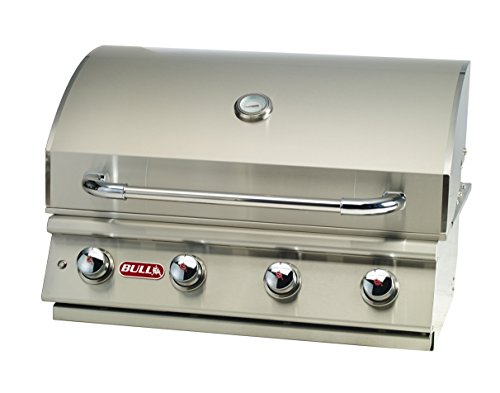
Pick 3: Bull Outdoor Products Lonestar Drop-In Grill Head, Natural Gas — Best for Natural Gas Islands
Check the current price on Amazon
The Bull Lonestar mirrors the Outlaw as a 60,000 BTU stainless drop-in head, but built for natural gas — the fuel that changes island life most, because the supply is the house’s own and the tank never empties during a party. It suits homes that can run a gas line to the island site. It does not suit renters, phased builds or any site where trenching a gas line is impractical.
Strengths
- Natural gas supply ends tank changes and mid-cook fuel anxiety forever
- Same specialist-brand ecosystem and stainless construction as the Outlaw
- 60,000 BTU gives full-size island cooking power
Trade-offs
- Requires a professionally installed gas line to the island — a real project cost
- The island becomes truly permanent; moving house means leaving it
- Natural gas and propane heads are not interchangeable — order the right one
| Format | Drop-in grill head |
| Total output | 60,000 BTU |
| Body | Stainless steel |
| Fuel | Natural gas |
Every island owner who has plumbed natural gas describes the same luxury: the grill is simply always ready, the way the kitchen stove is always ready. That readiness changes behaviour — the island gets used for Tuesday sausages, not just Saturday productions — and a grill that gets used three times a week justifies its construction in a way a special-occasion appliance never does. The Lonestar’s job is to be the dependable head at the centre of that life, and its specification — strong output, stainless build, specialist maker — is exactly calibrated to it.
The gas line is a professional job, full stop: sizing, shutoff valves, pressure testing and code compliance are not DIY territory, and your island design should place an accessible shutoff where a human can reach it in a hurry. Plan the line’s route before the island foundation is poured, alongside water and electrical if your design includes them, because retrofitting services under finished masonry is the most expensive sentence in outdoor kitchen building. Done once and done properly, the Lonestar rewards you every single week.
Best for: Permanent islands with a house gas line available / Not suited for: Renters, phased budgets or sites without gas access

Pick 4: SPIRE 36-Inch Built-In 6-Burner Dual Fuel Grill — Best Large Island Grill
Check the current price on Amazon
The SPIRE 36-Inch stretches the Best Overall pick’s formula to event scale: six burners, 73,000 BTU, 915 square inches of cooking space, a ceramic rear burner, interior lighting and the same all-304 stainless construction. It suits big islands, big families and hosts whose normal is twenty burgers. It does not suit compact island designs — a 36-inch head dictates a substantial structure around it.
Strengths
- 915 sq in and six burners handle genuine crowd cooking in one pass
- All-304 stainless construction, the correct material for a permanent install
- Ceramic rear burner and interior lighting carry over from the 30-inch model
Trade-offs
- Dictates a large island footprint and a large total project
- Six burners lit for a small dinner is wasteful — cook in zones
- Heaviest commitment in the roundup, in every sense
| Size | 36-inch built-in |
| Burners | 6, plus ceramic rear burner |
| Total output | 73,000 BTU |
| Cooking space | 915 sq in |
| Body | All 304 stainless steel |
| Ignition | Electronic |
| Extras | Interior lighting, built-in thermometer |
A 36-inch head changes island architecture. The structure needs the width for the cutout plus working counter on both sides — a grill you cannot stand beside with a tray is a design failure — so this pick belongs in backyards with genuine room. In return, it cooks the way party hosts dream about: a whole zone for searing, a whole zone for chicken, the rear burner turning a roast, and still a corner for vegetables. Zone discipline is the operating skill; light what the menu needs, and the big SPIRE behaves like three grills sharing one lid.
If you are choosing between this and its 30-inch sibling, let your island’s total length decide, not appetite alone. A 36-inch head in an island that is all grill and no counter is worse than a 30-inch head in a balanced kitchen. But where the space exists, the larger SPIRE is the one you will never outgrow, and in a format where replacement means masonry work, never outgrowing the grill is worth a great deal of money and trouble.
Best for: Large islands and hosts who cook for crowds routinely / Not suited for: Compact island footprints

Pick 5: Brand-Man Built-In Gas Grill Head, 40-Inch 6-Burner — Best Value Big Island Head
Check the current price on Amazon
The Brand-Man 40-Inch Built-In Grill Head is the value play at large scale: six burners, 60,000 BTU, heavy-duty stainless construction, cast iron grates plus a griddle, sold as a propane island drop-in and convertible to natural gas. It suits budget-aware builders who want a big head without the premium-brand premium. It does not suit buyers who need the deepest parts network or the finest steel grade.
Strengths
- 40 inches and six burners at a value-tier position in the island market
- Cast iron grates plus an included griddle widen the cooking repertoire
- Natural gas convertible, so the fuel decision can evolve with the build
Trade-offs
- Steel and finish are a tier below the all-304 SPIRE picks
- Convertibility still means a proper conversion job at install, not a switch
- Newer brand — long-term parts availability is the open question
| Size | 40-inch built-in head |
| Burners | 6 |
| Total output | 60,000 BTU |
| Grates | Cast iron, plus griddle |
| Fuel | Propane, convertible to natural gas |
| Body | Heavy-duty stainless steel |
Island projects haemorrhage money in a dozen places — masonry, counters, doors, services — so a head that delivers the essential scale at a value position can rescue a whole budget. The Brand-Man’s specification is intelligently chosen for that role: cast iron grates (the searing surface that matters) rather than decorative extras, a griddle in the box for the breakfasts and smash burgers islands end up cooking, and convertibility that keeps the design flexible if a gas line arrives in phase two of the build.
The ownership bargain at this tier is care. Keep the head covered when the island allows, season the cast iron properly, and inspect burners each spring; value-tier stainless rewards that attention and punishes its absence faster than 304 does. Builders on a budget should also photograph the model and serial plate and save the manual digitally — with newer brands, your own records are your best parts insurance. Judged as a way to put a genuinely large, capable grill into an island without the premium tax, it is a rational and popular route.
Best for: Budget-aware builders wanting maximum island grill size / Not suited for: Buyers prioritising top steel grades and legacy parts networks

Pick 6: Hygrill STD Series 40-Inch Built-In Grill, 5-Burner — Best Five-Burner Alternative
Check the current price on Amazon
The Hygrill STD Series 40-Inch (by Stanbroil) pairs the largest common island footprint with five burners and 70,000 BTU in stainless steel, running on liquid propane. It suits builders designing a wide island around propane who want output headroom. It does not suit natural-gas sites without conversion planning, or small islands.
Strengths
- 70,000 BTU is the second-highest output in this roundup
- 40-inch class gives a genuinely large cooking stage
- Five-burner layout balances zone flexibility with simpler plumbing than six
Trade-offs
- Liquid propane only as listed — natural gas households should look at the Bull Lonestar or SPIRE dual-fuel picks
- Stanbroil/Hygrill is a smaller name in islands than Bull
- Large head, large island: the total project scales with it
| Size | 40-inch built-in |
| Burners | 5 |
| Total output | 70,000 BTU |
| Body | Stainless steel |
| Fuel | Liquid propane |
Five burners in a 40-inch head is a quietly sensible specification: the zones are wide enough to be genuinely different temperatures, and the burner count keeps heat distribution even without the complexity of six. The 70,000 BTU headline is best understood as recovery power — when a crowd’s worth of cold food lands, this head has the reserves to keep cooking rather than steaming. For a propane island of real ambition, it is the output pick, and its STD-series positioning suggests a maker aiming at builders rather than gadget shoppers.
As with every pick here, verify the cutout dimensions from the manufacturer’s current documentation before a single block is laid — 40-inch class heads are not interchangeable between brands, and an island built to the wrong cutout is an expensive sculpture. Design tank access and ventilation into the structure from the first sketch, and consider a spare set of grates or a griddle plate in the initial order while the model is current. Islands reward planners; this head is for planners.
Best for: Wide propane islands wanting maximum output headroom / Not suited for: Natural gas sites or compact builds
Comparison Table
| Pick | Badge | Key spec | Best for |
|---|---|---|---|
| SPIRE 30-Inch Built-In 5-Burner Dual Fuel Grill | Best Overall Island Grill | 30-inch, 5 burners, 304 stainless, ceramic rear burner | Serious island builds wanting a complete, corrosion-resistant centrepiece |
| Bull Outdoor Products Outlaw Drop-In Grill Head, Liquid Propane | Best Proven Brand for Propane Islands | Drop-in head, 60,000 BTU, liquid propane, stainless | Island builders who want a specialist brand and matching components |
| Bull Outdoor Products Lonestar Drop-In Grill Head, Natural Gas | Best for Natural Gas Islands | Drop-in head, 60,000 BTU, natural gas, stainless | Permanent islands with a house gas line available |
| SPIRE 36-Inch Built-In 6-Burner Dual Fuel Grill | Best Large Island Grill | 36-inch, 6 burners, 73,000 BTU, 304 stainless | Large islands and hosts who cook for crowds routinely |
| Brand-Man Built-In Gas Grill Head, 40-Inch 6-Burner | Best Value Big Island Head | 40-inch, 6 burners, 60,000 BTU, cast iron grates + griddle | Budget-aware builders wanting maximum island grill size |
| Hygrill STD Series 40-Inch Built-In Grill, 5-Burner | Best Five-Burner Alternative | 40-inch, 5 burners, 70,000 BTU, liquid propane | Wide propane islands wanting maximum output headroom |
How to Choose a Gas Grill for a BBQ Island
Begin with the island, not the grill. The structure’s length, the counter space you need on each side, and the services you can reach — gas, water, electricity — define the envelope; the grill head is chosen to fit inside it. Builders who fall in love with a 40-inch head first and design around it often end up with a magnificent grill and nowhere to put a tray down.
Cutout dimensions are the contract
Every head has a specified cutout — width, depth and height — and the island must be built to it exactly, with the manufacturer’s clearances for heat and ventilation. Cutouts are not standardised across brands, so the head must be chosen before masonry begins, and the installation manual, not the product listing, is the document your builder should work from. Leave access for servicing: burners, valves and igniters will all need attention one day, and a head that cannot be lifted out is a future demolition job.
Fuel: the permanent decision
Propane offers flexibility and lower install cost, at the price of tank changes and strict island ventilation requirements. Natural gas costs a trench and a professional installation, then disappears from your life forever. Dual-fuel and convertible heads (the SPIRE and Brand-Man picks) hedge the decision, but the conversion itself is still an installer’s job with the correct orifices and regulator. Decide based on your site and your horizon: a forever home argues for the gas line; a phased garden argues for propane.
Steel grades, honestly explained
Island heads live outdoors permanently, so corrosion resistance is not a luxury. 304-grade stainless is the benchmark for grill bodies in wet climates; lower grades and painted steel can look identical on delivery day and very different in year four. If your climate is coastal, weight this factor above every feature on the list — salt air is merciless, and the SPIRE picks’ all-304 construction exists precisely for that reality.
The Island Around the Grill: Budgeting the Whole Project
New island builders consistently underestimate the project by budgeting the grill and forgetting the island. The full picture includes the structure (block, steel frame or prefab), the countertop, access doors and drawers, a trash centre, possibly a refrigerator and sink, the services (gas line or tank housing, electrical for lighting and fridge, water and drainage if a sink is included), and labour if you are not building it yourself. On many real projects the grill head is a minority of the total spend.
That arithmetic argues for two things. First, choose the head early and build to its cutout, because late changes are masonry changes. Second, do not starve the head to feed the finishes: a slightly plainer countertop around an excellent grill serves you better for a decade than the reverse. The value picks in this guide — the Brand-Man especially — exist for exactly that rebalancing.
Island Design Mistakes That Outlive the Grill
The saddest island stories are never about the grill. They are about the island with no counter space because the head ate the whole structure; the propane enclosure built without low ventilation; the beautiful stone surround that traps heat against a head installed without its specified clearances; the refrigerator placed beside the grill where it fights the heat all summer; the sink with no drainage plan; and the lighting nobody roughed in, leaving a premium head’s interior lights permanently dark.
Every one of those is a drawing-stage problem, which means every one is free to fix on paper and expensive to fix in stone. Sketch the island at full size on the patio with chalk or tape, stand in it, mime a cook — tray here, tongs there, guest with a drink not in the smoke path — and only then commit. Islands are the most permanent purchase in this entire guide series; an afternoon of theatre on the patio is the cheapest design consultancy you will ever buy.
Living With an Island: Seasons and Services
An island kitchen changes how a house entertains, and it asks for a seasonal rhythm in return. Spring: a service pass on the head — burner ports, igniter, gas connections leak-tested, grates seasoned — and a check of every door hinge and drawer runner. Summer: the weekly rhythm of grease management and cover discipline on any exposed components. Autumn: a deep clean before the wet months, and for propane islands, a full spare tank laid in. Winter: if your climate freezes, water lines drained and the refrigerator managed per its manual.
Build that rhythm into the household calendar and an island stays what it was on the first day — the best room of the house, minus the roof. Neglect it, and the same permanence that makes islands wonderful makes their decay conspicuous. The grill heads in this guide were chosen to reward the rhythm: serviceable burners, replaceable grates, makers with component catalogues. The rest is simply showing up for your own investment.
Island Components That Complete the Kitchen
A grill head alone does not make an outdoor kitchen, and the components around it decide whether the island works as a room or merely looks like one. Access doors under the head are the first essential — for tank access on propane builds and for the plumbing and storage every island accumulates. A trash centre near the cook’s working side sounds humble and proves indispensable nightly. Drawers for tools beat a bucket of tongs in a cabinet in every way that matters.
Beyond the essentials, choose by your actual entertaining pattern. A refrigerator earns its electricity if drinks and marinating food genuinely live outside; otherwise it is a warm box consuming a cabinet run. A side burner extends the island into a true kitchen for corn, beans and breakfast, and is worth its cutout if your menus say so. A sink is the most double-edged component: wonderful with proper water and drainage, a mosquito-breeding ornament without them. The discipline is the same as with the grill itself — components must match the life, not the photograph.
Prefab and modular islands: the middle path
Between a fully custom masonry build and a lone grill head sits the modular route: prefabricated island frames and ready-to-assemble outdoor kitchen kits that accept standard component sizes. They reduce labour and uncertainty, and they pair naturally with the heads in this guide provided the cutout matches — which remains, as ever, the first measurement to confirm. For many households a modular island with an excellent head is the sweet spot of the whole category: most of the life, a fraction of the construction drama.
What Island Owners Say After the First Year
Talk to island owners a year in and a pattern emerges. Nobody regrets counter space, the gas line, or buying the better grill head. Almost everybody regrets something small and specific: the drawer that should have been a trash centre, the outlet that should have been two, the light that should have been over the grill rather than behind the cook, the hose bib on the wrong side. The lesson is not that you must design perfectly — it is that the cheap decisions are the permanent ones, so they deserve a disproportionate share of the planning hour.
The other universal report is behavioural: an island that is plumbed, lit and ready gets used on weeknights, and weeknight use is where the investment quietly repays itself. The island that needs twenty minutes of setup becomes a Saturday monument. When you weigh the natural gas line, the lighting circuit and the component choices in this guide, weigh them against that single question — will this make Tuesday easier? — and you will allocate the budget the way happy owners did.
How to Plan and Install a Built-In Island Grill
Installation of a grill head is partly a builder’s job and partly a services job; this sequence shows where the homeowner’s decisions sit and where professionals take over.
- Fix the design on paper first: island dimensions, head model and cutout, counter runs, door and drawer positions, and the route of every service. Order nothing until the cutout specification is confirmed from the manufacturer’s installation manual.
- Run the services while the structure is open: gas line or tank housing with code-compliant ventilation, electrical for lighting and any refrigerator, water and drainage if a sink is planned. Gas work belongs to a licensed professional who pressure-tests the line.
- Build the structure to the cutout dimensions exactly, using non-combustible materials anywhere near the head, and observe the manufacturer’s clearance and ventilation requirements — including vents for the enclosure itself, high and low.
- Set the head into the cutout with a helper — these units are heavy and awkward — confirm it sits level and true, and connect the fuel with the correct regulator and fittings for the chosen fuel.
- Leak-test every gas joint with soapy water, then test-fire each burner and the rear burner, confirming even, mostly-blue flames before the first food appears.
- Run the empty head on high for a burn-off cycle to clear manufacturing residues, season the grates with high-heat oil, and only then declare the island open.
The first month of island life
Cook simply at first and learn the head’s zones the way you would any grill — where it runs hot, how the rear burner behaves with a drip pan, how the lighting helps after dark. Keep a notebook in a drawer of the island itself: cutout dimensions, model and serial numbers, the installer’s details, and what you learn about the grill. Islands are inherited by future owners and serviced by future technicians; that notebook is a gift to both, and to yourself in year six when a burner needs ordering.
Common Buying Mistakes
Building the island before choosing the grill
Cutouts are brand-specific. Masonry built first forces you into whichever heads happen to fit — or into demolition. Choose the head, get its installation manual, then build.
Enclosing a propane tank without ventilation
Propane is heavier than air and pools low. Island enclosures need correct venting and an accessible shutoff, designed in from the start. This is a safety requirement, not a style preference.
Starving the grill budget to feed the finishes
Countertops can be upgraded; a cheap head in a stone island is a decade-long compromise you will cook on weekly. Balance the budget toward the appliance.
Forgetting electrical at the design stage
Interior lighting, refrigerators and rotisserie motors all want power. Roughing in a circuit with the walls open costs little; adding one later costs a demolition crew.
Placing the fridge or storage in the heat path
Refrigerators beside a grill work harder and die younger, and plastic storage melts where you least expect it. Keep heat-sensitive components at the island’s cool end.
Final Recommendation
If your island deserves one centrepiece recommendation, it is the SPIRE 30-Inch: all-304 construction, a ceramic rear burner, lighting and five honest burners in the size class that fits most real islands. Scale it to the 36-Inch SPIRE if your structure and your parties are genuinely large.
Brand-loyal builders are well served by Bull — the Outlaw for propane islands, the Lonestar where a natural gas line makes fuel invisible — while the Brand-Man 40-Inch and Hygrill 40-Inch put serious size and output into projects whose budgets are being pulled in ten directions at once. Every pick here is a verified drop-in head, so check the current price on Amazon, then confirm the cutout and fuel one final time before you order.
An island is the biggest commitment in this guide series, so read the neighbouring island and general guides before the first block is laid — the hour you spend planning is the cheapest hour of the entire project.
And a word of encouragement for anyone daunted by the scale of an island project: every outdoor kitchen in every magazine began as a chalk outline and a head chosen with care. Choose the head that fits your site and your life, build honestly around it, and the island will take care of the rest — one Tuesday-night sausage at a time, for a great many years to come.
Best Bbq Island Grills Best Bbq Grills Under 650.00 Best Bbq Grills With Rotisserie Best Bbq Grills With Sear Station Best Beginner Propane Grills
Frequently Asked Questions
What is the difference between an island grill and a regular grill?
An island grill is a drop-in head with no cart, legs or side shelves — it is designed to be built into an outdoor kitchen island, which provides the structure, storage and work surfaces. You cannot use one freestanding, and you should not build a regular cart grill into an island; the ventilation and heat design are different.
How much space do I need around a built-in grill?
Follow the manufacturer’s specified clearances for the exact model — they are part of the installation manual and they govern. Beyond the head itself, plan genuine counter space on at least one side, ideally both: a grill you cannot set a tray beside is a design error that no specification can fix.
Propane or natural gas for an island?
Natural gas if a line can be run: it never runs out and suits a permanent installation. Propane if the site or budget cannot support a line, with correct enclosure ventilation and tank access designed in. Dual-fuel and convertible heads exist (two of our picks) but the conversion at install is still a professional job.
What stainless steel grade should an island grill be?
304-grade stainless is the benchmark for permanent outdoor exposure and the safest choice in wet or coastal climates — it is why the SPIRE picks lead this guide. Lower grades can serve inland with diligent care, but the island format punishes corrosion more than any other, because replacement means construction work.
Can I install a built-in grill myself?
Setting the head into a finished, correctly built cutout is within a competent DIYer’s ability. The gas connection and any gas line work should be done or at least checked by a licensed professional, and local codes may require permits for the services. When in doubt, the services are the place to spend on expertise.
Does a built-in grill add value to a home?
A well-built outdoor kitchen is a recognised selling feature, and a quality head from a known maker (with its documentation kept) presents far better than a corroded unknown. Treat it primarily as a lifestyle purchase that you will use for years; any resale benefit is a bonus, and it depends entirely on the whole island being sound, not just the grill.


