Disclosure: As an Amazon Associate, airfryerkitchensupply.com earns from qualifying purchases. Links to Amazon on this page are affiliate links; they cost you nothing extra. Listing details such as price and availability change often, so check the current Amazon listing before you buy.
Searching for the best organic pillows can feel confusing, because the word organic is used loosely on bedding listings. Some pillows are made with certified organic cotton covers and certified organic latex. Others simply use a natural fill, such as wool or kapok, without any certificate at all. This guide separates those cases and explains the materials, the labels you will see and the five pillows we think are worth reading about.
We focus on fill, cover, firmness descriptions, size and care. We do not make claims about how any pillow affects your body or rest, because a listing cannot tell you that. Instead, you get a plain comparison of what each pillow is made from and what its maker says about it.
You will find a quick table, five named pillows, short picks by situation, a buying checklist and a care routine. A natural pillow is often a bigger commitment than a polyester one, so a little reading first is worthwhile.


Quick Comparison
| Product | Best for | Main point | Link |
|---|---|---|---|
| Avocado Green Pillow | Shoppers who want certified materials | Organic latex pieces with an organic cotton cover | Check on Amazon |
| Holy Lamb Organics Wool Pillow | Wool fans | Organic wool fill, adjustable fill amount | Check on Amazon |
| Sleep and Beyond Washable Wool Pillow | People who want wool with a lighter feel | Merino wool fill in a cotton cover | Check on Amazon |
| PlushBeds Natural Talalay Latex Pillow | A springy, resilient feel | Natural latex core, check the certificate | Check on Amazon |
| Saatva Latex Pillow | A shaped, resilient pillow | Latex fill with a cotton cover to confirm | Check on Amazon |
In this guide
How These Options Were Chosen
We looked for pillows from established bedding brands whose fills are natural or plant based and clearly named on the listing. We compared what the maker says about the fill, the cover, the loft options, the size and the care method. We have not used these products ourselves, and this is a reading of published specifications, not a personal report.
Not every pillow below carries a certificate for every part, so we say so wherever the certification needs to be checked on the current listing.
Five Organic and Natural Fill Pillows to Compare
Avocado Green Pillow
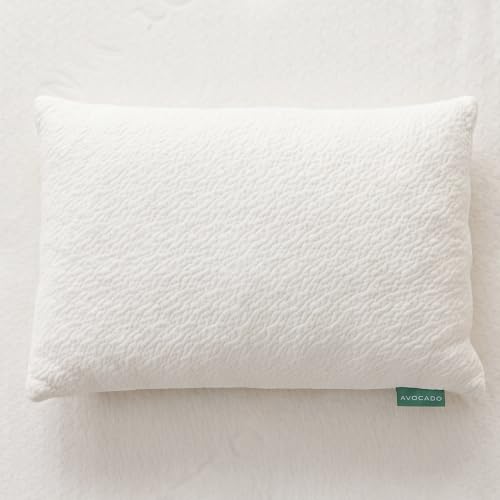
The Avocado pillow is built around shredded organic latex pieces inside a cover made from organic cotton, and the maker highlights certifications for these materials. The pieces can be removed or added, so the pillow offers an adjustable loft that suits different preferences.
It is the strongest match for shoppers who want a certificate trail, because the brand speaks openly about GOLS and GOTS labels. The cover is washable, but the latex filling needs gentler care, so read the instructions carefully.
The trade-offs are weight and feel. A latex filled pillow is heavier than a fibre pillow and has a bouncy, springy character that some people like and others do not. It also has a faint natural latex smell at first, which the maker describes as normal. Skip it if you want a very light, cloud like pillow.

Holy Lamb Organics Wool Pillow
This pillow is filled with wool from the brand’s own sourcing and finished in an organic cotton cover. The fill is loose, so you can reach inside and remove some of it, and that makes the loft easy to change by hand.
It suits people who like natural fibre and who want a pillow they can customise without buying a second one. Wool is also a long established bedding fill, so many shoppers feel comfortable with it.
The cautions are the usual ones for wool. The fill can shift, so it may need to be fluffed or redistributed. Care instructions are stricter than for a polyester pillow, and wool is not suitable for someone who avoids animal products. Check the listing for details on how to wash or air the pillow.

Sleep and Beyond Washable Wool Pillow
Sleep and Beyond offers a merino wool pillow that the maker describes as washable, filled in a cotton cover. This is a handy option for someone who likes the idea of wool but wants easier cleaning than some natural pillows offer.
It is a good match for shoppers who want a firmer, more textured fill than shredded foam, and who do not mind the weight that wool brings. Compared with the Holy Lamb pillow, it is more of a fixed form, so decide whether you want fill you can adjust.
As always, read the exact washing steps on the listing, since improper washing can leave wool lumpy. Skip it if you want a pillow that feels light and airy, or if you want a certificate for each component. Check the product page for what is certified.

PlushBeds Natural Talalay Latex Pillow
PlushBeds sells latex bedding, and this pillow uses a Talalay latex core, which is a process that produces a fine, even foam texture. The listing describes the material as natural latex. It is a good example of why you should read what the certificate covers, because natural and organic are not the same word.
It suits shoppers who like a resilient surface that springs back quickly. The latex gives the pillow a stable, shaped feel, and the fill does not clump the way loose fibre can.
The trade-offs are weight, a rubbery character and a different feel from a fluffy pillow. It is also less easy to adjust than a pillow with loose fill, so check the available heights and sizes before ordering. If you want an organic claim, confirm it on the listing.
Saatva Latex Pillow
The Saatva pillow is described as a latex pillow with a cotton cover. We include it as another reference point for a resilient natural material pillow. The brand is known for mattresses and bedding, and the listing gives details of the size options.
It is worth considering when you want a rounded, supportive shape and you are happy with latex. It sits at the firmer end of the pillows here, and it is a different experience from a wool or fibre pillow.
As with the PlushBeds pillow, read what the maker says about certifications, since the cover or the foam may or may not be certified organic. If you want fully certified materials, the Avocado pillow is the clearer match. Skip this one if you prefer an adjustable fill.
Best Firm Organic Pillows
If you want a firmer pillow, the latex models are the natural place to look. Both the PlushBeds and Saatva options keep a rounded shape, and the Avocado pillow can be packed firmer by leaving the pieces inside. Remember that firmness descriptions are not standard.
Best Soft Organic Pillows
For a softer feel, wool is the better lead. The Holy Lamb pillow lets you remove some fill to lower the loft, and the Sleep and Beyond pillow has a gentler, textured surface than latex. Neither is as fluffy as a down alternative.
Best Organic Pillows for Side Sleepers
Readers who sleep on their side often look for a taller loft, so adjustable fill is useful. The Avocado and Holy Lamb pillows both let you control the amount, which is why they come up in this search. We make no claim about outcomes, and we suggest reading the loft measurements on each listing.
How to Choose an Organic Pillow
Begin by deciding what you actually mean by organic. If it means certified organic materials, look for named certificates on the listing. GOTS covers organic textiles such as cotton covers, and GOLS covers organic latex. If it means natural, you may be satisfied by wool, kapok or untreated cotton without a certificate.
Look at the fill next. Latex gives a resilient, springy, heavier pillow. Wool gives a denser, textured, somewhat heavy feel. Kapok is a light plant fibre that behaves a bit like down. Organic cotton fill, where it is offered, is generally heavy and flat. Each has a different feel, so think about what you already like.
Check whether the loft can be adjusted. Removable fill lets you tune the height, and this matters because there is no universal best loft. Check the dimensions as well, including the thickness at the centre, which may be more useful than a word like soft or firm.
Think about care. Natural pillows generally need gentler cleaning than polyester ones. Some allow only spot cleaning of the fill, with the cover washed separately. Wool should be aired, and latex should never be put in a dryer.
Think about odour. New latex and wool can have a mild smell at first, which the makers normally describe as temporary. Airing the pillow before use helps.
Common mistakes are assuming organic means the whole pillow is certified, ignoring care instructions and ordering a heavy pillow without knowing you like the weight.
Best Natural Organic Pillows for Everyday Use
For a pillow you simply put on the bed and forget, the Avocado Green model is the most complete package in this list, with named materials and a cover that can be laundered. Anyone who prefers a plain, soft, plant based feel without latex can read about wool instead. The key point is to be clear about what you want from the word organic, because that decides which listing deserves your attention. Keep the shopping list short, compare two pillows at most, and read each care label before you commit to either one.
It also helps to think about the whole bed. A natural fill pillow looks and feels different from a polyester one, so a matching cotton pillowcase can complete the picture. Choose a case that fits snugly, since a loose case can bunch up around a heavier latex or wool pillow.
Labels, Certificates and Safe Use
A certificate belongs to a specific material, so check whether it covers the cover, the fill or both. Look for the certifying body and the licence number on the maker’s page, and do not rely on a general green logo. The terms natural, eco and plant based are marketing words, not standards.
Keep latex and wool away from open flames and heaters, follow the care label and check any local rules if you are buying for a rental or a business.
Care and Cleaning
Read the care label before cleaning. In general, a washable cover can go through a gentle cycle, while the fill is spot cleaned or aired in the open. Latex should be left to dry flat, away from direct heat, because heat can damage it.
Air wool pillows in a dry, shaded place. Shake out loose fill pieces from time to time to keep them even.
| Fill | General approach |
|---|---|
| Latex pieces | Spot clean, air dry, no dryer |
| Wool | Air often, follow the listing for washing |
| Cotton cover | Gentle machine wash if the label allows |
Natural Fills Compared
Organic pillows rely on a handful of plant and animal materials, and each behaves in its own way. Wool is springy, resilient and often described as breathable. It can be layered or loosely packed, and many wool pillows are adjustable. Natural latex, drawn from rubber tree sap, is buoyant and holds its form well.
Kapok and similar plant fibers feel light and airy, though they can compress more quickly than latex. Cotton and buckwheat are other natural options, offering very different textures. Buckwheat, for example, is firm and shifts around inside the cover.
- Wool: springy and adjustable, with a natural feel.
- Latex: bouncy and shaped, with a steady surface.
- Kapok: light, fluffy and silky.
- Buckwheat: very firm and moldable, with a rustling sound.
Because the word organic is used loosely, read the listing carefully for what portion of the pillow, whether the fill, the cover or both, carries the claim. Ingredients and construction vary a great deal, so use the product page and any stated certificates as your main guide rather than relying on a single marketing word.
Cost of ownership is worth thinking about as well. A pillow that can be refreshed, washed or re-stuffed may stay useful longer than one that cannot, so factor in the care steps when you compare options.
Cover Fabrics and Certification Notes
The cover is the part you touch most, so it deserves attention. Organic cotton is a common choice, valued for a soft, matte feel. Some covers use wool, hemp or linen blends, each with a distinct texture.
Reading Certificate Names
You may see names of third-party programs in a listing. These programs set rules for fibers, processing and sometimes the whole product. Because each one covers different ground, check what it actually applies to. A label may cover only the cotton cover, not the fill inside.
Treatments and Finishes
Some natural pillows are left untreated, while others include finishes for softness or durability. If a listing is unclear, look for a materials list or contact the seller through the platform before buying.
Zippers and Removable Covers
A zipped cover lets you adjust fill or launder the cover separately. This is a handy feature if you like to fine-tune loft over time.
Look for specific wording rather than vague phrases like eco-friendly or pure, which can mean very little on their own.
Ask whether the pillow arrives compressed. Some natural pillows are vacuum packed and need a day or two to expand fully, so allow time before deciding how they feel.
Common Buying Mistakes
One mistake is assuming that natural means maintenance-free. Natural fills may need airing, fluffing or special washing. Check the care label before you buy, since some cannot be tossed in a machine.
Another is trusting a single photo of fabric and finish. Natural materials vary from batch to batch, so slight shade and texture differences are normal.
- Do not ignore latex content if anyone in the home is sensitive to it; talk with a professional first.
- Do not assume all wool pillows feel alike, as processing methods differ.
- Do not skip the break-in period; natural fills often change feel after a few days.
- Do not buy based on a certificate name without reading what it covers.
Shoppers also tend to overlook smell. Natural latex and wool can have a mild scent when new, and airing the pillow in a well-ventilated space usually helps. Finally, do not forget the return terms, because feel is personal and an organic pillow can be a larger commitment than a basic synthetic one.
The cover thread count and weave also change the feel against your skin. A tighter weave feels smooth, while a looser one feels airy, and either can be pleasant depending on your preference.
Who Should Skip Which Type
Every natural fill has a group of people it suits less well. If you like a very plush, sinking feel, firm latex may disappoint you. If you like a quiet pillow, buckwheat may be too noisy. Those who prefer machine-washable convenience may want to skip fills that call for gentle, spot cleaning.
| Preference | Consider | Be cautious with |
|---|---|---|
| Adjustable loft | Wool or shredded fills | Solid latex blocks |
| Springy support | Natural latex | Soft kapok |
| Easy care | Washable wool options | Spot-clean-only fills |
| Soft, light feel | Kapok or cotton | Dense latex |
If you have allergies or sensitivities, a healthcare professional can offer advice that a product page cannot. For everyone else, the key is to pair the fill with your own taste for loft and firmness, then read the full materials list.
Above all, treat the materials list as your guide. A clear, specific list tells you far more than a general promise, and it helps you compare one product with the next on equal terms.
Final Recommendation
If you want a well-rounded natural option, Avocado Green Pillow is a sensible first pick for shoppers who like organic materials and an adjustable design. Holy Lamb Organics Wool Pillow is a good second choice for those who prefer a wool fill. Read the materials list and care instructions in the current Amazon listing, and check the return terms before you order.
Understanding Loft and Fill Weight in a Listing
Two organic pillows can carry the same label and still feel completely different, and the difference often comes down to loft. Loft simply means how tall the pillow stands when it is resting on the bed. A listing may give it in inches, or describe it as low, medium or high, and the numbers are worth reading carefully.
Fill weight is the second clue. A pillow packed with more wool, latex or natural fibre will usually feel denser and hold its shape, while a lighter fill tends to compress and feel softer. Some listings state the weight in ounces, which lets you compare two options on the same terms.
Check whether the fill can be adjusted. A pillow with a zip opening may let you remove some material to change the height, which is handy if you are unsure of your preference. Also compare the stated dimensions with your pillowcases, since a standard size and a queen size are not interchangeable, and a mismatch makes any pillow look untidy on the bed.
A Deeper Look at the Criteria Behind These Picks
A pillow is the piece of bedding your body judges most honestly, because you spend hours in direct contact with it and you cannot compensate for a bad match the way you can shift position on a mattress. Start with your dominant sleeping position and be truthful about it: the pillow a side sleeper needs has to fill the space between ear and shoulder, a back sleeper needs a lower, steadier cradle, and a stomach sleeper usually needs the thinnest, softest option that still feels like something. Then consider how much you move. A restless sleeper benefits from a pillow that works in several positions, while a still sleeper can choose something more specialised. The reviews above describe each pick’s character; your job is to match that character to the sleeper you actually are, not the one you intend to become.
Loft and firmness are a pair, not a single number
Loft, the height of the pillow at rest, and firmness, how much it compresses under your head, work together, and listings often blur them. A tall pillow that compresses a lot can sleep lower than a modest pillow that barely gives. What matters is the height your head settles at once your weight is on it, because that settled height decides whether your neck stays in line with your spine. If you are between options, think about your shoulders and your mattress too: broader shoulders and a firmer mattress generally call for more effective loft, while a soft mattress lets your shoulder sink and reduces what the pillow must provide. When a listing gives a firmness label, treat it as a starting point and read the fill description alongside it, since the fill is what produces the feel.
Fill behaviour over a full night
Every fill has a personality that only shows itself across a whole night. Some fills spring back the moment you lift your head, which suits people who change position and want the pillow to reset itself. Some mould around you and hold that shape, which can feel deeply supportive or faintly restrictive depending on taste. Fibre fills feel familiar and soft but rely on you to fluff and redistribute them. Adjustable fills hand the decision to you, at the cost of a few evenings of experimenting. As you read the picks above, keep one question in mind: what will this pillow be doing at three in the morning, after hours of warmth and pressure, because that is the version of it you actually sleep on.
Using Your Pillow Well, Night After Night
The first nights with a new pillow are an adjustment period, not a verdict. Your neck and shoulders have habits built around your old pillow, even if that pillow was well past its best, so give a new one several nights before deciding. If the fill is adjustable, change it in small steps and sleep a full night between changes; large swings make it impossible to learn what helped. With organic pillows, the paperwork is part of the product: which components are certified, and by whom, separates a genuinely certified pillow from one that is simply made with some natural materials. Read the certificate details, not just the headline claim. Pay attention to where you wake up rather than where you fell asleep, because your sleeping self votes honestly: a pillow pushed aside, folded double or supplemented with an arm is telling you its settled height is wrong for you.
Positioning matters as much as the pillow itself. Side sleepers should feel the pillow filling the shoulder gap without tilting the head up or letting it drop. Back sleepers should feel the head cradled with the chin neither pressed down nor tipped back. A second pillow is not only for sleeping on: one between the knees for side sleepers or under the knees for back sleepers changes how the main pillow feels, because it changes the alignment of everything above it. Small experiments like these are free, reversible and often more informative than another evening of reading listings.
Pairing the pillow with the rest of the bed
A pillow never works alone. Its case changes the surface feel and how easily your head can settle, the protector underneath the case guards against moisture and allergens, and the mattress decides how much support the pillow must add. Even the season plays a part, since a pillow that feels perfect under a light summer duvet can feel different when heavier bedding changes your sleeping posture. When you compare the options in this guide, picture them on your own bed with your own bedding rather than in the listing’s styled photograph, and let that picture arbitrate between two pillows that otherwise look evenly matched.
Cleaning, Care and Getting a Longer Life
Care is where pillow ownership is won or lost, and the rules depend entirely on the fill, so the care label and the listing’s instructions outrank any general advice, including this. As a routine, use a washable protector and change it with your sheets; it intercepts most of what would otherwise migrate into the pillow itself. Air the pillow regularly, fluff fills that are meant to be fluffed, and let any pillow dry completely before it goes back into its case, because a damp pillow deteriorates quickly and smells sooner. Where the maker says a pillow or its cover can be machine washed, follow the stated cycle and drying method rather than improvising, and make sure the machine is large enough for the pillow to move freely.
Know the signs that a pillow is finishing its service. A fill that stays flat after fluffing, lumps that no longer redistribute, a persistent odour after airing, or waking with a stiff neck on a pillow that used to suit you are all signals. Before replacing, try the honest tests: fold the pillow and see whether it recovers, weigh it against how it felt when new in your memory, and sleep one night on your spare or a hotel-style alternative if you can. Replacing a pillow at the right time is not extravagance; a pillow that no longer supports alignment quietly taxes every night’s sleep, and the options in this guide cover the main fill families so you can replace like with like or deliberately change direction.
Storing spares and guest pillows
Spare pillows live most of their lives in storage, and how they are stored decides how they greet a guest. Keep them clean, fully dry and loosely stored rather than vacuum-compressed for long periods, which some fills recover from slowly or unevenly. A breathable bag in a dry cupboard beats a sealed plastic box in a damp one. Before guests arrive, air spare pillows for a day and fluff or reshape them; a pillow that has sat folded will feel tired even if it is barely used. Rotating your own pillows, main and spare, every so often also spreads wear and reminds you which ones are due for replacement before a guest discovers it for you.
Choosing by Sleeping Position, in Detail
Side sleeping is the commonest position and the most demanding of a pillow, because the pillow has to fill the full distance between the side of the head and the surface of the mattress while the shoulder is compressed beneath you. Too little fill and the head drops, bending the neck; too much and it is propped at an angle that aches by morning. Back sleeping asks for less height but more shape: support under the neck with a gentler cradle under the head, so the chin stays neutral and the airway feels open. Stomach sleeping asks for the least pillow of all, thin and soft, because height in this position twists the neck for hours. Combination sleepers, who rotate through all three, should choose for their dominant position and prefer fills that forgive the others, since no single pillow is perfect in every posture.
Your mattress and body are part of the fitting
The same pillow sleeps differently on different beds, which is why a pillow that suited you in a hotel may disappoint at home. A soft mattress lets the shoulder sink, reducing the height the pillow must provide to a side sleeper; a firm mattress leaves the shoulder high and demands more. Broader shoulders need more effective loft, a narrower frame needs less, and a long neck changes the cradle a back sleeper wants. When you read the picks in this guide, mentally place each one on your own mattress under your own head rather than judging it in the abstract, and remember that changing your mattress in future may quietly change which pillow is right for you.
Sizes, Sets and the Spare-Pillow Question
Pillow sizes are nominal families rather than precise promises, and the same size name can hide small differences between makers, so the listing’s stated dimensions deserve a check against the cases you already own. A pillow that is slightly small for its case will feel flatter and shift around at night; one that is slightly large will feel firmer and more crowded. If you are buying a set, expect the pair to feel near-identical and plan to rotate them between the bed’s two sides so they age evenly. Keep one genuine spare if you can, stored clean and dry, because pillows fail at inconvenient moments, guests arrive with little warning, and a spare lets you test whether a new pillow is really an improvement by sleeping on each on alternate nights. That simple comparison, your own bed, your own sheets, two candidates a night apart, is worth more than any amount of listing photography.
Finally, think about the pillow’s whole wardrobe: the protector that guards it, the case that touches your skin and the decorative sham that does neither job. Budget and effort spent on the protector pay back every week in easier laundry and a longer-lived fill, while the case is where you can change the feel of the surface, smoother or more textured, without changing the pillow itself. Treating the three layers as one small system, rather than buying a pillow and forgetting the rest, is what turns a good pick from this guide into a good night’s sleep.
Comparing the Picks in This Guide, Side by Side
With the individual reviews read, the most useful final step is a deliberate comparison, because the picks above were chosen to differ from one another rather than to repeat the same formula. Use the comparison as a shortlisting exercise: for each option, write down the one strength from its review that matters most to you and the one trade-off you would have to accept. Most buyers find that a single option survives that exercise clearly, and the rest were attractive mainly in photographs. The notes below walk through the picks in the order they appear above and frame the question each one asks you.
Take the Avocado Green Pillow first. The question it asks is whether its particular balance, as set out in its review above, matches the main job you wrote down for this purchase. Re-read its stated strengths with your room, routine or sleeping habits in front of you, and be strict: a strength you will never use is not a strength. Its trade-offs deserve the same honesty, because a trade-off that touches something you do daily will grow, while one that touches something you rarely do may never matter at all.
Next, the Holy Lamb Organics Wool Pillow. Compare it directly against the option you have just considered rather than against an ideal that does not exist. Where the two differ, in construction, in intended use or in the care they ask for, ask which difference your household will actually feel. Listings make small differences look large and large ones look small; the reviews above are there to restore the proportions, so use the contrast between them as your sharpest tool.
The Sleep and Beyond Washable Wool Pillow rewards a different kind of attention. Look at how it is meant to be used across a whole season or a whole year rather than on its first day, because designs in this part of a shortlist often justify themselves through durability of feel: how they settle, recover or hold up once novelty has gone. If your priority is a purchase you stop thinking about, that long-view quality may matter more than any first impression.
With the PlushBeds Natural Talalay Latex Pillow, focus on fit in the broadest sense: fit with your space, your other furniture or bedding, and the people who will share it. A product can be excellent in isolation and wrong in combination, and this is the pick where the combination question is worth asking twice. Picture it in place on an ordinary evening, surrounded by the things it will actually live with, before you let its individual merits decide you.
Finally, the Saatva Latex Pillow is the option to measure your shortlist against if you are still undecided. Its review above makes its case plainly; if, having read all the others, you keep returning to it, that instinct usually reflects a real match between its character and your priorities. If instead its trade-offs are the ones you keep circling, take the hint and promote whichever alternative removes them.
One more comparison habit is worth adopting: compare the total proposition, not the headline. That means the product as described, plus whatever you will genuinely add to it, a pad, a protector, a cover, a cushion or a storage bag, plus the care routine you will actually keep up. Two options that look close on the listing can separate quickly once their real ownership costs in time and extras are counted. Conversely, an option that looks plain can win once you realise it needs nothing added and nothing special done to it. Let the reviews above supply the facts and let your own routine supply the verdict.
A Short Decision Checklist Before You Order
Before you buy, run through the checks that catch the mistakes returns are made of. Confirm the size and stated loft on the live listing, and match them to your bed size and sleeping position rather than to habit. Re-read the fill description and the care instructions together, and be honest about whether you will follow them, including any fluffing, airing or fill adjustment the design expects. Check what the pillow is sold as, single or set, and what, if anything, is included by way of a cover. Then re-read the review above for your chosen option, including its trade-offs, and picture your third night on it rather than your first. A pillow chosen against your real position, your real mattress and your real routine is the one most likely to still feel right when the novelty has worn off.
Notes for the Longer Term
Temperature deserves a mention in any final decision, because a pillow sits against your face and neck all night. Some fills hold warmth where they touch you, others feel neutral, and the case fabric shifts the sensation further. If you regularly wake warm, weigh the surface and breathability notes in the reviews above more heavily, and remember that a protector adds a layer of its own. Small changes, a lighter case in summer, a different protector, often solve a warmth problem without changing the pillow itself.
It is also worth separating the pillow you sleep on from the pillows you stage. Decorative shams and spare cushions can make a bed look finished, but they do no work at night and should not influence the support decision. Buy the sleeping pillow for the sleeper, in the loft and firmness their position demands, and let the decorative layer be chosen purely for looks. Households that keep those two decisions separate tend to end up both sleeping better and liking how the bed looks.
Finally, keep a simple record when you find a pillow that suits you: the fill, the size and the settled feel that worked. Pillows are replaced on a cycle of years, by which time model names and ranges have changed, and that small note turns a future replacement from a fresh research project into a quick matching exercise. Your future self, standing in front of a wall of near-identical listings, will be grateful for three lines of handwriting.
One more habit separates satisfied pillow owners from frustrated ones: they note the date a pillow goes into service, on the care label or in a phone note, along with the fill and size. Pillow decline is gradual enough to escape notice, and that small date turns a vague feeling that sleep has worsened into a clear answer about whether the pillow has simply served its time. It also makes replacing like with like straightforward, because the details that matter are recorded rather than remembered.
And if you share a bed, buy for two sleepers rather than one. Partners rarely need the same loft or firmness, and a pair of identical pillows chosen for one person’s position quietly taxes the other’s sleep. Choosing each side of the bed separately, even from the same shortlist in this guide, is a small decision that pays out every single night, and it ends the quiet competition for the better pillow that many couples pretend not to have.
Frequently Asked Questions
What makes a pillow organic?
A pillow is organic when its materials are grown and processed under an organic standard. Certificates such as GOTS and GOLS name the part of the pillow that qualifies.
Is natural the same as organic?
No. A natural fill comes from a plant or animal source, but it may not be grown or processed to organic rules. Look for the certificate if the distinction matters to you.
Are 100 percent organic pillows common?
Fully certified pillows are less common than partly certified ones. Check the listing for what percentage of each component is covered.
What is the difference between latex and wool fill?
Latex is resilient, springy and heavy, while wool is textured, dense and can be adjusted if the fill is loose. They feel quite different.
Can I wash an organic pillow?
Often the cover can be washed, and the fill needs special care. Follow the care label exactly.
Do organic pillows smell?
New latex and wool can have a faint natural scent that makers say fades. Airing the pillow helps.
How many nights should I give a new pillow before judging it?
Give it the better part of a week unless it causes real pain. Your neck is adapting from your old pillow’s shape, and the first night or two mostly measure that adaptation. Adjustable fills deserve a few more nights, with one small change at a time.
Why does my new pillow feel different from the same one I tried elsewhere?
Mattress firmness, bed height, the case and protector you use, and even room temperature change how a pillow settles under you. Judge a pillow on your own bed after several nights rather than by a brief try on a different setup.
Should a pillow be fluffed every day?
Fills that rely on loft from loose fibres benefit from a daily fluff and reshape, which redistributes the fill and airs it. Moulded or solid fills need little fluffing but still appreciate being aired and having their covers and protectors washed regularly.
Can I use two pillows instead of one taller one?
You can, but a stack slides and settles unevenly through the night, so one pillow of the right settled height usually supports the neck more consistently. A second pillow is often better used between or under the knees, where it improves alignment without disturbing the head.
How do I know whether I need more or less loft?
Wake up and read the evidence. A sore neck with the head tipped toward the chest suggests too much height; an arm tucked under the pillow or the pillow folded double suggests too little. Change one variable at a time and give each change several nights.
What is the best way to protect a new pillow?
A washable protector under the pillowcase is the simplest protection there is: it intercepts moisture and oils, washes easily with your sheets and extends the life of every fill type. Keep the pillow itself aired and dry, and follow the maker’s washing guidance when the pillow itself needs cleaning.
When should a pillow be replaced rather than revived?
Replace it when the fill no longer recovers after fluffing or airing, when lumps refuse to redistribute, when odour survives a proper clean, or when you consistently wake with stiffness that a different pillow relieves. Revival tricks help a tired pillow briefly, but they cannot restore a fill that has finished its service.
Bottom Line
If a certificate trail matters most, begin with the Avocado Green pillow. If you prefer wool, compare Holy Lamb and Sleep and Beyond. If you want a firm, springy shape, look at the PlushBeds and Saatva latex pillows and confirm each certification. Read the fill, cover and care sections before you decide.