Disclosure: As an Amazon Associate, airfryerkitchensupply.com earns from qualifying purchases. Links to Amazon on this page are affiliate links; they cost you nothing extra. Listing details such as price and availability change often, so check the current Amazon listing before you buy.
More shoppers are looking for blankets made from natural fibers, and cotton is the obvious place to begin. It is familiar, washable and breathable, and it suits both a bed and a sofa. When the cotton is described as organic, the question becomes how much that label tells you and how to tell one blanket from another.
This guide covers the best organic cotton blankets in four distinct styles: a honeycomb weave for the bed, a waffle blanket, a classic woven cotton blanket and a knit weighted blanket made for adult use. We explain who each suits, what it gives up and how to read the listing for the details that matter, including certification wording, size and care.
You will also find notes on eco friendly and natural fiber blankets in general, what organic does and does not mean, and how to build layers from sheets and blankets. Descriptions are based on manufacturer listings and published specifications.
Quick Comparison
| Product | Best for | Main point | Link |
|---|---|---|---|
| Coyuchi Honeycomb Organic Cotton Blanket | Year-round bed layering | Textured weave from an organic bedding specialist | Check on Amazon |
| Boll and Branch Organic Cotton Waffle Blanket | Sofa and bed use | Waffle texture in a natural palette | Check on Amazon |
| Under the Canopy Organic Cotton Blanket | Everyday family use | Straightforward woven cotton layer | Check on Amazon |
| Bearaby Cotton Napper Weighted Blanket | Adult weighted blanket fans | Chunky cotton knit design | Check on Amazon |
In this guide
How These Options Were Chosen
We looked for brands that focus on natural-fiber bedding and offer blankets in well-defined styles. The four here cover weave, knit and weighted constructions, so you can compare textures without repeating yourself.
Everything is drawn from maker listings and published specifications, and we have not used these products ourselves. Labels such as organic, certified or natural can change between versions, so we do not repeat specific certification claims. Please read the live listing for those details and for current sizes and colors.
The Best Organic Cotton Blankets
Coyuchi Honeycomb Organic Cotton Blanket
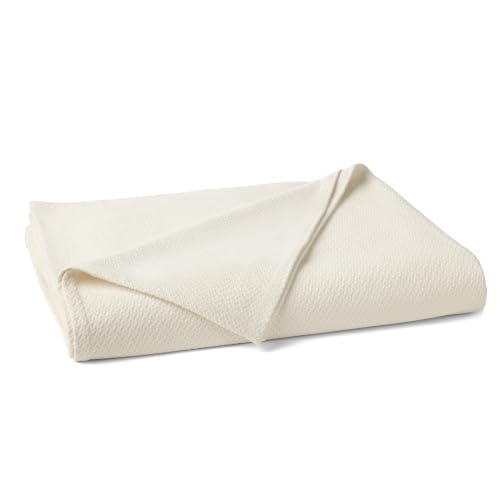
Coyuchi is a bedding specialist built around organic cotton, and its honeycomb blanket is a good first stop for a natural-fiber bed layer. The weave has a raised cell pattern that gives it a pleasant, tactile look folded at the end of a bed.
It suits shoppers who want something to live on the bed in every season: a breathable top layer when it is mild, a base under a duvet when it is cold. The neutral color range also pairs easily with linen or percale sheets.
The trade-offs are that it is a premium purchase and cotton can shrink if washed hot. Read the care tag and wash gently. It also provides less warmth than a thick wool blanket on its own.
Skip it if you want a plush, fluffy feel.
Boll and Branch Organic Cotton Waffle Blanket
Boll and Branch sells organic cotton bedding with a clean, understated look, and a waffle blanket is the kind of piece that works as a bed blanket and a sofa throw. The waffle texture holds a little air and gives the fabric a bit of grip when you pull it up.
It suits readers who want a single blanket that moves around the house, from the bed to the couch to a porch chair. The look is tailored but relaxed.
Weaknesses are typical for waffle cotton: it can feel thin on a cold night and may wrinkle after washing. Confirm the available sizes and the current product name on the listing, because lines are updated periodically.
Skip it if you need a heavy, dense winter blanket.

Under the Canopy Organic Cotton Blanket
Under the Canopy is a brand that focuses on organic and eco-conscious home textiles, and its cotton blankets are plain, woven covers meant for ordinary daily use. The designs are simple, which keeps the focus on the material.
It suits households that want a natural-fiber blanket for the guest room, the nursery-adjacent chair or the family sofa, and that prefer something easy to launder over something ornamental.
The limitation is that a simple woven blanket offers a lower-key look than a textured weave, and sizes and colors vary by listing. Compare the dimensions before you buy.
Skip it if you want a bold texture or a strong visual statement.
Bearaby Cotton Napper Weighted Blanket
Bearaby makes weighted blankets with a chunky knit structure, and the Cotton Napper is the version built around cotton. It is a thick, open knit that looks more like decor than a typical weighted blanket, and it comes in several sizes and colors.
It is intended for adults only and is not a toy or a children’s product. We make no health promises about weighted blankets, but if you simply like the feeling of a heavy knit over your legs on the sofa, this is a stylish version. Check the listing for the weights offered and choose according to the maker’s guidance.
The downsides are that knit cotton is bulky, can snag on jewelry, and needs specific washing care. It is also not the lightest choice for hot rooms.
Skip it if you want a flat, flexible blanket that folds small.
Best for the Bed
Pick the Coyuchi honeycomb blanket. It sits comfortably between sheets and a duvet, handles changes in weather, and looks smart when folded across the foot of the bed.
Keep it for the cooler half of the year and put it away clean in summer if you prefer a lighter cover.
Best for the Sofa
The Boll and Branch waffle blanket works hard in a living room. It is light enough to drape over a shoulder and neat enough to leave over the sofa arm.
Fold it loosely so the texture stays visible.
Best for Everyday Family Use
The Under the Canopy blanket is a practical choice. A simple weave is easy to wash and rotate, which is what busy households need from a blanket that gets used daily.
Best for Adults Who Like Weight
The Bearaby Cotton Napper stands apart because it is a chunky knit weighted blanket made for adult use. Follow the maker’s size and weight guidance, and keep it away from children and pets.
How to Choose an Organic Cotton Blanket
Begin with what organic means to you. Organic describes how the cotton was grown, and a reputable listing will name a recognised certification or explain the claim. If the listing does not, treat the word cautiously and look for more detail before paying extra.
Next, think about the weave. A waffle or honeycomb weave is airy and textured, a flat woven blanket is smoother and more formal, and a chunky knit is bulky and decorative. Each gives a different result, and a weave you love in a photograph might not suit your bed.
Check the size against your purpose. A bed blanket should cover the mattress with room to spare, while a sofa blanket can be much smaller. If you want something to share on a king bed, confirm the dimensions rather than trusting the size name.
Weight and warmth matter too. Cotton breathes well but usually feels cooler than wool or fleece. In a cold bedroom, you may need an extra layer, and in a warm one a thin weave may be all you want.
Check care instructions. Cotton can shrink and may need cool washes and low heat. A blanket that needs special treatment may stay in the cupboard.
Eco friendly shopping goes beyond the fiber. Look at the dye and finishing information in the listing, the packaging and whether the maker explains where the blanket is produced. These points vary and are not always stated.
Common mistakes: assuming organic means softer, ignoring size, and buying a delicate weave for a household with pets or messy kids.
Finally, buy the best you can afford for the place it will be used most, whether bed or sofa.
Organic Labels and Natural Fiber Claims Explained
Shoppers searching for eco friendly or all natural blankets will see a lot of overlapping wording. Natural fiber simply means the yarn comes from a plant or animal source, such as cotton, wool or linen. Organic is narrower and refers to how the crop is grown. Neither word tells you how soft, warm or durable a blanket will be.
When a listing makes an organic claim, look for the name of a certification body, a statement about the fabric rather than just the packaging, and a clear material line. If it only says natural, the claim is looser. That does not make the blanket poor, but it does mean you should judge it on weave and fit instead.
It also helps to separate the throw from the sheets. Organic sheets and blankets are often sold as matched sets, and mixing a textured blanket with smooth sheets keeps a bed from looking flat.
Layering Organic Cotton on a Bed or Sofa
Cotton works best as one part of a layered system. On a bed, put a smooth sheet at the bottom, a textured blanket such as a honeycomb or waffle weave in the middle, and a duvet on top when the weather turns cold. In mild months, the blanket can be the only cover.
On a sofa, a single throw is enough. Drape it over one arm so it is ready when you want it, and fold it back in thirds when you are finished. Rotating between two cotton blankets also helps them last, since each gets a rest between washes.
If your household includes pets, keep a washable cotton throw on the sofa and save the chunkier knit for use when you are sitting with it.
Safety, Labels and Use Notes
Follow the maker’s care instructions and any safety warnings. Weighted blankets are for adults, not for children, and we do not suggest any health benefit from them. Do not use one if you cannot easily move it off yourself, and follow the maker’s guidance on use.
Natural-fiber blankets can still ignite, so keep them away from heaters, candles and fireplaces. If you have a skin condition or an allergy and are worried about a fabric, check the material details and ask a qualified professional.
Claims such as organic or natural are labels made by sellers, so rely on the information shown on the live listing rather than on the product name alone.
Care and Troubleshooting
Wash organic cotton blankets gently, using a mild detergent and cool or warm water as the label says. Dry on low heat or hang to dry to limit shrinkage.
| Issue | What to try |
|---|---|
| Shrinkage after washing | Use cool water and low heat, and re-stretch while damp |
| Wrinkled weave | Tumble with a damp cloth or steam lightly |
| Snagged knit | Pull the loop through to the back instead of cutting it |
| Faint odor | Air it outside before washing |
Store cotton blankets clean and fully dry in a breathable bag.
A Short Glossary for Cotton Blanket Shoppers
Blanket listings lean on a handful of terms that sound similar but describe different things. Knowing them makes it easier to compare the blankets above without being swayed by wording alone.
- Organic cotton: cotton grown under organic farming rules. The claim describes the fiber, not how the blanket was woven or finished, so look for a named certification and read what it covers.
- Waffle weave: a woven pattern with small raised squares that gives a blanket texture and a lighter feel than a dense flat weave.
- Honeycomb: a similar raised, cellular texture, usually a little softer and more rounded in look.
- Knit: loops of yarn rather than a woven grid. Chunky knits drape heavily and have more stretch.
- Percale and sateen: terms normally used for sheets, but they sometimes appear on lighter blankets to describe a crisp or smooth surface.
- Pre-washed: the maker has already laundered the blanket once, which usually reduces further shrinking and softens the hand feel.
When a term is unfamiliar, the manufacturer’s own product page or care label is the safest place to confirm what it means for that specific blanket.
Mistakes to Avoid When Choosing Organic Cotton
Most disappointments come from a mismatch between expectation and use, not from a flaw in the blanket itself. A few patterns show up again and again.
- Assuming organic means soft on day one. Cotton often relaxes and softens after a few washes. A blanket that feels slightly crisp out of the package is not necessarily a problem.
- Ignoring the dimensions. A throw sized for a sofa will not cover a bed, and a bed blanket can overwhelm a small chair. Check the listed measurements against the surface you have in mind.
- Buying on color alone. Screen colors vary, and natural-toned cotton tends to look warmer or greyer in different light.
- Skipping the care label. Hot water and high heat can shrink cotton. Follow the maker’s washing and drying directions rather than guessing.
- Expecting one blanket to do every job. A light waffle blanket and a dense knit are built for different rooms and seasons.
If you are buying for a household with allergies or sensitive skin, treat product claims as a first pointer and rely on the maker’s documentation rather than assumptions.
Waffle Weave Against Knit: A Side-by-Side Table
Two constructions dominate this category, and choosing between them clears up most of the decision. This table describes general tendencies, so individual blankets can differ.
| Feature | Waffle or honeycomb weave | Chunky or fine knit |
|---|---|---|
| Typical weight | Light to medium | Medium to heavy |
| Texture | Raised grid, a little crisp at first | Soft loops with visible stitches |
| Drape | Flat and tidy on a bed | Slouchy, suited to a sofa |
| Snagging | Less likely to catch | Loops can catch on rough surfaces |
| Washing | Usually simple machine care | Often needs gentler handling |
| Best role | Layering on a bed | Throw or cozy accent |
If you want something you can fold neatly at the foot of a bed, the woven type is usually the more practical choice. If you want a blanket that looks relaxed draped over an armchair, a knit has the edge.
Care Notes That Keep Cotton Looking Good
Cotton is forgiving, but a little routine care helps a blanket age well. The label always takes priority over general advice, so use these notes only to fill gaps.
- Wash on the setting the label recommends, and avoid overloading the machine so the blanket can move freely.
- Use a mild detergent and skip fabric softener unless the maker says it is fine, since softener can leave a coating on natural fibers.
- Dry on the lowest suitable heat, or air dry if the label advises it, to limit shrinkage.
- Shake the blanket out and let it air between uses, particularly if it lives on a sofa.
- Store folded in a breathable bag or on a shelf rather than sealed in plastic.
Weighted designs such as the Bearaby Cotton Napper have their own washing and handling instructions because of the filling and construction, so follow the maker’s guidance for that one specifically.
A Decision Guide by Situation
Instead of searching for a single winner, match the blanket to how you will actually use it.
For a guest room
Pick something neutral and easy to wash, such as a woven blanket from the picks above. It folds flat and suits most bedding.
For a family sofa
Choose a throw-sized blanket you will not mind washing often. Texture helps hide small marks between washes.
For layering through the year
A lighter woven blanket can sit under or over a duvet depending on the season, which makes it the most flexible single purchase.
For someone who likes a weighted feel
Look at the weighted option and read the maker’s guidance on suitable sizes and who should use it. For any questions about suitability, talk to a qualified professional rather than relying on a product page.
Budget your attention for the unglamorous details too. Check whether the blanket has bound edges or a plain hem, since edges take the most wear. Look at how the maker describes shrinkage, and whether the listing gives a washed size or only the size before washing. Those small facts say more about long-term satisfaction than a single adjective in the title, and they are usually easy to find in the product description or the care tag.
It is also worth thinking about where the blanket will be stored. A bulky knit takes up shelf space, while a waffle weave folds into a slim square. If cupboard room is tight, that difference can matter as much as the look.
Once you know the room, the size, and the weight you prefer, the shortlist usually shrinks to one or two blankets, and the final choice comes down to color and how much care you are willing to give it.
Frequently Asked Questions
What does organic cotton mean?
It refers to how the cotton is grown. Look for a named certification in the listing to see what the claim covers.
Is organic cotton softer than regular cotton?
Not necessarily. Softness depends on the weave and finishing more than on how the crop was grown.
Are cotton blankets good for hot weather?
They tend to breathe well, especially in open weaves such as waffle or honeycomb. Choose a thinner weave for warm rooms.
Will an organic blanket shrink?
Cotton can shrink if washed or dried at high heat, so follow the label and use gentle settings.
Are natural fiber blankets always eco friendly?
Not always. The fiber is one part of the picture, and dyes, finishing and shipping also matter. Read the listing for specifics.
Is a weighted cotton blanket for kids?
No. The Bearaby blanket here is an adult product, so follow the maker’s guidance on use.
Bottom Line
For a bed layer that works across the year, Coyuchi’s honeycomb blanket leads, while Boll and Branch’s waffle blanket suits sofa and bed alike. Under the Canopy offers a simple family cover, and the Bearaby Cotton Napper is the adult weighted option for knit lovers. Check certifications, size and care instructions on the live listing before buying.
A Deeper Look at How to Choose Organic Cotton Blankets
Most shoppers start by comparing how an organic cotton blanket feels in the hand, but the better test is how it behaves across a whole season of ordinary use. A blanket that feels wonderful in a shop can still disappoint if it sheds, pills, traps too much heat, or comes out of the wash looking tired. As you read the picks above, keep three questions in mind: how warm do you actually sleep, how often will this blanket be washed, and where will it spend most of its time — on a bed, over a sofa, or folded at the foot of a guest bed? The honest answers narrow the list far faster than any single feature on a listing page.
Material is the first filter. Organic cotton is grown and processed without the synthetic inputs conventional cotton relies on, and in a blanket it behaves like good cotton always has: breathable, calm against sensitive skin, and cooler to the touch than any plush synthetic. It will not feel instantly lofty like fleece; its comfort builds through breathability and a clean, natural hand that many sleepers prefer across the whole year. Beyond the headline fiber, look at how the blanket is finished: the edging, the density of the weave or pile, and whether the listing describes the reverse side as the same material or something thinner. Two blankets with the same fiber name can feel quite different because of those finishing choices, and the reverse side is what actually touches your skin for much of the night.
Size deserves more thought than it usually gets. A throw is meant for one person on a sofa, while a bed blanket should drape over the sides of the mattress with enough left to tuck or fold back. If you share the bed, consider going one size up from the minimum that fits, because the person on the edge always loses the tug-of-war at three in the morning. Measure your mattress, including its depth, and compare those numbers with the dimensions on the listing rather than trusting the size name alone, since sizing conventions vary between brands.
Weight and warmth should match your room, not the season name on the label. A heated bedroom in a modern flat needs a very different blanket from a draughty older house, and a blanket that is perfect in January can be miserable in May. If you tend to sleep hot, breathability matters more than thickness; if you sleep cold, look for loft and coverage, and consider layering a lighter blanket over a sheet so you can peel back one layer instead of throwing the whole thing off.
Matching an Organic Cotton Blanket to Real Life
An organic cotton blanket rarely has just one job. The same blanket might cover a child’s reading corner in the afternoon, a film night on the sofa in the evening, and a guest bed at the weekend. Thinking through your own routines — rather than an idealised version of them — is the surest way to pick the option above that will still please you in six months. Organic cotton suits households that wash bedding often, share beds with children, or simply prefer natural fibres against the skin through every season.
Everyday family use
In a busy household the winning blanket is usually the one nobody has to think about. It survives repeated washing, it does not show every crumb and pet hair, and it is soft enough that people reach for it without checking which one it is. If children will use it for dens and picnics on the living-room floor, favour a forgiving colour and a finish that does not snag. Keep one blanket as the designated everyday workhorse and save any finer option for the bed or for guests, so the best piece is not worn out by the hardest jobs.
Guests, spare rooms and thoughtful touches
A guest blanket sends a message before a word is spoken. Freshly laundered, aired, and folded at the foot of the bed, it tells visitors they were expected and welcome. Because guests run at different temperatures, a midweight blanket layered over a sheet suits more people than one very heavy cover. If your spare room doubles as a study or storage space, choose a blanket that folds small and looks tidy on a shelf, and wash it after each stay even if it looks unused, so it always smells fresh for the next arrival.
Reading, screens and slow evenings
For sofa use, length matters more than width: a blanket that reaches from chin to toes without a gap at the ankles gets used every night, while a short one is quietly abandoned. Drape appeal counts too, because a sofa blanket is part of the room’s furniture for most of the day. Choose a colour that works with your cushions rather than against them, and store it folded over the arm or in a basket within reach, since a blanket kept in another room might as well not exist on a cold evening.
Getting the Best From Your Blanket Week After Week
Rotation is the simplest habit that extends a blanket’s life. If you own two everyday blankets, alternate them weekly so the fibres of each get time to recover their loft between uses, and so wear is spread evenly instead of concentrated on one favourite. Shake blankets out outdoors when you can; a good shake removes dust and revives pile better than another wash, and washing less often is itself a form of care.
Layering is a skill worth learning. A sheet between you and the blanket keeps body oils away from the fibres and means the blanket needs washing far less often. In colder months, putting a lighter blanket under a heavier one traps air in the gap and often feels warmer than a single thick layer, while in spring you can drop the top layer and keep the familiar feel of the lighter one. Smooth the bed properly each morning and fold the blanket back for an hour before remaking it, which lets overnight moisture escape instead of staying trapped in the fibres.
Pay attention to how the blanket behaves with the rest of your bedding. Cotton layers beautifully: over a sheet in summer it may be all you need, and under a duvet in winter it adds a breathable middle layer that stops the duvet feeling clammy against the skin. Small frictions like these decide whether a blanket becomes a quiet favourite or a nightly annoyance, and they are almost impossible to judge from a product photograph, so give a new blanket a fair trial across several nights and sleep setups before you judge it.
Care, Washing and Storage in More Detail
Always start with the care label on the blanket itself, because it overrides any general advice, including this guide. Wash cotton in cool to warm water with a mild detergent, and avoid bleach and heavy softeners that coat the fibres and blunt absorbency. Cotton can shrink a little in early washes, especially if dried hot, so dry on a moderate setting or on the line and fold it while it is fully dry to keep it fresh in storage. As a rule, wash blankets separately or with similar colours and textures, close any fastenings on duvet covers they travel with, and avoid overloading the machine: a blanket that cannot move freely in the drum neither washes nor rinses properly, and detergent residue left behind is a common cause of stiffness and dullness.
Drying deserves the same care as washing. Where the label allows tumble drying, use a gentle, cooler setting and take the blanket out while it is very slightly damp, then drape it over a rail or several chairs to finish; this reduces shrinkage, static and heat damage, and keeps edges from curling. Line drying in moving air is kinder still for most fibres. Never store a blanket that is even slightly damp, because trapped moisture invites musty smells and mildew that are far harder to remove than ordinary dirt.
Storage between seasons should be clean, dry and unhurried. Wash or air the blanket first, fold it loosely rather than compressing it hard, and keep it in a breathable bag or on a shelf away from direct sunlight, which fades colours and weakens fibres over time. Cedar or lavender sachets nearby can help deter moths for natural fibres, but they are no substitute for starting with a clean blanket, since moths are drawn to the food residues and body oils left in unwashed fabric. When the season turns, a few hours of airing on a line refreshes a stored blanket better than an unnecessary wash.
Small repairs done early prevent big disappointments. Snip loose threads rather than pulling them, mend a small tear before it reaches the wash, and deal with spills at once by blotting — never rubbing — from the outside of the mark towards the centre so it does not spread. Treat a stain before washing, because heat and a full wash cycle can set many marks permanently. A blanket that is looked after this way keeps its softness and colour for years rather than months.
How the Picks in This Guide Compare With Each Other
Readers often ask how the options in this guide differ in practice, since several share similar descriptions. The honest answer is that they differ in emphasis rather than in kind: each pick above leans towards a particular mix of softness, warmth, easy care and value, and the review notes for each one say where its strength lies. Use the comparison below as a way of thinking, then confirm the details that matter to you on the listing before you order.
Take the first pick, the Coyuchi Honeycomb Organic Cotton Blanket, as the reference point: it represents the balance this guide recommends for the widest range of buyers. Measure every other option against it by asking what you gain and what you give up.
The Boll and Branch Organic Cotton Waffle Blanket suits buyers whose priorities differ slightly — perhaps a different feel against the skin, a different weight for the season, or a look that fits their room better. Neither is simply better; they answer slightly different briefs. If you are torn between two, decide by your washing routine and your sleeping temperature, the two factors that shape daily satisfaction most.
Options such as the Under the Canopy Organic Cotton Blanket show the range within this category: some lean towards plush comfort, others towards lighter, easier handling. A useful exercise is to rank the picks by the one quality you care about most, then by price-independent practicalities like size and care, and see which name survives both rankings. That shortlist of one or two is where your final decision should live.
Whichever you choose, check the returns terms before ordering and keep the packaging until you have slept under the blanket for a few nights. First impressions of softness are easy; judging warmth across a whole night, and how a blanket behaves after its first wash, takes a little longer and is the test that actually predicts whether you will still be pleased next winter.
Common Blanket Mistakes and How to Avoid Them
The most common mistake is buying for the coldest night of the year. A blanket chosen for a rare frost will spend most of its life pushed to the foot of the bed, while a midweight option layered with a sheet or a second blanket covers the frost and everything else. Buy for your typical night, and solve the extremes with layers you already own.
The second mistake is ignoring the wash until something goes wrong. Hot water, harsh detergent, fabric softener build-up and an overfilled drum between them account for most of the pilling, stiffness and fading people blame on the blanket itself. Follow the label, wash cooler and gentler than your instincts suggest, and skip softener unless the maker recommends it, since softener coats fibres and can dull exactly the softness you paid for.
Third, shoppers often judge size by the name alone. Twin, double, queen and king blankets are not cut to one universal pattern, and a blanket that barely reaches the mattress edges will ride up and leave cold gaps. Compare the printed dimensions with your mattress, allow for drape on both sides, and remember that natural fibres in particular can relax or shrink slightly with washing, so a little generosity at the start is cheap insurance.
Finally, many people keep one blanket far past its best and blame their sleep instead. A blanket that has gone thin, lumpy or rough no longer insulates evenly, and no amount of careful washing will restore lost loft. When the fibres are tired, retire the blanket to pet beds, car boots or picnic duty, where its remaining life is still useful, and let its replacement do the nightly job properly.
More Questions Buyers Ask
How long should a good blanket last?
With sensible rotation and label-guided washing, an everyday blanket should give several years of comfortable service. Lifespan depends less on the purchase price than on how it is washed and stored: gentle cycles, thorough drying and clean, loose storage all add seasons of use, while hot washes and damp cupboards shorten life quickly.
Should I wash a new blanket before first use?
Yes, in almost every case. A first gentle wash removes loose fibres and finishing residues from manufacture and packing, softens the hand of the fabric, and gives you an early look at how the blanket behaves in your machine. Follow the care label for that first wash just as you would for later ones.
Why does my blanket feel less soft after washing?
Detergent residue, hard water and heat are the usual causes. Try a cooler, gentler cycle, use a little less detergent, add an extra rinse if your machine offers one, and dry on a lower heat or on the line. Softness lost to residue often returns after one careful wash; softness lost to heat damage does not, which is why prevention matters.
Can one blanket work all year round?
For many homes, yes, if you layer intelligently. A breathable midweight blanket over a sheet suits most of the year; add a second layer or a duvet for the coldest weeks and fold the blanket back in summer. Homes with strong heating or no heating at all are the exceptions, where a dedicated summer and winter pair is more comfortable.
How do I stop a blanket slipping off the bed?
Slipping usually comes from a smooth sheet paired with a smooth blanket and a restless sleeper. A cotton sheet with more texture, tucking the foot of the blanket under the mattress, or using the blanket as a middle layer under a duvet all help. Check too that the blanket is large enough; undersized blankets migrate far more than generous ones.
Is it better to buy one premium blanket or two everyday ones?
Two everyday blankets that you rotate will usually outlast and out-perform one premium blanket used every single night, because rotation rests the fibres and halves the washing pressure on each. Buy the premium option for the bed you care most about if you wish, but for family and guest use, a sensible pair in rotation is the practical choice.
How should I choose a blanket colour?
Choose for the room it will live in and the life it will lead. Mid-tones and heathered finishes hide everyday marks and pet hair far better than solid white or very dark shades, while a colour that echoes your cushions or curtains makes a sofa blanket look intentional rather than accidental. For a bed, remember you will see it folded back daily, so pick a shade you enjoy in daylight as well as lamplight.
What should I check when the blanket arrives?
Unfold it fully, check both sides and all edges for flaws, confirm the size against the listing, and note the care label before the first wash. Sleep under it for a few nights before removing tags where the seller’s terms require them, and keep the packaging until you are sure about warmth and size, since those are the qualities you can only judge in use.
Ownership Notes: The First Season With It
The first season with a new blanket tells you where it truly belongs in the house. Notice which room it migrates to, whether it is the one reached for on the coldest nights or the one handed to guests, and how it comes out of its first few washes, because those early washes predict the next fifty. If a blanket pills or stiffens early, gentler washing usually arrests it; if it stays soft and flat and easy, you have found a workhorse and it is worth buying its twin while the same version is available. Households that pay attention in this first season end up with blankets matched to jobs, rather than a cupboard of near-duplicates all failing at the same task.
Troubleshooting: When a Blanket Disappoints
Most blanket complaints are washing complaints in disguise. A blanket that has gone rough or flat has usually been dried too hot, washed with too much detergent, or spun and stored while still holding moisture at its centre; one careful, cooler wash with less detergent and a thorough, patient dry will often restore more than you expect. Shedding that continues past the first few washes points to friction — a rough load washed alongside it, an overfilled drum, or constant use as a play surface — so wash it alone or with its own kind and give it a rest in rotation. Static that crackles through winter is a room problem as much as a fabric one: drier indoor air makes every synthetic fibre theatrical, and a little humidity calms the whole bed.
Warmth disappointments deserve a different diagnosis. A blanket that feels cold is often not too thin but too compressed, too small, or layered in the wrong order, with the warm layer trapped under a heavy one that flattens it. Rebuild the bed with the lofty layer where it can trap air, tuck the edges, and give the arrangement three nights before judging it, because bodies take a few nights to report honestly on a new sleep setup. And if a blanket smells musty despite washing, the cause is almost always incomplete drying somewhere in its past; a full sunny day on the line, turned hourly, achieves what another perfumed wash cannot.
From Shortlist to Checkout: A Practical Walkthrough
Once the reviews have narrowed your choice to two or three blankets, decide the remaining questions in a fixed order. First, size: measure the bed or sofa, add drape, and compare with the printed dimensions rather than the size name. Second, care: read the label summary on the listing and ask honestly whether your household will follow it, because the finest blanket in this guide will fail in a home that washes everything hot. Third, colour and finish, judged in your room’s light and against your existing bedding, not against a studio photograph. Fourth, quantity: for everyday and guest use, two sensible blankets in rotation beat one precious blanket worked to death.
When the blanket arrives, wash it as the label directs, sleep under it for several nights, and only then decide whether it has earned its place or should go back while returns are easy. Note how it washed, because that first cycle is the strongest evidence you will get about the next hundred. Bought this way, a blanket stops being a hopeful guess about softness and becomes a known quantity in the house — the one you reach for without thinking, which is the highest praise bedding ever earns.