Disclosure: As an Amazon Associate, airfryerkitchensupply.com earns from qualifying purchases. Prices and availability change; check Amazon for the latest.
Gaggia is an Italian espresso brand with a long history in home machines, and its range splits into two camps. One camp is the manual, commercial-style machines such as the Classic, where you grind, dose, tamp and steam yourself. The other is the super-automatic range, where the machine grinds, brews and in some models froths milk at the touch of a button.
The six machines below cover both camps so you can match the style to your routine. We have not used these machines ourselves, and Gaggia revises its lineup from time to time, so model names, colors and included accessories can differ between listings. Confirm the details on the current listing before you buy, especially for features such as the milk system and the water tank.
As an Amazon Associate we earn from qualifying purchases. Links below are affiliate links, and they do not change the product information we give.
In this guide
Quick Picks
- Gaggia Classic Pro
- Gaggia Classic Evo Pro
- Gaggia Brera
- Gaggia Anima Prestige
- Gaggia Cadorna Prestige
- Gaggia Velasca Prestige
What to Look For
| Feature | Why it matters |
|---|---|
| Manual or super-automatic | Manual machines reward skill; super-automatics trade control for speed |
| Grinder | Manual machines need a separate grinder; super-automatics have one built in |
| Milk system | A steam wand needs practice; an automatic frother or carafe is easier |
| Portafilter | Commercial-style portafilters accept a wide range of baskets and accessories |
| Cleaning | Removable brew groups and drip trays make daily upkeep easier |
| Footprint | Compare width and height with your counter and cabinets |
The biggest decision is control versus convenience. A manual machine can make excellent espresso but asks for time and a separate grinder. A super-automatic makes consistent drinks quickly but offers fewer ways to tune the shot.
Specs at a Glance
| Machine | Type | Grinder | Notes |
|---|---|---|---|
| Gaggia Classic Pro | Manual semi-automatic | None; needs a separate grinder | Commercial-style portafilter; steam wand |
| Gaggia Classic Evo Pro | Manual semi-automatic | None; needs a separate grinder | Updated Classic; confirm changes |
| Gaggia Brera | Super-automatic | Built-in burr grinder | Compact; steam wand for milk |
| Gaggia Anima Prestige | Super-automatic | Built-in burr grinder | Automatic milk option; display controls |
| Gaggia Cadorna Prestige | Super-automatic | Built-in burr grinder | Display and milk system; confirm details |
| Gaggia Velasca Prestige | Super-automatic | Built-in burr grinder | Touch display; confirm details |
The 6 Best Gaggia Espresso Machines

Top pickBest for learners who want hands-on control
1. Gaggia Classic Pro
The Classic Pro is the machine most people mean when they talk about Gaggia in the home-barista world. It is a manual, semi-automatic espresso machine with a commercial-style portafilter, a metal-bodied look and a steam wand for milk. It has a long-running reputation as a platform people learn on and modify.
It suits someone who wants to learn proper espresso technique and is happy to buy or already own a separate grinder. On the listing, check the colors offered, what basket and accessories come in the box, and whether the portafilter is the pressurized or standard style, since that affects how forgiving it is.
The fair trade-off is that it has no built-in grinder and no automation. A poor grinder will limit results more than the machine does, so budget for a decent one alongside it.
Suits: learners who want hands-on control. Strengths: classic design, steam wand, strong following. Weaknesses: needs a separate grinder and practice. Skip it if you want one-touch drinks.


Best for fans of the Classic who want the newer version
2. Gaggia Classic Evo Pro
The Classic Evo Pro is an updated version of the Classic family. It follows the same manual, commercial-style formula, with refinements the maker describes as improving the build and daily use. It keeps the steam wand and the straightforward switch-driven operation that fans of the Classic enjoy.
It suits buyers who want the Classic experience in its current form. Because Gaggia sells several Classic variants, read the listing closely so that you know exactly which one you are buying and what changed compared with the Classic Pro.
The trade-off is that the differences from the older Classic can be modest for everyday use. If both are available and the features you care about match, the decision may come down to availability and seller rather than anything dramatic.
Suits: fans of the Classic who want the newer version. Strengths: familiar workflow with updates. Weaknesses: still needs a grinder and skill. Skip it if the older Classic Pro already does what you need.

Best for small spaces and quick drinks
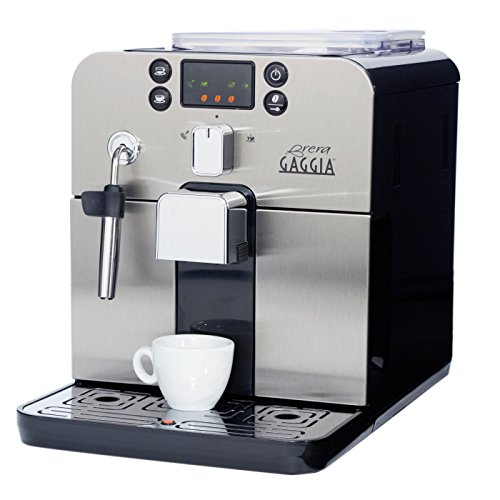
3. Gaggia Brera
The Brera is a compact super-automatic machine with a built-in burr grinder. You choose your drink and the machine grinds, tamps and brews on its own. For milk drinks it has a steam wand, so you still do the frothing by hand unless you prefer plain espresso or black coffee.
It suits small kitchens and anyone who wants fresh-ground coffee without the learning curve of a manual machine. On the listing, check the dimensions, the water tank and bean hopper sizes, and how the brew group is removed for cleaning.
The trade-off is that super-automatics offer less control over the shot. You can adjust strength and size, but you cannot tweak the process the way you can on a manual machine, and the drinks are closer to strong coffee than to a dialed-in espresso for some tastes.
Suits: small spaces and quick drinks. Strengths: compact, built-in grinder. Weaknesses: limited shot control. Skip it if you want to dial in your own espresso.
Best for households that want one-touch milk drinks
4. Gaggia Anima Prestige
The Anima Prestige is a super-automatic machine with a built-in grinder and an automatic milk option for drinks such as cappuccino and latte. It adds a display for selecting drinks, which makes it easier for several household members to use without guidance.
It suits households that want a range of milk drinks without learning to steam by hand. On the listing, confirm how the milk system works, whether it uses a carafe, how it is cleaned, and which drink presets are included.
The fair trade-off is the cleaning routine. Automatic milk systems need to be rinsed or cleaned regularly, and neglecting them is the fastest way to get off flavors. Build the habit of cleaning after milk drinks.
Suits: households that want one-touch milk drinks. Strengths: display controls, automatic milk option. Weaknesses: milk system needs regular cleaning. Skip it if you prefer manual steaming.
View Gaggia Anima Prestige on Amazon
Best for busy households with varied tastes
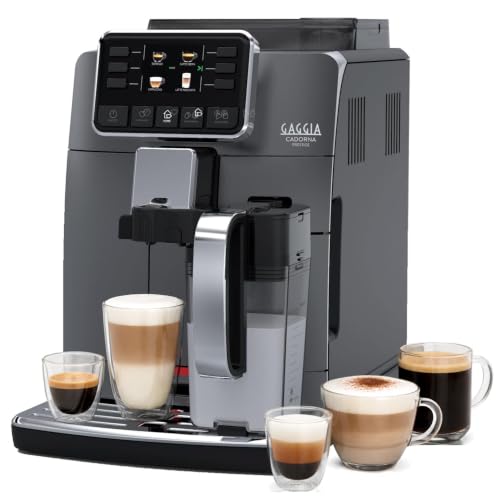
5. Gaggia Cadorna Prestige
The Cadorna Prestige sits in the upper part of Gaggia’s super-automatic range, with a built-in grinder, a display and an automatic milk system for one-touch drinks. It is aimed at people who want a wider choice of drinks and more customization of strength and quantity.
It suits households where several people have different drink preferences, since the controls let each person pick a drink without much fuss. Check the listing for the milk system details, the supported drink list and the size of the water tank and bean hopper.
The trade-off is the same as with any automatic machine: more parts, more cleaning and less hands-on control. It is a convenience machine, so judge it on convenience and consistency rather than on how much you can tinker with each shot.
Suits: busy households with varied tastes. Strengths: broader drink choice, automatic milk. Weaknesses: more cleaning, less control. Skip it if you want manual espresso.
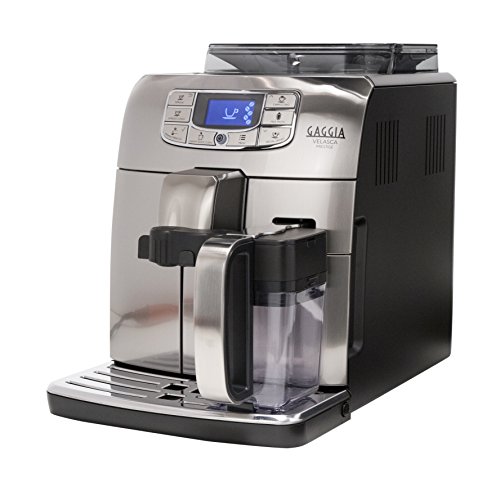
Best for screen-friendly users who want easy drinks
6. Gaggia Velasca Prestige
The Velasca Prestige is a super-automatic machine with a touch display and a built-in grinder, with an automatic milk option for cappuccino and latte style drinks. It is designed to be approachable, with menus that guide you through selecting a drink.
It suits people who like on-screen controls and want quick, repeatable drinks. Because model details vary between releases, confirm the feature list on the current listing, including the milk system, the number of drink presets and what accessories come in the box.
The trade-off is that touch displays and automatic milk systems add complexity. If you value a simple, repairable machine and enjoy the hands-on side of espresso, a manual Classic is a better fit than any of the Prestige models.
Suits: screen-friendly users who want easy drinks. Strengths: touch display, automatic milk. Weaknesses: details vary, more electronics. Skip it if you want a simple manual machine.

Manual Versus Super-Automatic
The most important decision with Gaggia is which family to buy from. The Classic machines are manual. You choose your own grinder, dose and tamp the coffee, and decide when to stop the shot. That means more skill and more gear, but also more control and the potential for better espresso over time.
The Brera, Anima, Cadorna and Velasca are super-automatic. They grind, tamp and brew for you, and some froth milk too. They are faster and more consistent for daily use, but you give up the ability to fine-tune extraction, and their drinks can taste different from classic espresso.
Be honest about your patience. A manual machine used rarely becomes an expensive ornament, while an automatic machine used daily earns its keep. Choose the style that you will actually use on a busy weekday morning.
Choosing a Grinder for a Classic
If you buy a Classic, the grinder matters as much as the machine. Espresso needs a fine, even grind that can be adjusted in small steps. A basic blade grinder will not do, and a weak burr grinder will limit what the machine can achieve. Many people spend as much on a good grinder as on the espresso machine itself.
Look for a burr grinder with fine adjustment and a design that suits espresso rather than only drip coffee. Check that its adjustment range reaches the fine settings you will need. Also consider a scale, a tamper that fits the portafilter basket, and a distribution tool if you enjoy details.
Check the basket size and portafilter type in the listing so that accessories you buy fit. Dimensions vary by version, so confirm them before ordering tampers or baskets.
Milk Systems Compared
Gaggia machines use two main approaches to milk. A steam wand, found on the Classic and Brera, gives you full control of the texture but demands technique. You hold a pitcher, introduce a little air, then spin the milk into a smooth, glossy texture. It is rewarding and flexible, but it takes practice.
Automatic milk systems, found on the Prestige models, draw milk from a container and froth it for you. They are quick and consistent, but they have more parts to clean. Most need a rinse after each use, and a deeper clean on a regular schedule according to the manual.
If you drink mostly black coffee, the milk system matters less. If you make milk drinks daily, choose the approach you will keep clean. A neglected automatic frother is worse than a steam wand you wipe every time.
Care and Maintenance
- Descale on the schedule given in the manual, and use filtered water in hard-water areas.
- Rinse the drip tray and water tank regularly.
- Wipe the steam wand straight after every use and purge it briefly.
- On super-automatics, remove and rinse the brew group as the manual directs.
- Run any cleaning cycle the machine offers, using only products the maker allows.
- Store beans in an airtight container and avoid very oily beans if the manual advises against them.
Mistakes to Avoid
- Buying a Classic without planning for a separate grinder.
- Choosing an automatic machine and expecting full manual control.
- Skipping descaling and cleaning cycles.
- Leaving milk in an automatic system overnight.
- Not checking that accessories fit your portafilter or model.
Manual or Automatic: Which Gaggia Style Fits You
Gaggia machines range from traditional manual espresso machines to fully automatic ones. The manual style gives you direct control over grinding, tamping and timing, and it rewards practice. The automatic style grinds and brews at a button press, trading control for convenience. Neither is better; they suit different people and different mornings.
| Question | Manual machine | Automatic machine |
|---|---|---|
| Effort per cup | Higher; grind, tamp, pull shot | Lower; press a button |
| Learning curve | Steeper | Gentle |
| Control | Fine control of dose and timing | Preset programs with some adjustments |
| Grinder | Usually a separate grinder | Often built in |
| Cleaning | Portafilter and group head | Internal brew unit and drip tray |
Think about your tolerance for fiddling. If you enjoy the process and want to explore espresso in depth, a manual machine can be satisfying. If you want a good cup with little work, an automatic is a more practical choice.
What You Need Beyond the Machine
A manual espresso machine does not work alone. The grinder is as important as the machine, because freshly ground, consistent coffee makes a big difference. You also need a tamper, a scale, a milk jug if you steam milk and a knock box for used grounds. Plan for these items when you think about the total setup.
- A burr grinder that can adjust finely for espresso.
- A scale to weigh dose and output.
- A tamper that fits the basket.
- A steaming pitcher and a thermometer, if you make milk drinks.
- Cleaning tools and a descaling product recommended by the maker.
Check which accessories come with the machine and which are sold separately. Basket sizes and filter types vary, so confirm compatibility with the exact model.
Steaming Milk Without Frustration
Steam wands reward patience. Purge the wand before and after use, position the tip just below the surface of the milk to introduce air, then lower it to swirl and heat. Use cold milk and a cold pitcher for best results, and stop before the milk is too hot. Wipe the wand immediately after each use to stop milk baking onto it.
- Fill the pitcher to the point the maker or your barista guide suggests.
- Purge the wand to clear water.
- Introduce air briefly, then submerge the tip to create a whirlpool.
- Stop heating at a comfortable drinking temperature.
- Wipe and purge the wand again.
Maintenance, Descaling and Water
Espresso machines need regular care to stay at their best. Backflush the group head or clean the brew unit as the manual directs, descale on the schedule the maker gives, and replace water filters when recommended. Use fresh water and consider a filter if your tap water is hard. Empty the drip tray often, and wipe the exterior with a soft cloth.
Follow the maker’s guidance on cleaning chemicals and never mix them. If the machine leaks, loses pressure or produces odd noises, stop and contact the maker or an authorized service point. Do not open the casing yourself, since it contains hot water and electrical parts.
Placement and Kitchen Setup
Place the machine on a stable, level, heat-resistant surface, with space around it for ventilation and for opening the lid or water tank. Keep the cord away from hot surfaces and use a wall outlet directly. Leave room for the grinder and a tray for accessories. A tidy coffee station makes the routine pleasant, and a small mat under the machine catches drips and protects the counter.
Understanding Pressure, Temperature and What They Do to a Shot
Espresso is a combination of pressure, temperature, grind and time. Machines list a maximum pump pressure, but what matters is the pressure at the coffee, which many machines regulate. Water temperature affects flavor: too hot can taste bitter, and too cool can taste sour. Temperature stability from shot to shot is a sign of a well-made machine, and some models let you adjust it. You do not need to master every variable at once. Change one thing at a time and taste the result.
- If the shot runs too fast and tastes sour, try a finer grind or a slightly larger dose.
- If the shot runs too slowly and tastes bitter, try a coarser grind or a smaller dose.
- Keep the water temperature steady by running a short purge before brewing, if the maker suggests it.
- Use fresh beans, as stale beans make results unpredictable.
Keep a notebook with the beans, the grind setting, the dose and the time. Over a few weeks you will learn what your machine and your beans like.
Warm-Up Time, Cups and Everyday Routine
Espresso machines need time to heat, and the portafilter, group head and cups benefit from warming. Many users switch the machine on a little before they want a drink, and keep cups on top where warmth from the machine reaches them. Rinse the group head briefly before inserting the portafilter. After brewing, knock out the used coffee, rinse the basket and wipe the group head. This routine takes a minute or two, and it keeps flavors clean from one shot to the next.
If you make many drinks in a row, give the machine time to recover between milk drinks. Follow the maker’s advice about the interval, since steam and brewing may use the same heating system.
Going Deeper: Judging a Gaggia Espresso Machine by Your Real Routine
The reviews above describe each pick on its own terms. This section steps back to the judgements underneath them, with particular attention to the differences between manual and automated espresso making in the Gaggia range. Work through these points honestly and the shortlist usually narrows itself, because most appliance disappointment is not about quality — it is about a mismatch between a machine’s habits and a household’s habits.
Placement first: where it will actually live
Before comparing any features, decide where this Gaggia espresso machine will live and work. Measure the space it must fit, including room to open, lift, pour, load or clean whatever it handles, and the clearance the maker asks for around it. Think about what is nearby: water, sockets, storage for its accessories, and the surfaces it will share a counter or a room with. A machine that fits its place gracefully gets used daily; one that must be dragged out, assembled and put away for every use quietly stops being used at all, whatever its abilities. Several picks above differ mainly in footprint and format, and for many households that difference, not performance, is the decision.
Controls and the learning curve you will actually climb
Every appliance asks you to learn something: a control layout, a sequence, a set of presets, an app, or simply the timing that turns out right in your kitchen or your routine. Be honest about how much learning your household will enjoy. Some people delight in dialling in a process; others want two buttons and predictability, and both are right. The reviews above indicate where each pick sits on that spectrum. Remember that other people will use this machine too — a partner in a hurry, a teenager, a guest — and a control scheme that only its owner understands is a hidden cost that shows up on busy mornings.
Capacity and size, translated into your portions and your people
Capacity claims only mean something when translated into your servings, your pans, your loads or your group size. Think about your largest regular job, not your largest imaginable one: buying for a rare feast burdens every ordinary day with a bigger machine, more washing up and more storage. Equally, a machine that handles your everyday job only in multiple batches teaches you to dread it. Use the descriptions in the reviews above to picture your own typical load inside each pick, and prefer the size that swallows the typical load whole with a little room to spare — that little room is where ease lives.
The grinder question, honestly answered
Espresso lives or dies on ground coffee, so the grinder arrangement is the first real fork in this range. Machines with a built-in grinder, as described in the reviews above, offer a compact, integrated routine and one learning curve; machines without one ask you to bring a separate grinder, which adds cost and counter space but lets you upgrade or replace that half independently. Neither answer is wrong. What is wrong is underestimating the grinder’s role: stale or unevenly ground coffee will limit any machine, however capable, while fresh, well-ground Gaggia espresso rewards even a modest machine. Decide this question first and the shortlist above reorganises itself.
Milk: how much of your drinking is milk-based?
Be honest about your actual drinks. If your household drinks mostly straight espresso or black coffee, milk capability is a pleasant extra and should not drive the choice. If lattes, cappuccinos and flat whites are the daily point, then the steam arrangement described for each pick — manual wand, assisted frothing, or automatic milk systems on the more automated models — becomes a central criterion, because you will perform that routine hundreds of times. Manual milk work is a skill that improves with practice and gives control; automated systems trade some control for consistency and speed on busy mornings. Match the machine to the drinks you really make, not the drinks you imagine making for guests twice a year.
Learning curve and the first month
Every machine in this guide can make good espresso, but they distribute the learning differently. More manual machines teach you the craft — dose, grind, tamp, timing — and reward that learning with control; more automated machines absorb decisions for you and reward you with repeatability. The honest question is which kind of first month you will enjoy. If dialling in sounds like a hobby, lean manual; if it sounds like homework standing between you and coffee, lean automated, and do not let anyone shame you out of that choice. The best Gaggia machine for you is the one still in daily use in month six.
Cleaning: the feature that decides year two
Ask, for each pick, what cleaning actually involves after a normal use — not a showroom use. Which parts come off, which go in a dishwasher or must be hand-washed, which corners trap residue, and what the maker says about descaling, filters or deep cleans. Then imagine doing it on a tired evening. A Gaggia espresso machine whose cleaning you accept will be cleaned often and will perform as described for years; one whose cleaning you resent will be cleaned late, and its performance and hygiene will drift. This is the least glamorous criterion in the guide and, in our judgement, the most predictive of long-term satisfaction.
Noise, heat and the small frictions of daily use
Appliances share your home’s air and hours. A machine used early in the morning, in an open-plan room, or while someone works nearby needs manners as well as power: tolerable noise, no alarming smells, controls that do not demand full attention, and a finish that does not show every fingerprint and splash. These frictions are rarely decisive alone, but they accumulate daily, and they are exactly what owners mention when they say a machine is fine but somehow annoying. The reviews above flag the character of each pick; trust those flags, because you will live with the character long after you have forgotten the feature list.
A Gaggia Espresso Machine in Everyday Life: Scenarios That Settle the Choice
The weekday morning, against the clock
A weekday morning tests workflow, not peak quality: how the machine warms up and is ready, how many steps stand between you and a finished cup, how much mess the routine makes, and how forgiving the process is when performed half-awake. Walk each pick above through your real morning in your imagination, including grinding, tamping or pod-equivalent steps, milk if it is a milk morning, and the rinse or wipe that follows. The machine whose routine fits inside your morning without stress is the right machine, even if another could, in expert hands on a Sunday, produce a marginally finer cup.
The unhurried weekend drink
Weekends are where espresso machines earn their affection: a slower drink, perhaps a second one, perhaps an experiment with a new coffee or a practised attempt at better milk texture. This scenario favours machines that invite involvement — accessible controls, satisfying manual steps, room to improve. If your coffee life is mostly weekend ritual, weight the reviews toward the picks that reward participation, and treat weekday speed as secondary. Many households, of course, live both scenarios, which is exactly why the mid-range picks in a range like this one so often prove to be the sweet spot.
Drinks for guests, back to back
Making several drinks in a row exposes a machine’s rhythm: how it handles repetition, how milk work queues behind shots, how much clearing and refilling interrupts the flow, and how the counter looks afterwards. If you regularly make drinks for a table of people, favour the picks whose reviews describe a workflow that stays calm under repetition, and plan your station — cups, milk, cloth, a place for used grounds — before guests arrive. A practiced, unhurried host with a modest machine will always out-serve a flustered one with a flagship.
The second coffee of the day, and the decaf question
Many households discover a second pattern after purchase: an afternoon drink, sometimes decaf, sometimes for a different drinker with different taste. Machines and routines differ in how gracefully they switch coffees — changing beans, using pre-ground coffee where a model allows it as described above, or keeping a second routine simple. If two drinkers with different habits will share this machine, read the reviews with both people’s drinks in mind, because a machine chosen for one person’s perfect morning can quietly frustrate the other’s afternoon.
Living With It: Setup, Care and Troubleshooting in Detail
When the machine arrives, resist the first use for the length of one careful read: the maker’s setup instructions exist because the first run often involves a cleaning cycle, a priming step, a part fitted in a particular order, or packaging hidden in a place you would not think to look. Set it up in its real home, not on a temporary surface, and run its simplest job first so you learn its sounds, smells and signals while nothing important depends on the result. Keep the box and packaging until that first successful use is behind you; returning or exchanging any appliance is dramatically easier with its packaging intact.
Espresso machines ask for a small, regular care rhythm and repay it directly in the cup. Wipe the steam wand immediately after every milk use, before residue dries; knock out and rinse the basket and portafilter or brew unit parts as the maker directs; empty and rinse drip trays and grounds containers before they announce themselves. Water is the long game: follow the maker’s guidance on filtering and descaling for your model and your water, because scale builds silently and changes both flavour and machine health. Backflushing, group cleaning and seal care should follow the manual for your specific Gaggia model rather than generic internet schedules — the machines in this range differ in what they need, and the manual knows which one you own.
Build cleaning into the use itself rather than treating it as a separate chore: the rinse, wipe or emptying done in the minute after use is almost always easier than the same job done dried-on, cooled-down or forgotten tomorrow. Keep the few cleaning things the maker recommends within reach of where the machine lives, because a brush or cloth stored in another room is a brush that will not be used. And keep the manual findable — a photo of its key pages on your phone is enough — because error signals, cleaning reminders and part names are all far easier to deal with in the maker’s own words than by guesswork and forums.
When something goes wrong, troubleshoot in a calm order before assuming the worst. Check the obvious physical things first: power, water, doors or lids properly closed, parts seated correctly, filters or reservoirs due for attention, and the settings you actually selected rather than the ones you meant to select. Then consult the manual’s troubleshooting section for that exact symptom, because most faults in most appliances are known, named and fixable at home. If a problem involves damage, burning smells, leaking where leaking should never happen, or anything electrical misbehaving, stop using the machine and contact the maker or a qualified professional — that boundary is not caution for its own sake, it is where home troubleshooting properly ends.
The Picks in This Guide, Compared in Plain Language
Comparison tables are useful, but they compress a lot. What follows restates, pick by pick, the role each option in this guide was chosen for, using only the positioning already given in the reviews and the comparison table above. Read it as a shortlist-narrowing exercise: find the description that sounds most like your household and your habits, then go back and re-read that product’s full review with fresh eyes. If two picks both sound right, the deciding factor is usually not a headline feature but a small everyday detail — how a Gaggia espresso machine is cleaned, where it will live, or who else will use it.
Gaggia Classic Pro. In the guide above, this pick is presented as the choice for manual semi-automatic, with the main point being none; needs a separate grinder. That positioning matters more than any single feature. If that description matches the way you actually live — the room, the people, the routine — then the compromises noted in its review are the ones you are most likely to accept happily. If it does not match, a nominally stronger pick on paper will still feel like the wrong purchase a month later, so let the fit with your routine lead and the feature list follow.
Gaggia Classic Evo Pro. In the guide above, this pick is presented as the choice for manual semi-automatic, with the main point being none; needs a separate grinder. That positioning matters more than any single feature. If that description matches the way you actually live — the room, the people, the routine — then the compromises noted in its review are the ones you are most likely to accept happily. If it does not match, a nominally stronger pick on paper will still feel like the wrong purchase a month later, so let the fit with your routine lead and the feature list follow.
Gaggia Brera. In the guide above, this pick is presented as the choice for super-automatic, with the main point being built-in burr grinder. That positioning matters more than any single feature. If that description matches the way you actually live — the room, the people, the routine — then the compromises noted in its review are the ones you are most likely to accept happily. If it does not match, a nominally stronger pick on paper will still feel like the wrong purchase a month later, so let the fit with your routine lead and the feature list follow.
Gaggia Anima Prestige. In the guide above, this pick is presented as the choice for super-automatic, with the main point being built-in burr grinder. That positioning matters more than any single feature. If that description matches the way you actually live — the room, the people, the routine — then the compromises noted in its review are the ones you are most likely to accept happily. If it does not match, a nominally stronger pick on paper will still feel like the wrong purchase a month later, so let the fit with your routine lead and the feature list follow.
Gaggia Cadorna Prestige. In the guide above, this pick is presented as the choice for super-automatic, with the main point being built-in burr grinder. That positioning matters more than any single feature. If that description matches the way you actually live — the room, the people, the routine — then the compromises noted in its review are the ones you are most likely to accept happily. If it does not match, a nominally stronger pick on paper will still feel like the wrong purchase a month later, so let the fit with your routine lead and the feature list follow.
Gaggia Velasca Prestige. In the guide above, this pick is presented as the choice for super-automatic, with the main point being built-in burr grinder. That positioning matters more than any single feature. If that description matches the way you actually live — the room, the people, the routine — then the compromises noted in its review are the ones you are most likely to accept happily. If it does not match, a nominally stronger pick on paper will still feel like the wrong purchase a month later, so let the fit with your routine lead and the feature list follow.
Effort per cup. In the guide above, this pick is presented as the choice for higher; grind, tamp, pull shot, with the main point being lower; press a button. That positioning matters more than any single feature. If that description matches the way you actually live — the room, the people, the routine — then the compromises noted in its review are the ones you are most likely to accept happily. If it does not match, a nominally stronger pick on paper will still feel like the wrong purchase a month later, so let the fit with your routine lead and the feature list follow.
Learning curve. In the guide above, this pick is presented as the choice for steeper, with the main point being gentle. That positioning matters more than any single feature. If that description matches the way you actually live — the room, the people, the routine — then the compromises noted in its review are the ones you are most likely to accept happily. If it does not match, a nominally stronger pick on paper will still feel like the wrong purchase a month later, so let the fit with your routine lead and the feature list follow.
Control. In the guide above, this pick is presented as the choice for fine control of dose and timing, with the main point being preset programs with some adjustments. That positioning matters more than any single feature. If that description matches the way you actually live — the room, the people, the routine — then the compromises noted in its review are the ones you are most likely to accept happily. If it does not match, a nominally stronger pick on paper will still feel like the wrong purchase a month later, so let the fit with your routine lead and the feature list follow.
Grinder. In the guide above, this pick is presented as the choice for usually a separate grinder, with the main point being often built in. That positioning matters more than any single feature. If that description matches the way you actually live — the room, the people, the routine — then the compromises noted in its review are the ones you are most likely to accept happily. If it does not match, a nominally stronger pick on paper will still feel like the wrong purchase a month later, so let the fit with your routine lead and the feature list follow.
Cleaning. In the guide above, this pick is presented as the choice for portafilter and group head, with the main point being internal brew unit and drip tray. That positioning matters more than any single feature. If that description matches the way you actually live — the room, the people, the routine — then the compromises noted in its review are the ones you are most likely to accept happily. If it does not match, a nominally stronger pick on paper will still feel like the wrong purchase a month later, so let the fit with your routine lead and the feature list follow.
One honest way to finish the comparison is to write down, in a single sentence, the job you most need this Gaggia espresso machine to do, and then check which pick’s stated role answers that sentence with the fewest conditions attached. Buyers who do this tend to be more satisfied than buyers who chase the longest feature list, because everyday satisfaction comes from the match between one main job and one well-chosen product, repeated daily, rather than from rarely used extras.
More Questions Buyers Ask About Gaggia Espresso Machines
Do I need fresh beans, and does it really matter?
Yes, more than almost any upgrade. Coffee stales after roasting and faster after grinding, and espresso’s short, pressurised brew exposes staleness ruthlessly. Fresh beans, ground as you brew where your setup allows, will improve results from every machine in this guide more than moving one step up the range would. Buy in quantities you will use while the coffee is still lively, store beans away from heat, light and moisture, and treat the bean as an ingredient you manage, not a supply you stockpile.
Why does my espresso taste sour or bitter?
Sour, sharp espresso usually points to under-extraction — often a grind that is too coarse, too little coffee, or water and timing working against you — while harsh bitterness usually points the other way, to over-extraction. Change one variable at a time, in small steps, and taste again; changing three things at once teaches you nothing. The manuals and the reviews above point to the adjustments each model gives you. Keep brief notes for a week and patterns appear quickly; espresso rewards this small discipline more than any accessory.
What accessories are actually worth buying first?
Very few, and mostly humble ones: a decent tamper if your machine’s arrangement calls for one and the included one frustrates you, a milk jug sized to your usual drinks if milk matters, a knock container or a tidy routine for used grounds, and the cleaning supplies the maker specifies. Buy these in response to friction you actually feel in your routine, not in anticipation. Fancy extras can wait until your technique is consistent, because until then they mostly add variables to a process you are still learning.
Can a beginner really learn on the more manual picks?
Yes — beginners learned on manual machines for decades, and the learning is front-loaded rather than endless. Expect the first week to involve some sink drinks, a little mess and a growing notebook of what worked. The skills are simple individually: consistent dose, even tamping, a grind adjusted in small steps, milk steamed with the wand placed with intent. If that sounds like an enjoyable apprenticeship, a manual-leaning pick will keep rewarding you for years; if it does not, the more automated picks in this same range exist precisely for you, and choosing one is wisdom, not surrender.
How do I choose between two picks that both seem right?
Gaggia Espresso Machine FAQ
Which Gaggia is best for beginners?
If you want to learn espresso, the Classic Pro is a popular starting point, though it needs a separate grinder. If you want easy drinks right away, a super-automatic such as the Brera is simpler.
Does the Classic have a built-in grinder?
No. The Classic machines are manual and need a separate grinder. Plan the grinder purchase as part of your setup.
Can I use pre-ground coffee?
Many models allow pre-ground coffee, but the method differs between manual and automatic machines. Check the manual, and note that fresh beans usually taste better.
How often should I descale?
Follow the manual’s schedule. Hard water usually means more frequent descaling, and filtered water can reduce buildup.
Are super-automatic machines hard to clean?
They have more parts, but most have removable components and cleaning prompts. Regular rinsing of the milk system and brew group keeps the work manageable.
Can I make lattes on every model?
Yes, with a steam wand or an automatic milk system depending on the model. The method differs, so check which one your machine has.
Do these machines take up a lot of space?
The Classic and Brera are relatively compact, while the Prestige models can be larger. Check the listing dimensions against your counter and cabinets.
What accessories do I need?
A milk pitcher, a tamper that fits, a cleaning brush and a descaler are common. Check what is already in the box before buying extras.
The Short Version
For a hands-on manual machine, the Classic Pro. For the newer Classic, the Classic Evo Pro. For a compact super-automatic, the Brera. For easy milk drinks, the Anima Prestige. For a wider drink menu, the Cadorna Prestige. For a touch display, the Velasca Prestige.
Related Guides
- 6 Best Breville Espresso Machines: Barista and Bambino (2026)
- 6 Best De'Longhi La Specialista Espresso Machines (2026)
- 6 Best Portable Espresso Makers for Travel (Manual and Battery)
- 6 Best Turkish Coffee Pots: Cezves by Material and Size (2026)
- 6 Best Cold Brew Coffee Makers for Large Batches (Pitchers and Systems)


