Disclosure: airfryerkitchensupply.com is reader-supported. When you buy through links on our site, we may earn an affiliate commission at no extra cost to you.
The best automatic flush toilets come in two honest forms, and this guide keeps them side by side so you can choose deliberately. The first form is a complete smart toilet that flushes itself when you stand. The second — and the one most searchers actually need — is an automatic flush kit or sensor valve that gives the toilet you already own a hands-free flush. Both solve the same problem: nobody touches a handle, nobody forgets, and a shared bathroom stays cleaner. They differ enormously in cost, installation and what else they change.
Below you will find retrofit kits for standard tank toilets, a sensor retrofit for commercial flushometer valves, and complete automatic-flush fixtures for buyers replacing the toilet anyway. Every product was verified against Amazon’s catalog before it earned a link. Read the kits by compatibility first — tank style and valve type decide everything — and read the complete toilets by trigger style and power, exactly as you would in the companion guide to autoflush toilets.
A final framing note before the picks: automatic flushing will not rescue a bad toilet. A weak-flushing, badly stained fixture with a sensor kit on it is still a weak, stained fixture that now flushes itself. The kits below assume a sound toilet underneath; the complete fixtures assume a bathroom ready for an upgrade. Judge which assumption matches your bathroom and the shortlist sorts itself — that single decision is worth more than any badge in this guide.
Where to buy
The confirmed picks in this guide are sold through Amazon, where you can check the current price on Amazon for each kit or fixture, confirm compatibility details on the listing, and have even the heavy complete toilets delivered to your door. Start with these confirmed options:
- Techo Touchless Toilet Flush Kit — Best Overall Retrofit Kit: Check the current price on Amazon
- KERDE Touchless Toilet Flusher Kit — Best Value Retrofit: Check the current price on Amazon
- Jamini Touchless Toilet Flush Kit, Dual Flush — Best Dual-Flush Retrofit: Check the current price on Amazon
- Zurn AquaSense E-Z Flush Retrofit Kit — Best Commercial Flushometer Retrofit: Check the current price on Amazon
- American Standard Madera Toilet with Selectronic Flush Valve — Best Complete Commercial Toilet: Check the current price on Amazon
- Smart Tankless Toilet with Dual Auto Flush, 0.8/1.2 GPF — Best Complete Home Toilet: Check the current price on Amazon
Compatibility is the whole game in this category. For kits, confirm whether your toilet is a chain-pull tank model, a canister model or a flushometer installation before ordering — a kit built for one will not adapt to another, and the listing’s compatibility notes are the authority.
In this guide
Quick Picks
- Best Overall Retrofit Kit: Techo Touchless Toilet Flush Kit — The established retrofit name — an adjustable sensor that motorizes a standard tank toilet — Check price on Amazon
- Best Value Retrofit: KERDE Touchless Toilet Flusher Kit — Value-tier kit with both a motion sensor and a wireless flush button for placement freedom — Check price on Amazon
- Best Dual-Flush Retrofit: Jamini Touchless Toilet Flush Kit, Dual Flush — The retrofit for water-savers — adds sensor operation and dual-flush choice to a standard tank — Check price on Amazon
- Best Commercial Flushometer Retrofit: Zurn AquaSense E-Z Flush Retrofit Kit — Turns an existing manual flushometer into a sensor flush — the commercial standard route — Check price on Amazon
- Best Complete Commercial Toilet: American Standard Madera Toilet with Selectronic Flush Valve — A complete commercial toilet with the sensor flush valve included from the factory — Check price on Amazon
- Best Complete Home Toilet: Smart Tankless Toilet with Dual Auto Flush, 0.8/1.2 GPF — The full-replacement route — a tankless smart toilet whose dual auto flush uses as little as 0.8 GPF — Check price on Amazon
How These Picks Were Chosen
Verification followed the standing method for this program: each product was searched by brand and model through the airfry site’s Amazon listing data, the Amazon title returned was matched against the product reviewed, and only a confident match received a dp link. Retrofit kits in particular attract vague marketplace listings, so any kit whose returned title did not clearly describe a sensor flush mechanism was left out rather than guessed at.
Selection then balanced the three real buying situations. Situation one: a home tank toilet that needs hands-free flushing — served by the Techo, KERDE and Jamini kits, which differ in sensor style and whether they offer dual flush. Situation two: a commercial or institutional flushometer that needs sensor operation — served by the Zurn retrofit and the American Standard Madera with its factory Selectronic valve. Situation three: a full replacement where automatic flushing comes built in — served by the tankless smart toilet pick. Every pick also had to offer a manual way to flush, because an automatic system with no override is a failure waiting for a dead battery.
No product with a safety recall was included, no medical or hygiene claims beyond ordinary cleanliness are made, and kit battery-life claims are treated as manufacturer statements rather than tested facts — the reviews say so where it matters.
One more filter was applied quietly throughout: every pick had to remain useful if its electronics were switched off. Kits leave a working manual toilet underneath, the commercial valve retains an override button, and the complete smart toilet has a manual flush routine. Automation that degrades gracefully into an ordinary toilet is the only kind worth installing in a fixture a household cannot skip for a day, and any product that failed that test — however impressive its sensor — was excluded from this list.
The 6 Best Automatic Flush Toilets

Techo Touchless Toilet Flush Kit — Best Overall Retrofit Kit
The Techo kit is the default recommendation for turning an ordinary home toilet into an automatic flush toilet. It suits owners of standard chain-pull tank toilets who want sensor flushing for hygiene or for a family member who forgets, without touching the plumbing or replacing a fixture that works perfectly well. It does not suit canister-flush toilets, dual-flush button tanks or flushometer installations — the mechanism it motorizes is specifically the flapper chain, and the listing’s adapter notes should be checked against your tank before ordering.
Strengths
- Adjustable sensor range lets you tune how close a hand or body must be, reducing false flushes in small bathrooms
- Motor unit drives the existing flapper chain, so flush volume and bowl behavior stay exactly as the toilet was designed
- Battery powered with no wiring and no plumber — a genuine sub-half-hour install for most tanks
Trade-offs
- Chain-pull tanks only; canister and tower-style flush valves are not compatible
- Batteries are a recurring chore — expect to change them on a schedule rather than when they die mid-week
- Adds a visible sensor module to the tank, which purists may dislike in a styled bathroom
| Specification | Detail |
|---|---|
| Type | Sensor flush retrofit kit |
| Compatibility | Chain-pull flapper tanks (see listing adapters) |
| Power | Battery powered |
The Techo’s advantage is restraint. It does not try to reinvent the flush; it pulls the same chain your handle pulled, with the same flapper and the same water volume, so a toilet that cleared well before will clear identically after. The adjustability is the feature that matters in practice — bathrooms differ, and a fixed sensor that fires when someone reaches for the tap trains a household to hate automation within a week. Set the range short, test it across a day of normal use, and the kit fades into the background, which is precisely what an automatic flush should do. For a first step into hands-free flushing, this is the lowest-risk money in the category.
Longevity is where the Techo quietly wins. Because it only pulls a chain, its wear parts are the toilet’s own flapper and chain — components available in any hardware store — while its motor and sensor live above the waterline doing light work. Keep the sensor lens wiped, date the battery changes, and there is little to go wrong that a homeowner cannot reverse in minutes. Among kits, that serviceability profile is the strongest argument for choosing the established design over a cheaper unknown.
Best for: Standard tank toilets needing a proven, adjustable sensor retrofit / Not suited for: Canister-flush tanks, dual-flush button tanks, or flushometer bathrooms
Check the current price on Amazon

KERDE Touchless Toilet Flusher Kit — Best Value Retrofit
The KERDE kit suits budget-led buyers and landlords who want automatic flushing in one or several bathrooms without paying established-brand prices per unit. Its pairing of a motion sensor with a separate wireless button is genuinely useful: the button can live where a lever used to make sense, while the sensor handles the automatic side. It fits standard chain-pull lever toilets in homes and light commercial bathrooms. It is a weaker choice for a buyer who wants a long track record behind the brand, and high-traffic commercial sites should read the trade-offs before standardizing on it.
Strengths
- Two trigger routes — motion sensor for automatic flushing and a wireless button for deliberate flushes
- Battery powered and reversible: remove it and the toilet returns to stock, ideal for rentals
- Value-tier positioning makes multi-bathroom rollouts realistic
Trade-offs
- Newer brand with a shorter track record than Techo or Zurn
- Wireless button is a small loose part — mount it deliberately or it will wander
- Chain-pull compatibility only, like most kits in this class
| Specification | Detail |
|---|---|
| Type | Motion sensor flush kit with wireless button |
| Compatibility | Chain-pull lever toilets |
| Power | Battery powered |
Value kits earn their place when the core mechanism is simple, and KERDE keeps it simple: a motor pulls the chain, a sensor decides when, and a button covers the exceptions. The wireless button deserves more credit than it gets — in households with a hesitant user, a big obvious button at a comfortable height converts skeptics faster than any sensor, and it gives guests a target that makes sense. Buy it with realistic expectations about finish and documentation, keep spare batteries in the vanity, and it delivers the essential promise of this category — a toilet that flushes itself — at the tier where most households can justify trying it in every bathroom at once.
For landlords, the arithmetic is the feature: one kit per bathroom, no plumber visit, no tenant learning curve beyond ‘it flushes itself,’ and full reversibility at tenancy change. The wireless button solves the one recurring complaint about sensor-only kits — a guest hunting for how to flush — by giving the bathroom an obvious, pressable answer. Mount it at switch height beside the door-side of the tank and the questions stop. Just budget the button’s battery into the same change schedule as the main unit.
Best for: Budget rollouts across several home or rental bathrooms / Not suited for: Heavy commercial traffic, or buyers wanting a decades-proven brand
Check the current price on Amazon

Jamini Touchless Toilet Flush Kit, Dual Flush — Best Dual-Flush Retrofit
The Jamini kit is for the buyer whose automatic-flush project is also a water-saving project: it replaces the flush mechanism with a dual-flush system and drives it with a wireless sensor. It suits households on metered water, homes in water-conscious regions, and anyone whose current single-flush tank wastes a full volume on every visit. Compatibility is the gate here — the kit is built around overflow tubes of 27–33 mm diameter, so it fits many standard tanks but must be measured, not assumed. Button-top tanks and unusual valve geometries should look elsewhere.
Strengths
- Dual flush adds a genuine small-volume option that single-flush kits cannot offer
- Wireless sensor placement is flexible — mount it where the bathroom layout actually makes sense
- DIY installation on standard tanks without replacing the toilet or the fill valve in most cases
Trade-offs
- Overflow tube diameter must be measured first; 27–33 mm is the stated window
- More invasive than a chain-puller kit because it replaces the flush mechanism itself
- Dual-flush retrofits need careful adjustment so the small flush still rinses the bowl properly
| Specification | Detail |
|---|---|
| Type | Dual-flush sensor retrofit system |
| Compatibility | Overflow tubes 27–33 mm diameter |
| Power | Battery powered, wireless sensor |
Most retrofit kits automate the flush you already have. The Jamini improves the flush itself, and that distinction matters over years of water bills: the difference between a full flush for every visit and a correctly adjusted half flush for liquids is the largest single saving available in a bathroom short of replacing the toilet. The cost of that ambition is setup care. Spend the extra fifteen minutes adjusting flush volumes and testing bowl rinse with the small flush, because a badly tuned dual-flush retrofit teaches users to flush twice and saves nothing. Tuned properly, it is the most capable kit on this list.
Adjustment is this kit’s rite of passage, so treat the first week as calibration, not failure. Dual-flush retrofits need the small flush strong enough to rinse and the large flush not so strong it splashes; both are set by chain length, float position and patience. Keep a notebook of what you changed. Once dialed, the Jamini delivers the one thing no other home kit here can: a toilet that both flushes itself and uses the right amount of water when it does.
Best for: Water-conscious households wanting sensor flushing and dual flush in one project / Not suited for: Tanks outside the stated overflow-tube range, or buyers wanting a five-minute install
Check the current price on Amazon
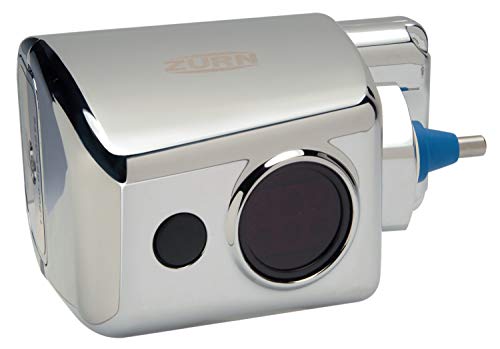
Zurn AquaSense E-Z Flush Retrofit Kit — Best Commercial Flushometer Retrofit
The Zurn E-Z Flush is not for home tanks at all: it clamps sensor operation onto the manual flushometer valves found in commercial, institutional and multi-unit bathrooms. It suits facility managers, restaurant and office operators, and owners of buildings whose restrooms still use handle flushometers but need touch-free operation for hygiene compliance and user expectations. It requires an existing compatible flushometer valve to retrofit — if your bathroom has a tank, nothing about this pick applies, and if your building has no flushometers yet, you are shopping for complete valves instead.
Strengths
- Retrofits the installed base of manual flushometers instead of replacing valves and plumbing
- Metal cover and commercial build suit public-restroom abuse that plastic home kits would not survive
- Sensor operation cuts the forgotten-flush problem that plagues manual commercial restrooms
Trade-offs
- Only relevant where flushometer valves already exist — useless for tank toilets
- Battery maintenance across many units becomes a facilities schedule, not a household chore
- Professional installation is advisable in regulated commercial settings
| Specification | Detail |
|---|---|
| Type | Flushometer sensor retrofit kit |
| Model | ZERK-CPM (per Amazon title) |
| Finish | Chrome, metal cover |
Commercial restrooms judge an automatic flush differently from homes: uptime, vandal resistance and serviceability across dozens of units matter more than elegance. The E-Z Flush approach — keep the proven valve body in the wall, replace the human interface with a sensor unit — is why this style of retrofit dominates facilities work. The valve keeps its known flush volume and parts ecosystem, maintenance staff keep one battery and sensor routine, and users get the touch-free operation they now expect. For a building owner staring at a row of manual flushometers, this is the pragmatic upgrade path, and Zurn’s presence in commercial plumbing supply means parts conversations stay simple for years.
Facilities buyers should think in fleets. A retrofit that one technician can service with one battery type and one sensor routine across forty restrooms is worth more than a marginally cheaper unit with three variants. The metal cover matters here too — public restrooms test every exposed part, and chrome-over-metal survives curiosity and cleaning chemicals that crack consumer plastic. Standardize on it where valves match, and keep two spare units on the shelf; downtime, not hardware, is the real cost in commercial restrooms.
Best for: Facilities with existing manual flushometer valves / Not suited for: Any bathroom with a tank toilet — this kit cannot adapt to one
Check the current price on Amazon

American Standard Madera Toilet with Selectronic Flush Valve — Best Complete Commercial Toilet
The Madera with Selectronic valve is the complete-fixture answer for commercial spaces: a floor-mounted flushometer toilet supplied with American Standard’s electronic sensor flush valve, so the automatic flush is engineered in rather than retrofitted. It suits new commercial builds, restroom renovations in offices, clinics and hospitality, and any setting where an exposed flushometer and hands-free operation are the specification. It is not a home product — it needs flushometer plumbing rough-in, not a tank supply — and residential buyers should stay with the kits and smart toilets elsewhere in this guide.
Strengths
- Factory-paired Selectronic sensor valve removes retrofit compatibility guesswork
- ADA-compliant configuration suits regulated commercial installations
- American Standard commercial parts and documentation are widely supported by plumbers
Trade-offs
- Requires flushometer rough-in plumbing — a renovation-level commitment, not a swap
- 1.6 GPF volume reflects commercial codes for this class rather than the 1.28 GPF home tier
- Utilitarian styling is correct for commercial restrooms and wrong for a styled home bath
| Specification | Detail |
|---|---|
| Flush volume | 1.6 GPF |
| Valve | Selectronic electronic flush valve (per Amazon title) |
| Format | Floor-mount flushometer toilet, ADA |
Where the Zurn kit modernizes an existing valve, the Madera replaces the whole question with a matched system: bowl, valve and sensor specified together by one manufacturer. That pairing is what specifiers pay for — no field improvisation, no mismatched spud or volume, and a single warranty conversation if the sensor misbehaves. In service, sensor flushometers also meter their flush by occupancy logic rather than user enthusiasm, which keeps commercial water use predictable. For a home reader this pick is mainly a reference point for what ‘automatic flush’ means at commercial grade; for anyone fitting out a real commercial restroom, it is the most straightforward complete option here.
Specifiers should note the rough-in reality behind this pick: flushometer toilets need a 1-inch-class supply and a carrier or floor outlet arrangement that residential plumbing simply does not have, which is why this category lives in commercial codes. Within that world, a factory-matched electronic valve removes the field-pairing risk that retrofit projects carry. If a restroom renovation is already opening walls, specifying the complete Madera is usually cheaper in labor than coordinating separate bowl, valve and sensor purchases.
Best for: Commercial restrooms being built or renovated to a hands-free specification / Not suited for: Homes — the plumbing, styling and volume class are all commercial
Check the current price on Amazon

Smart Tankless Toilet with Dual Auto Flush, 0.8/1.2 GPF — Best Complete Home Toilet
This tankless smart toilet is the pick for a home buyer who has decided the old toilet goes: its dual auto flush drops to 0.8 GPF for liquid waste, the siphon design keeps the flush quiet, and the integrated bidet seat adds heated washing and air drying. It suits a primary bathroom remodel chasing both water savings and hands-free operation in one fixture. It demands what all smart toilets demand — a GFCI outlet at the bowl and a household comfortable with an electronic fixture — and value-tier brand support should be checked on the listing with the usual honesty.
Strengths
- 0.8/1.2 GPF dual auto flush is the lowest water use of any complete toilet in this guide
- Tankless one-piece body saves visual and physical space versus tank models
- Child mode plus manual seat and lid options keep the automation family-friendly
Trade-offs
- Tankless flush depends on supply pressure more than tank designs do
- Value-tier brand — verify warranty and support terms before ordering
- Manual seat and lid: the flush is automatic, the lid is not
| Specification | Detail |
|---|---|
| Flush volume | 0.8/1.2 GPF siphon dual flush |
| Format | Tankless one-piece electric |
| Extras | Heated bidet seat, child mode, warm water wash, air dry |
The 0.8 GPF liquid flush is the headline, and it is a real one: in a household, the large majority of flushes are liquid-only, so the small volume is where annual water use is decided. Pairing that with automatic volume selection — the toilet, not the user, chooses — removes the classic dual-flush failure where everyone presses the big button anyway. The siphon action keeps things quieter than washdown tankless designs, which matters in an ensuite at night. Treat it as the efficiency flagship of this guide, budget for the outlet if you lack one, and it replaces both a toilet and a bidet seat in a single install.
The efficiency case compounds quietly. Automatic volume selection removes the human habit of choosing the big flush ‘to be safe,’ and across a household that habit is worth real water every single week. The tankless body also frees a few visual inches that make small bathrooms feel less crowded — a benefit guests notice even if they never learn the flush volumes behind it. For a remodel already committed to a smart toilet, this pick’s 0.8 GPF liquid flush is the specification that justifies the category.
Best for: Remodels wanting the lowest-water complete automatic flush toilet / Not suited for: Low-pressure water supplies, or buyers wanting an auto-open lid too
Check the current price on Amazon
Comparison Table
| Pick | Badge | Key spec | Best for |
|---|---|---|---|
| Techo Touchless Toilet Flush Kit (check price on Amazon) | Best Overall Retrofit Kit | Adjustable sensor retrofit for chain-pull tank toilets, battery powered | Standard tank toilets needing a proven, adjustable sensor retrofit |
| KERDE Touchless Toilet Flusher Kit (check price on Amazon) | Best Value Retrofit | Motion sensor plus wireless button, battery powered, chain-pull compatible | Budget rollouts across several home or rental bathrooms |
| Jamini Touchless Toilet Flush Kit, Dual Flush (check price on Amazon) | Best Dual-Flush Retrofit | Dual flush retrofit, wireless sensor, fits 27–33 mm overflow tubes | Water-conscious households wanting sensor flushing and dual flush in one project |
| Zurn AquaSense E-Z Flush Retrofit Kit (check price on Amazon) | Best Commercial Flushometer Retrofit | Sensor retrofit for flushometer valves, metal cover, chrome | Facilities with existing manual flushometer valves |
| American Standard Madera Toilet with Selectronic Flush Valve (check price on Amazon) | Best Complete Commercial Toilet | 1.6 GPF floor-mount flushometer toilet with electronic sensor valve, ADA | Commercial restrooms being built or renovated to a hands-free specification |
| Smart Tankless Toilet with Dual Auto Flush, 0.8/1.2 GPF (check price on Amazon) | Best Complete Home Toilet | Siphon dual flush 0.8/1.2 GPF, tankless one-piece, child mode | Remodels wanting the lowest-water complete automatic flush toilet |
How to Choose Between a Flush Kit, a Sensor Valve and a New Toilet
The decision tree is short. If your toilet is a standard tank model in good condition, buy a kit — the Techo, KERDE or Jamini above — and keep the fixture. If your bathroom uses an exposed flushometer, as commercial restrooms do, the choice is a sensor retrofit like the Zurn E-Z Flush for existing valves, or a complete fixture like the Madera when renovating. If the toilet itself is old, weak-flushing or part of a remodel, skip the accessories and buy a complete automatic flush toilet, where the sensor, valve and bowl were designed together.
Compatibility checks come before brand preference. For tank kits: is the flush a chain-pull flapper, a canister, or a button-top dual flush? Chain-pull is the widely supported case. For dual-flush retrofits like the Jamini, measure the overflow tube diameter. For flushometers: identify the valve brand and model, because retrofit kits are built around specific valve families. Ten minutes with a tape measure and the tank lid off prevents the most common return in this category.
- Home tank, chain-pull flapper → chain-puller sensor kit
- Home tank, water saving also wanted → dual-flush sensor retrofit
- Commercial flushometer, valve sound → sensor retrofit kit
- Commercial build or renovation → complete toilet with factory sensor valve
- Home remodel, toilet being replaced anyway → complete smart toilet
Power, Batteries and Manual Overrides: The Practical Details
Every automatic flush system runs on something. Home kits are battery powered, which keeps installation trivial and creates a standing chore: batteries die gradually, sensors get sluggish before they stop, and the professional habit is to replace them on a fixed schedule — every battery change dated on a note inside the tank lid. Commercial sensor valves may use batteries, hardwired transformers or turbine generators depending on model, which is a facilities decision about maintenance access. Complete smart toilets plug into a GFCI outlet and draw standby power continuously for seat heating and sensors.
Whatever the power source, insist on a manual override and learn it on day one. Kits keep the original handle or add a button; sensor valves have an override button; smart toilets have a side button or backup battery routine. An automatic flush that cannot be triggered manually during an outage or a dead-battery week is not a convenience, it is a single point of failure installed in the most essential fixture in the building.
Sensor Styles Compared: Wave, Presence and Foot Triggers
Not all automatic triggers behave alike, and the style you choose decides how the bathroom feels. Wave sensors ask for a deliberate hand gesture near the sensor — hygienic, but technically a requested flush rather than a fully automatic one, and guests usually need one demonstration. Presence sensors watch the bowl area and flush after the user leaves, which is the truest automatic behavior and the best fit for forgetful children and public restrooms; their weakness is range tuning, since a sensor watching too wide a zone flushes for people washing their hands. Foot triggers, found on smart toilets rather than tank kits, are deliberate like a wave but keep hands entirely out of the transaction.
Match the trigger to the room. A small home powder room with the sink beside the toilet is the worst case for a wide presence sensor and the best case for a short-range wave unit. A family bathroom with young children rewards presence sensing, because the flush no longer depends on anyone remembering anything. A commercial restroom wants presence sensing with vandal-resistant hardware, full stop. The picks in this guide were deliberately spread across these styles so the shortlist contains a correct answer for each room, not six versions of the same compromise.
Troubleshooting Automatic Flush Problems
Most automatic flush complaints trace to four causes, in this order. Phantom flushes mean the sensor range is too long or the sensor faces a mirror or doorway — shorten the range and re-aim before blaming the unit. Missed flushes mean dying batteries or a dirty sensor lens; both are five-minute fixes that a maintenance schedule prevents. Weak flushes after a kit install mean the chain length changed the flapper lift — restore the original chain link position and re-test. Double flushes mean the flapper is staying open too long, usually a chain with too much slack tangling under the flapper.
Work the list in order and nearly every ‘the kit is broken’ story resolves without a replacement. The deeper lesson is that automatic flush systems fail softly: they degrade into sluggish, occasional misbehavior rather than stopping outright, which is why households that schedule battery changes and a yearly sensor wipe report near-perfect reliability, while households that wait for symptoms chase the same four causes forever.
Automatic Flushing in Shared and Guest Bathrooms: Etiquette and Evidence
The strongest case for automatic flushing is not the owner’s bathroom — it is every bathroom other people use. In guest baths, rentals, offices and multi-generational homes, the forgotten flush is the single most common restroom failure, and it is a social problem as much as a sanitary one: the next user discovers it, the host hears about it, and nobody involved enjoys the moment. A sensor removes the failure mode entirely, which is why hotels and restaurants standardized on automatic flushing long before homes considered it. The technology trickling into home kits is the same logic at household scale.
There is also an accessibility dimension that deserves plain statement. A twist lever assumes grip strength, wrist rotation and reach — three things that injury, arthritis, age or disability can each compromise independently. A sensor flush assumes none of them. For a household adapting a bathroom for an aging parent, a flush kit costing less than a plumber’s call-out can be the difference between independent and assisted toileting, which is a dignity outcome wildly out of proportion to the hardware involved. Occupational therapists recommend exactly this class of modification because it is cheap, reversible and immediately effective.
Set expectations honestly for guests, though. First-time users of a wave-sensor kit may not realize a gesture is required, and first-time users of presence sensors sometimes wait, puzzled, for a handle that does not exist. A tiny, friendly note in a guest bathroom — hosts increasingly treat this as normal, like instructions for an unusual shower valve — converts confusion into a small delight. In your own family’s bathrooms no note is needed after day two; the behavior becomes as invisible as a refrigerator light, noticed only in other people’s houses where it is missing.
How to Install a Touchless Flush Kit on a Tank Toilet
Most home kits in this guide install without tools beyond what the kit includes, and none require shutting off more than the toilet’s own supply valve. The sequence below covers the common chain-pull style; follow your kit’s own instructions where they differ.
- Turn off the toilet supply valve and flush to empty the tank; sponge out remaining water if the kit needs a dry work area
- Remove the tank lid and unhook the existing handle chain from the handle arm, noting which link the chain used — that link is your flush-volume baseline
- Mount the motor unit inside the tank per the kit template, connect it to the flapper chain, and route cables clear of the fill valve and float
- Place the sensor: on the tank front for wave activation, or positioned for presence detection, following the kit’s range guidance
- Install batteries, restore water, and run five test flushes — check for complete flapper closure, no phantom refills, and no chain slack tangling
- Adjust sensor range downward until walking past the bathroom door no longer triggers it; a kit that flushes for passers-by will be switched off within a month
- Keep the original handle parts in a labeled bag inside the vanity — every retrofit should be reversible in minutes
Finish with a household briefing: where the manual override is, where spare batteries live, and what a weakening sensor behaves like. That two-minute conversation is what separates a successful retrofit from a mysterious one.
One week later, open the tank and inspect: chain untangled, motor mount firm, no cable resting in water, and the battery date note written. That single scheduled inspection catches the entire class of slow-developing kit problems while they are still free to fix.
Common Buying Mistakes
Ordering a kit before identifying your flush type. Chain-pull, canister and button-top tanks need different mechanisms. Lift the lid and look before you buy — the single most common mistake in this category.
Assuming a flushometer kit fits a home toilet. Sensor retrofits like the Zurn are built for commercial valves and cannot adapt to a tank. Match the kit to the plumbing architecture, not to the word “toilet” in the title.
Setting sensor range to maximum. Maximum range means flushes triggered from the hallway. Start short and lengthen only if users must wave deliberately.
Letting batteries die instead of scheduling them. A sensor on dying batteries flushes late, weakly or twice. Replace on a calendar schedule and keep spares in the bathroom.
Removing the manual flush path. Any install that leaves no way to flush by hand — handle removed, override unknown — will fail the household at the first outage. Keep and document the override.
Judging a kit in the first hour. Sensor placement and range need a day of real household traffic to evaluate. Adjust across a full day before concluding a kit false-flushes or misses.
Mounting the sensor where cleaning sprays hit it daily. Sensor lenses clouded by bathroom cleaner lose range and start missing flushes. Mount the sensor out of the direct spray path and clean it with water and a soft cloth only — a thirty-second habit that prevents the most common slow failure in this category.
Final Recommendation
For most homes the answer is a kit: the Techo for a proven adjustable retrofit, the KERDE when several bathrooms need doing on a budget, and the Jamini when water saving matters as much as automation. Commercial readers should split by situation — Zurn’s retrofit for sound existing flushometers, the American Standard Madera when the restroom is being rebuilt anyway. And if the toilet itself is being replaced, the tankless dual-flush smart toilet delivers the most complete automatic result at the lowest water use. Whichever route you take, the checks are the same: compatibility first, manual override always, batteries on a schedule.
To compare the leading options side by side, start with Techo Touchless Toilet Flush Kit, KERDE Touchless Toilet Flusher Kit, Jamini Touchless Toilet Flush Kit, Dual Flush — each listing confirms the current configuration and lets you check price on Amazon before you commit.
Keep researching within this category cluster: Best Autoflush Toilets Best Automatic Toilets Best 1.28 Gpf Toilets Best Ada Compliant Toilets Best 2 Piece Toilets
Frequently Asked Questions
What is the difference between an autoflush toilet and an automatic flush kit?
An autoflush toilet is a complete fixture with the sensor and flush mechanism built in. A kit adds a sensor and motor to the toilet you already own. Kits cost far less and install in minutes; complete toilets add a new bowl, often a bidet seat, and require power at the fixture.
Will a touchless kit work with my dual-flush or canister toilet?
Most chain-puller kits will not — they are built for flapper-and-chain tanks. Dual-flush and canister owners should look for a system that replaces the flush mechanism, like the Jamini-style retrofit, and must check the stated dimensions before ordering.
How long do flush kit batteries last?
It varies with traffic and model, and manufacturer figures are best treated as optimistic. The practical approach is a fixed replacement schedule — commonly every six to twelve months in a home — rather than waiting for failures.
Do automatic flush systems waste water with false triggers?
A badly adjusted sensor can. Setting the range short, positioning the sensor away from the doorway, and testing across a normal day keeps false flushes rare. Dual-flush automatics can actually save water by choosing the small volume reliably.
Can a landlord install a flush kit in a rental?
Yes — battery kits are reversible and need no plumbing changes, which suits rentals. Choose a model with a clear manual override and leave the tenant written instructions plus spare batteries.
Are sensor flush valves suitable for homes?
Flushometer valves are commercial plumbing: they need larger supply lines than homes have and are loud by residential standards. Homes should use tank kits or smart toilets; flushometer sensor retrofits belong in commercial restrooms.
Can a flush kit damage my toilet?
A correctly matched chain-puller kit only moves the chain your handle moved, so the risk is minimal. Damage stories almost always trace back to forcing a kit onto an incompatible valve type. Match the mechanism first and the category is gentle.
Do automatic flush kits help with hygiene, honestly?
They remove one shared touchpoint — the handle — and they eliminate the forgotten flush, which is the larger real-world benefit in shared bathrooms. They do not sterilize anything, and no claim beyond touch reduction and reliability is made here.
What happens if a flush kit motor fails?
On chain-puller kits the toilet simply returns to manual behavior once the original handle is reconnected, which is why this guide insists you keep the removed parts. Keep the labeled bag of original hardware and a failure becomes a five-minute reversion, not an emergency.


