Disclosure: airfryerkitchensupply.com is reader-supported. When you buy through links on our site, we may earn an affiliate commission at no extra cost to you.
Where to buy
For best auger to clean toilets, start here. A toilet auger — also called a closet auger — is the only snake designed to pass a toilet’s trapway without scarring the porcelain. Every pick below was verified, led by RIDGID’s K-series and General Pipe Cleaners’ Flexicore models; check the current price on Amazon, and never substitute a sink snake or a chemical for this tool.
Start here: RIDGID K-6DH Hybrid Toilet Auger, 6-Foot Drop Head · RIDGID K-3 Toilet Auger, 3-Foot Bulb Head · General Pipe Cleaners I-T6FL-DH Closet Auger, 6-Foot Flexicore — check price on Amazon on each listing.
Best Auger to Clean Toilets: The Tool That Replaces the Plumber’s Visit
The best auger to clean toilets is a specific tool with a specific shape, and understanding that shape is most of this purchase. A toilet’s trapway is a curved, glazed tunnel cast into the porcelain; a clog sits in or just beyond it, in a place a plunger can only push against and a straight drain snake can only reach by scraping. A closet auger solves the geometry with a curved, vinyl-guarded tube that seats in the bowl and aims a flexible cable exactly along the trapway, so the cable’s head works the clog while the porcelain never meets bare metal. If you own one tool for toilet emergencies, this is the tool.
The market divides cleanly. Professional models from RIDGID and General Pipe Cleaners use heavy cables — tri-wrap or Flexicore — with drop or bulb heads that either bore through a mass or hook an object for retrieval, and they come in 3-foot lengths for trapway clogs and 6-foot telescoping lengths that reach through the fixture into the line beyond. Budget models copy the shape with lighter cable and simpler heads; they clear soft clogs honestly and reach their limits on the hard ones. Chemicals, this guide states once and plainly, are not an alternative: they rarely reach a toilet clog in working strength, and they endanger the next person who augers the bowl.
Six verified augers follow, from the 6-foot professional standard to a budget 3-footer that still respects the porcelain. The buying guide explains heads and cable lengths, the how-to walks the clearing technique step by step, and the mistakes section covers the errors that turn a clog into a repair bill.
In this guide
Quick Picks
Six closet augers: 6-foot reach for through-the-fixture work, 3-foot for classic trapway clogs, drop heads for retrieval and bulb heads for boring — all guarded for porcelain.
- RIDGID K-6DH Hybrid Toilet Auger, 6-Foot Drop Head — Best Overall: the professional standard: 6 feet of tri-wrap cable and a drop head. — Check the current price on Amazon
- RIDGID K-3 Toilet Auger, 3-Foot Bulb Head — Best for Standard Clogs: the classic 3-foot RIDGID for the classic trapway clog. — Check the current price on Amazon
- General Pipe Cleaners I-T6FL-DH Closet Auger, 6-Foot Flexicore — Best Professional Alternative: General’s Flexicore professional: 6 feet, down head, torque to spare. — Check the current price on Amazon
- General Wire Spring T6FL Closet Auger, Regular Head — Best Mid-Range 6-Foot: the T6FL with a regular head: 6-foot reach at a step down in price. — Check the current price on Amazon
- Klein Tools 53017 Steel Toilet Auger, 3-Foot — Best Compact Pro-Brand: Klein’s 3-footer with drill operation and a quick-release handle. — Check the current price on Amazon
- Cobra Plumbing 42030 Toilet Auger — Best Budget: the honest budget closet auger: correct shape, lighter build. — Check the current price on Amazon
How These Picks Were Chosen
Every auger here was verified by brand and model, with the ASIN taken from the matching Amazon title — important in a category where unbranded lookalikes borrow professional model numbers. Eligibility required the defining feature of the type: a curved guide tube with a porcelain guard. Straight drain snakes, drum augers for sinks, and grabber toys were excluded regardless of how their listings court this search.
Within the true closet augers, picks were weighed on cable construction (the professional tri-wrap and Flexicore cables transmit torque and survive kinking far better than light spring wire), head design (drop heads retrieve, bulb heads bore), length (3-foot for the trapway, 6-foot telescoping for reach beyond), and drive (manual crank, or drill-attachment on the hybrid models for stubborn work). The result spans the professional standard to the honest budget floor.
The 6 Best Augers to Clean Toilets
RIDGID and General Pipe Cleaners own the professional end and place three picks between them; Klein and Cobra hold the value end. Length is the first decision — the guide below the table explains when 3 feet is right and when 6 earns its keep.

RIDGID K-6DH Hybrid Toilet Auger, 6-Foot Drop Head — Best Overall
The K-6DH is the auger plumbers carry, and its specification reads like the category’s definition of done properly: six feet of heavy-duty tri-wrap cable that telescopes for reach, a drop head that angles to retrieve as well as bore, a vinyl-guarded guide tube for the porcelain, and a handle that works by hand or couples to a cordless drill when a clog needs torque. It clears the trapway, reaches into the line beyond the fixture, and hooks the toy, the wipe wad and the fallen bottle cap alike.
Strengths
- Tri-wrap cable transmits torque without the kinking of light wire
- Drop head retrieves objects instead of pushing them deeper
- Drill operation for stubborn clogs; manual feel for delicate ones
Trade-offs
- Professional tier: the most expensive pick here
- Six feet of cable is more tool than a simple trapway clog needs
- Drill mode demands restraint — torque can overwhelm a fragile trapway joint
| Specification | Detail |
|---|---|
| Length | 6 ft telescoping (per Amazon title) |
| Cable | Heavy-duty tri-wrap, drop head (per Amazon title) |
| Drive | Manual or cordless drill (per Amazon title) |
The drop head is the feature that justifies the badge. Most toilet clogs are masses to be broken, but the memorable ones are objects to be removed — and a bulb head pushed past an object often wedges it tighter, while the K-6DH’s drop head is shaped to get beyond and pull back. Add the cable’s reach into the first stretch of drain line, and this single tool covers the overwhelming majority of toilet stoppages a household or a building will ever meet.
Buy it as a decade-scale tool: rinse and dry the cable after use, keep the guide tube’s guard intact, and it will outlast several toilets. For landlords, maintenance staff and anyone whose clog is never their own, it is not the expensive option — it is the one that ends the recurring expense of every lesser option.
Ownership note: after any retrieval, inspect the drop head and cable end before storage; the head that brought back a bottle cap may carry the scratch or the bend that matters on the next job, and thirty seconds of inspection is the professional habit in miniature.
The telescoping reach also future-proofs the purchase against the house itself: the bathroom remodel that moves nothing but adds a longer first run, the basement fixture added later — the K-6DH already owns the lengths those futures require.
Best for: homeowners, landlords and maintenance use wanting the one-auger answer / Not suited for: a single simple clog on the tightest budget, where the 3-foot picks suffice
Check on Amazon — check price on Amazon before you order, and confirm the exact variant and tank size on the listing.

RIDGID K-3 Toilet Auger, 3-Foot Bulb Head — Best for Standard Clogs
The K-3 is the K-series in its original, essential form: three feet of cable with a bulb head, a guarded curved tube, and RIDGID’s build quality throughout. Three feet is the honest length for the overwhelming majority of toilet clogs, which live in the trapway itself — and a shorter cable is easier to control, easier to clean, and harder to kink than a long one used carelessly. For the single-family bathroom, this is the sensible professional-grade buy.
Strengths
- RIDGID cable and head quality at the essential length
- Bulb head bores soft masses — the common clog — efficiently
- Simpler and lighter to handle and store than 6-foot models
Trade-offs
- Cannot reach clogs seated beyond the fixture in the line
- Bulb head bores better than it retrieves objects
- Manual only: stubborn masses take arm work
| Specification | Detail |
|---|---|
| Length | 3 ft (per Amazon title) |
| Head | Bulb head (per Amazon title) |
| Maker | RIDGID (per Amazon title) |
There is a discipline argument for the 3-footer: it matches the tool to the anatomy. The trapway’s far end is roughly where this cable finishes, which means the user feels the clog directly, works it with control, and stops where the fixture stops — the safest possible relationship between a cable and a porcelain tunnel. Households graduating from plungers and chemicals will find the K-3 the exact size of the problem they actually have.
Its limit is equally anatomical: a clog beyond the fixture — in the line, at a junction — is out of its parish, and repeated free passage of the cable with a still-stalled toilet is the signal to step up to the 6-foot K-6DH or to the diagnosis in this program’s anti-clog guide. Within its parish, nothing here is a compromise.
Ownership note: hang the K-3 where the bathroom’s responsible adult can reach it in the dark; a tool this simple earns its keep at hours when nobody is comparison-shopping, and its whole value is being present, dry and ready.
The K-3 is also the teaching tool of the category: its direct feel instructs a first-time user in what a trapway is and what a clog feels like, an education that makes every later tool — including its bigger sibling — safer in the same hands.
Best for: households wanting professional quality for ordinary trapway clogs / Not suited for: recurring clogs seated beyond the fixture, which need 6-foot reach
Check on Amazon — check price on Amazon before you order, and confirm the exact variant and tank size on the listing.

General Pipe Cleaners I-T6FL-DH Closet Auger, 6-Foot Flexicore — Best Professional Alternative
General Pipe Cleaners is the other professional house in this category, and the I-T6FL-DH is its flagship closet auger: six feet of Flexicore cable — a heavy spring wound over a core that resists kinking and transmits serious torque — tipped with a down head shaped to enter the trapway’s curve and work what it finds. Plumbers who swear by General over RIDGID are arguing about cable feel, and Flexicore is the substance of their argument.
Strengths
- Flexicore cable: exceptional torque and kink resistance
- Down head is shaped for the trapway’s geometry and retrieval work
- Professional build intended for daily trade use
Trade-offs
- Professional tier pricing alongside the K-6DH
- Six-foot cable demands the technique section’s discipline
- Heavier in hand than the 3-foot models
| Specification | Detail |
|---|---|
| Length | 6 ft (per Amazon title) |
| Cable | Flexicore snake (per Amazon title) |
| Head | Down head (per Amazon title) |
Flexicore’s virtue appears on the third clog, not the first: where light cables take a permanent set and begin to corkscrew instead of advancing, the cored cable keeps feeding true, which is why it is a trade standard. The down head complements it by dropping into the trapway’s low path — the route water and waste actually take — rather than riding the crown where a straight head can skate over a mass.
Choose it over the RIDGID if your hand prefers its crank and cable feel, or if a building’s maintenance kit is already General-based; choose between them on ergonomics, because on capability this is a genuine tie at the professional tier, and ties at this level are broken by the user, not the specification sheet.
Ownership note: Flexicore rewards a storage coil at its natural radius; forced into a tight bucket it will eventually hold the insult as a set, and a cable with a set feeds like an argument instead of a tool.
In rental fleets the I-T6FL-DH’s durability arithmetic is stark: it is bought once per career rather than once per season, and its cost per cleared clog falls below the budget tools’ within the first year of real use.
Best for: tradespeople and serious maintenance kits wanting Flexicore torque / Not suited for: occasional household use, where the K-3’s simplicity fits better
Check on Amazon — check price on Amazon before you order, and confirm the exact variant and tank size on the listing.
General Wire Spring T6FL Closet Auger, Regular Head — Best Mid-Range 6-Foot
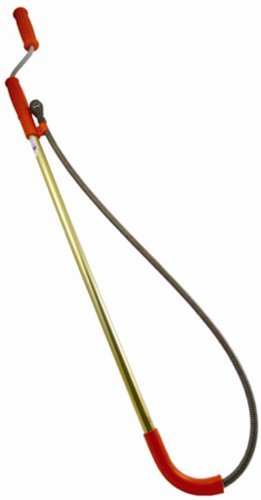
The T6FL with a regular head is the pragmatic professional-adjacent pick: General’s 6-foot closet-auger platform with the standard boring head, for buyers who need reach beyond the fixture without the down-head flagship’s full specification. It suits the facilities drawer and the experienced homeowner whose clogs have proven they live past the trapway.
Strengths
- Six-foot reach covers trapway and the line’s first stretch
- General’s cable quality at a mid-range point in its own line
- Regular head is the versatile boring choice for mass clogs
Trade-offs
- Regular head retrieves objects less surely than a down or drop head
- Confirm the exact configuration on the listing before ordering
- Still a tool that rewards the technique in this guide
| Specification | Detail |
|---|---|
| Model | T6FL closet auger (per Amazon title) |
| Head | Regular head (per Amazon title) |
| Maker | General Wire Spring (per Amazon title) |
The regular-versus-down head choice is the honest fork in General’s line: masses — paper, waste, the ordinary stall — are bored and broken by either, while objects reward the down head’s geometry. A buyer whose history is ordinary stalls, in a fixture whose line has swallowed a clog or two beyond the trapway, is exactly the T6FL regular head’s customer: reach and cable quality where they matter, savings where they do not.
It also makes a rational second auger for a building that already owns a 3-footer: the short tool handles the common call, the T6FL answers the through-fixture one, and between them the plumber’s number stays in the drawer for the genuinely structural jobs.
Ownership note: because this is often a kit’s second auger, tag it with its head type and length on a strip of tape at the handle; in an emergency nobody should have to read a catalog to know which tool is in their hand.
The regular head’s boring efficiency also makes the T6FL the fastest of the 6-footers on the pure mass clog — the call where the tenant is waiting and the mass, not an object, is the whole story.
Best for: experienced owners and facilities kits needing 6-foot reach on mass clogs / Not suited for: object retrievals, which favor the drop or down heads
Check on Amazon — check price on Amazon before you order, and confirm the exact variant and tank size on the listing.

Klein Tools 53017 Steel Toilet Auger, 3-Foot — Best Compact Pro-Brand
Klein Tools brings its electrician-grade tool discipline to the closet auger with the 53017: a 3-foot steel auger that works by hand or under drill power, with a quick-release handle that swaps between the two without a workshop session. For the tool-belt household — the one that already owns the drill and values convertible tools — it is the compact pick with professional manners.
Strengths
- Hybrid manual and drill operation at the compact length
- Quick-release handle makes the drive swap genuinely quick
- Klein’s build and distribution: a tool brand, not a listing brand
Trade-offs
- 3-foot reach: trapway clogs only, by design
- Drill torque at short length demands a gentle trigger finger
- Newer entrant in this category than RIDGID or General
| Specification | Detail |
|---|---|
| Length | 3 ft (per Amazon title) |
| Drive | Manual and drill operation (per Amazon title) |
| Handle | Quick-release (per Amazon title) |
The 53017’s insight is that most “stubborn” household clogs are not long, they are dense — and density is a torque problem, not a reach problem. Drill operation at three feet, used with the restraint this guide’s technique section teaches, breaks the dense trapway mass that makes a manual-only user sweat and a plunger user surrender. The quick-release handle keeps that power optional rather than obligatory, which is the correct relationship between a drill and a porcelain fixture.
It slots beneath the K-3 for the traditionalist and beside it for the power-tool household: same parish, different temperament. Either way, the porcelain guard and the 3-foot discipline keep the tool inside the anatomy it was built for.
Ownership note: keep the quick-release handle’s mechanism clean and dry; it is the part of the tool that lives in your hand, and the swap between manual feel and drill force should stay instant for the tool’s whole life.
Klein’s distribution is a practical virtue of its own: the tool is stocked where trades already shop, so the replacement or the second unit for the other bathroom is an errand, not a shipment.
Best for: power-tool households wanting drill torque at trapway length / Not suited for: clogs beyond the fixture, which need a 6-foot pick
Check on Amazon — check price on Amazon before you order, and confirm the exact variant and tank size on the listing.

Cobra Plumbing 42030 Toilet Auger — Best Budget
The Cobra 42030 is the budget floor of this guide, and it earns its place the way the Camco did in the campervan guide: by keeping the essential thing. It is a true closet auger — curved guide tube, guarded for the bowl, cable sized for the trapway — at a price that undercuts the professional houses by a wide margin. Its cable and crank are lighter, its working life will be shorter, and for the occasional soft clog in a single household, that trade is rational.
Strengths
- Correct closet-auger shape and porcelain guard at a budget tier
- Adequate for the soft, ordinary clogs most homes actually meet
- Cheap enough to keep one per bathroom in a rental or a large home
Trade-offs
- Lighter cable kinks more readily under hard use — feed it gently
- Not the tool for dense masses or object retrieval
- Shorter service life than the professional picks is part of the price
| Specification | Detail |
|---|---|
| Type | Toilet auger, standard (per Amazon title) |
| Maker | Cobra Plumbing (per Amazon title) |
| Role | Budget / occasional use |
Judge a budget auger by what happens on its fifth use, not its first. The Cobra clears the first readily; by the fifth, its cable will show the difference in its metallurgy if it has been forced, which is why this guide pairs it with a technique note: let the head work, advance in small bites, and never use the crank as a winch. Treated as the light tool it is, it handles the statistical reality of household clogs — most are soft, near and forgiving — at a fraction of the professional tier.
The upgrade path from here is clear and honest: if clogs recur, grow denser, or start involving objects, the K-3 or K-6DH is not a luxury but the correct tool arriving late. Buy the Cobra knowingly, as the occasional-use instrument it is, and it will not disappoint.
Ownership note: treat the Cobra’s cable with the gentleness its tier asks for — small advances, no winching — and inspect it after each use; a light cable retired at the first permanent kink is a bargain kept, while one forced past it becomes a scratch looking for a bowl.
Even at its tier, the Cobra teaches the correct category instinct — that a toilet is cleared with a guarded cable, not with chemistry or violence — and a household that learns that instinct owns the important half of this guide already.
Best for: single households with occasional soft clogs and a firm budget / Not suited for: recurring, dense or object clogs, or any professional use
Check on Amazon — check price on Amazon before you order, and confirm the exact variant and tank size on the listing.
Comparison Table
Length and head type — from the verified listings — are the working specifications: length decides how far the tool’s parish extends, and the head decides whether it bores, retrieves, or both.
| Pick | Badge | Key spec | Best for |
|---|---|---|---|
| RIDGID K-6DH Hybrid Toilet Auger, 6-Foot Drop Head | Best Overall | 6 ft tri-wrap cable; drop head; manual or drill operated | homeowners, landlords and maintenance use wanting the one-auger answer |
| RIDGID K-3 Toilet Auger, 3-Foot Bulb Head | Best for Standard Clogs | 3 ft cable; bulb head; vinyl guard | households wanting professional quality for ordinary trapway clogs |
| General Pipe Cleaners I-T6FL-DH Closet Auger, 6-Foot Flexicore | Best Professional Alternative | 6 ft Flexicore cable; down head; professional grade | tradespeople and serious maintenance kits wanting Flexicore torque |
| General Wire Spring T6FL Closet Auger, Regular Head | Best Mid-Range 6-Foot | T6FL closet auger; regular head; 6-foot class Flexicore line | experienced owners and facilities kits needing 6-foot reach on mass clogs |
| Klein Tools 53017 Steel Toilet Auger, 3-Foot | Best Compact Pro-Brand | 3 ft steel auger; manual and drill operation; quick-release handle | power-tool households wanting drill torque at trapway length |
| Cobra Plumbing 42030 Toilet Auger | Best Budget | Standard toilet auger; budget tier | single households with occasional soft clogs and a firm budget |
How to Choose an Auger for a Toilet: Length, Head, Cable
Length first. Three feet covers the trapway, where most clogs live, with the best control and the least cable to manage. Six feet — telescoping on the professional models — reaches through the fixture into the drain line’s first stretch, for clogs that a 3-footer passes beside or cannot touch. Buy 3 feet for a household’s first auger; buy 6 when experience, not anxiety, says your clogs live deeper.
Head second. Bulb and regular heads bore and break masses; drop and down heads add retrieval geometry for objects. Cable third: tri-wrap and Flexicore transmit torque and resist the kinking that ends light cables’ lives, which is why the professional premium is mostly a cable premium. Drive last: manual gives feel, drill gives force, and the hybrids here let the clog, not the tool, decide which the job needs.
Auger vs Plunger vs Chemicals: The Honest Hierarchy
A plunger moves water; sometimes that is enough for a fresh, soft stall near the bowl, and it costs nothing to try once, gently, with a proper flange plunger. An auger moves the clog itself — breaking it, boring it or pulling it out — and it is the correct tool the moment a plunger fails, because it addresses the cause at the exact address. Between them there is no third household option worth the name.
Chemicals sit outside the hierarchy entirely for toilets. A trapway holds the cleaner in the bowl, not on the clog; the strength that reaches the mass is spent and the residue endangers whoever augers next — which, after the chemical fails, is what happens. Enzyme treatments have a maintenance role in some drain systems, but for an active toilet clog the professional answer is mechanical, and this guide’s picks are that answer at six price-and-power points.
Cable Care: Making an Auger a Decade Tool
An auger dies of neglect, not of clogs. After each use, rinse the cable clean, wipe it fully dry, and give steel cables the lightest film of oil before storage if your climate or garage runs damp. Store the tool hung or loosely coiled at its natural radius — never kinked into a bucket — and inspect the guide tube’s vinyl guard: a worn guard is the one part whose failure can scar a bowl.
Retire or repair honestly: a cable with a permanent corkscrew set will fight every future feed, and a head worn smooth bores nothing. The professional picks repay this care with decades of service, which is the arithmetic that makes their tier the economical one for anyone beyond the occasional clog.
Building and Landlord Kits: One Auger or a System
A single household needs a single auger; a building needs a small system, and this guide’s picks assemble one naturally. The pattern experienced supers follow: a 3-foot professional auger on each floor or in each stairwell’s closet for the common call, one 6-foot drop-head at the central kit for the through-fixture and retrieval calls, and a log — even a notebook — of which units clog and how, because a unit that clogs quarterly is telling you about its line, its fixture or its occupants, and the log is how you hear it.
The economics are not subtle. One avoided emergency call-out pays for the professional tier outright; a kit that prevents three pays for itself, the spare cables and the gloves for a decade. What the kit must never contain is the chemical shelf: a building that stocks augers and plungers, and trains its people in the seven steps in this guide, has no use for the bottles that endanger the next pair of hands into the bowl.
When the Auger Says No: Escalation and Honesty
A good tool reports its own limits clearly, and the auger’s report is unmistakable: full cable passage with a still-stalled toilet means the problem is in the line; a cable that will not pass at all, in a fixture it has passed before, suggests a hard obstruction or a broken trapway; water rising in other fixtures while you work means the main is involved. Each of those is a stop-and-escalate signal — to a drain machine, a camera, or a plumber — and recognizing them is part of owning the tool rather than being owned by the emergency.
Escalation is not defeat; it is the auger having done its diagnostic half of the job. The households and buildings that fare worst in plumbing are not the ones that call for help, but the ones that answer every signal with more force. Keep the tool’s honesty and it will keep your porcelain, your lines and your weekends intact for the decades it is built to serve.
The Clog Diary: What Repeated Stoppages Are Trying to Say
A single clog is an event; a pattern of clogs is a message, and the auger is the instrument that lets you read it accurately. Keep the diary mentally or on paper: what the cable met (mass, object, grit), where it met it (early in the trapway, at its far end, beyond the fixture), and what the flush did afterward. A mass at the trapway’s mouth in a house with a new low-flow fixture says the fixture’s transport is marginal for the household’s paper. Grit and scale at the far end in a hard-water home says the trapway itself is narrowing. Resistance beyond the fixture, recurring at the same depth, is the line pointing at its own defect with a surveyor’s precision.
Each reading prescribes its own remedy, and none of the remedies is “auger harder”. Marginal transport is answered in this program’s anti-clog guide; a scaling trapway is answered with descaling or, when the porcelain’s glaze has gone, with replacement; a line defect is answered by a camera and a professional conversation armed with your diary’s depths and dates — information that shortens that conversation and its bill considerably.
This is the deeper reason the professional picks justify themselves to a household: they are measuring instruments as well as clearing tools, with cables whose feel transmits the trapway’s story to an attentive hand. The clog you clear teaches you the house; the diary is how the lesson survives until it is needed.
Rentals, Guests and the Borrowed-Plunger Problem
The auger’s social life deserves a section, because toilet clogs cluster around hospitality: the guest who meets an unfamiliar low-flow fixture, the holiday weekend that loads a system beyond its habits, the rental turnover that discovers what the last tenancy left in the trapway. In each case the difference between an incident and an embarrassment is the presence, in the building, of the right tool and one person who has read this guide’s seven steps. Hosts who keep a closet auger — even the budget Cobra — in the guest bathroom’s closet have quietly deleted a category of awkwardness from their homes.
Rentals sharpen the point into policy. A tenancy that begins with a clear, tested trapway — augered as a matter of turnover routine, the way the flapper is checked and the supply line inspected — begins with the clog question already answered, and the diary this guide recommends starts at zero with the new occupants’ names. Landlords who adopt the routine find their emergency calls reclassify themselves: the remaining ones are line problems and object retrievals, which is to say, the ones a professional or the 6-foot drop-head genuinely owns.
And the borrowed plunger — that neighborly artifact — can retire. The auger is not an expensive tool, not a dangerous one, and not a mysterious one; it is simply the correct one, and a street where every house owns one is a street where a clog is a ten-minute story told afterward with relief rather than a weekend retold with feeling.
Storing the Auger: Ready Means Reachable, Clean and Dry
An emergency tool’s storage is part of its function, and the auger’s rules are few and absolute. Clean and dry before it sleeps, always — a cable stored wet is a cable rusting toward its next job. Hung or loosely coiled at its natural radius, never kinked into a bucket or crushed under the toolbox. Reachable by the household’s responsible adults without a search party: the hall closet, the bathroom cabinet’s tall side, the super’s labeled shelf — anywhere that the 2 a.m. version of you already knows.
Gloves live with it, because the pair you must hunt for is the pair the job starts without. And once a year, in a calm moment that is not an emergency, take it down, extend the cable, and look at the head and the guard with the inspection habit this guide has repeated for every tool and fixture in the program: ten honest seconds, in daylight, that keep the emergency version of the tool a stranger you never have to meet.
How to Use a Toilet Auger, Step by Step
Technique is the difference between a cleared trapway and a scarred bowl. This is the sequence the picks above are built for.
- Prepare the room and stop adding water. Gloves on, towels at the base, bucket nearby. If the bowl is brimful, bail it to half — you need room to work, not a flood to fight.
- Seat the guide tube. Place the auger’s curved tube into the bowl with its guard against the porcelain and the cable retracted, aimed into the trapway’s mouth. The tube’s curve is the tool’s aim; set it before any cranking.
- Crank clockwise and feed gently together. Turn the handle while easing the cable forward in small advances. Steady pressure persuades; force makes kinks. On drill models, use the lowest speed and a feathered trigger.
- Read the resistance. A firming that yields is the clog engaging. A hard stop that springs is likely an object or the trapway’s turn — ease back, re-angle slightly, and try again rather than muscling through.
- Work the clog in short strokes. Advance and retract a few inches repeatedly to break a mass apart; for a suspected object, push just past it, then withdraw slowly and steadily to bring it back with the head.
- Test with paper, twice. Withdraw the cable, then flush with a modest wad of toilet paper, then a normal load. Two clean passes mean the trapway is truly clear, not merely punctured.
- Clean the tool before it sleeps. Rinse, dry and inspect the cable and guard now, while the job’s lessons are fresh. The next emergency will thank this one.
If the cable passes its full length freely yet the toilet still stalls, the clog lives beyond the fixture: stop, and treat it as the drain-line diagnosis in this program’s anti-clog guide describes. An auger’s honesty about its own limits is part of its value.
Common Buying Mistakes
Reaching for a sink snake or a coat hanger. Unguarded wire in a trapway scars the glaze permanently and usually fails to clear the clog besides. The closet auger’s guarded tube exists precisely because porcelain is unforgiving.
Pouring chemical cleaner first. It does not clear toilet clogs, and it turns the subsequent augering into a chemical-splash hazard. Mechanical first, mechanical only.
Cranking with full force at the first resistance. Force kinks cables and can wedge an object tighter. The tool works by rotation and patience; a clog that will not yield to technique is information, not a challenge.
Pushing an object deeper by optimism. If you suspect a toy, a cap or a phone’s smaller cousin, work to retrieve — drop and down heads exist for this — because an object pushed past the trapway becomes a drain-line excavation.
Skipping the paper test. A punctured clog re-forms within days. The two-flush paper test is the difference between a repair and a postponement, and it costs ninety seconds.
Final Recommendation
For the one-auger household, the RIDGID K-6DH is the complete answer — reach, retrieval and torque in a single decade-grade tool — with the General I-T6FL-DH as its genuine professional peer for Flexicore loyalists. Ordinary trapway clogs in ordinary homes are the K-3’s parish, with Klein’s 53017 beside it for drill-owning households, the T6FL regular head as the mid-range reach option, and the Cobra as the honest budget floor. Whichever you choose, learn the seven steps above before the emergency: an auger used calmly is the cheapest plumber you will ever employ.
RIDGID K-6DH Hybrid Toilet Auger, 6-Foot Drop Head — check price on Amazon. RIDGID K-3 Toilet Auger, 3-Foot Bulb Head — check price on Amazon. General Pipe Cleaners I-T6FL-DH Closet Auger, 6-Foot Flexicore — check price on Amazon. General Wire Spring T6FL Closet Auger, Regular Head — check price on Amazon. Klein Tools 53017 Steel Toilet Auger, 3-Foot — check price on Amazon. Cobra Plumbing 42030 Toilet Auger — check price on Amazon.
Keep reading in this series: Best Anti Clog Toilets Best And Worst Toilets Best Toilets For Large Loads Best Drain Snakes Best Plungers For Toilets
Frequently Asked Questions
What is the difference between a toilet auger and a drain snake?
A toilet auger is a drain snake specialized for the toilet: its cable feeds through a curved, vinyl-guarded tube that follows the trapway’s shape and shields the porcelain. A general drain snake has no guard and no curve, and using one in a toilet risks permanent scratches in the glaze.
Should I buy a 3-foot or 6-foot auger?
Three feet for the trapway clogs most households meet, with better control and easier care. Six feet when clogs have proven they sit beyond the fixture, or for landlords and maintenance work where one tool must cover every case.
Can a toilet auger damage the toilet?
Used as designed — guard seated, gentle feeding, clockwise cranking — it is the safest clearing method there is. Damage comes from substitutes and from force: unguarded snakes scar glaze, and winching the crank can stress joints. Technique, covered in this guide, is the safeguard.
What if the auger goes through but the toilet still clogs?
Then the obstruction is beyond the fixture, in the drain line, or the toilet’s own flush is too weak to transport a normal load. That is a diagnosis problem — line clearing or, per this program’s anti-clog guide, a fixture with real transport physics — not a reason to buy a longer auger blindly.
Are drill-powered augers safe for porcelain?
The drill drives the cable, which stays inside the guarded tube’s path; the porcelain meets only the guard. Use the lowest speed, feather the trigger, and stop at hard resistance. The hybrid picks here are built for exactly that controlled use.
How do I know if a clog is an object?
By its biography and its feel: a sudden total stall after something fell or a child visited, and a hard, springy stop on the cable rather than a mass’s gradual firming. Object clogs call for retrieval heads and patience — and for the auger, not the plunger, since plunging seats objects deeper.


