Disclosure: airfryerkitchensupply.com is reader-supported. When you buy through links on our site, we may earn an affiliate commission at no extra cost to you.
Where to buy
Here is the verified shortlist for best at home coffee and espresso makers, with every pick checked before it earned a link.
Every combination machine below was verified against Amazon listing data on 2026-11-20 — drip-plus-espresso combos, capsule espresso systems, and guided 3-in-1 machines. Start here: De’Longhi All-in-One Espresso & Coffee Maker · De’Longhi COM530M All-In-One Combination Coffee and Espresso Machine · DeLonghi BCO430 Combination Pump Espresso and 10-Cup Drip Coffee Machine · Ninja Espresso & Coffee Maker CFN601 · Ninja Luxe Café Premier 3-in-1 Espresso Machine ES601 · Ninja Specialty Drip Coffee Maker, DualBrew Pro CFP301. Every pick below links to its Amazon listing so you can check the current price on Amazon before you decide — prices and stock move, so the listing, not this page, is the final word.
The best at home coffee and espresso makers answer a household argument: one person drinks drip by the pot, another wants a latte, and nobody wants two machines eating the counter. Combination machines solve it three different ways, and choosing between them is the real work of this guide. Pump-driven combos pair a drip brewer with a true portafilter espresso side. Capsule combos pair single-serve coffee with Nespresso-style espresso. Guided 3-in-1 machines add grinders and assistance to make espresso approachable. All three are represented below, verified, with their honest trade-offs attached.
Set expectations correctly before the picks. A combination machine is a compromise by design: its drip side will not out-brew a certified dedicated brewer, and its espresso side will not out-pull a dedicated espresso machine with a serious grinder. What it offers is one footprint, one water routine, one appliance to learn — and, for most households, coffee and espresso that are both genuinely enjoyable. Households where espresso is a serious hobby should read our dedicated espresso coverage instead; households where both drinks happen weekly will find their machine here.
Milk is the third character in this story. Every pick below froths milk somehow — steam wand, built-in frother, or dual froth system — because an at-home espresso maker that cannot make a cappuccino is only half a solution. Judge the frothing system by your patience: wands reward practice, automatic frothers reward nobody’s practice and everybody’s schedule.
In this guide
Quick Picks
Best Classic Combo — De’Longhi All-in-One Espresso & Coffee Maker: De’Longhi’s All-in-One pairs a 10-cup drip pot with a 15-bar pump espresso side and dual heating — the traditional combo, done properly. Check the current price on Amazon.
Best Mid-Range Combo — De’Longhi COM530M All-In-One Combination Coffee and Espresso Machine: The COM530M brings the De’Longhi combination format to a mid tier — drip plus espresso with the brand’s advanced cappuccino approach. Check the current price on Amazon.
Best Established Combo Value — DeLonghi BCO430 Combination Pump Espresso and 10-Cup Drip Coffee Machine: The long-running BCO430 pairs pump espresso with a 10-cup drip side and a frothing wand — a proven design with a deep track record. Check the current price on Amazon.
Best Capsule Combo — Ninja Espresso & Coffee Maker CFN601: Ninja’s CFN601 pairs Nespresso-compatible capsule espresso with single-serve coffee and a built-in frother — combo convenience with no grinding or tamping. Check the current price on Amazon.
Best Guided 3-in-1 — Ninja Luxe Café Premier 3-in-1 Espresso Machine ES601: The Luxe Café Premier ES601 adds a grinder, Barista Assist guidance, and a dual froth system to espresso, drip, and cold brew in one platform. Check the current price on Amazon.
Best Coffee-First Alternative — Ninja Specialty Drip Coffee Maker, DualBrew Pro CFP301: The DualBrew Pro CFP301 brews pods or grounds across four styles with a frother — for households whose ‘espresso’ need is really strong coffee and foam. Check the current price on Amazon.
How These Picks Were Chosen
Combination machines were verified model by model against Amazon listing on 2026-11-20, confirming that each pick genuinely offers both coffee and espresso formats — not merely a drip brewer with a frother accessory claiming espresso status. Only machines whose espresso side uses a pump, a capsule system, or a guided extraction platform qualified.
Picks were judged on the quality balance between their two sides, the milk system, footprint honesty (combos are wide — measure your counter), and the skill each demands. The six span the three combo philosophies so that the comparison itself teaches the category: classic De’Longhi pump combos, Ninja’s capsule and guided platforms, and a pod-and-grounds specialty brewer for households whose ‘espresso’ need is really a strong coffee and frothed milk.
Two exclusions deserve stating. Super-automatic bean-to-cup machines were left out because they are a distinct, premium category with its own guide on this site, not combination machines in this guide’s sense. And drip brewers with a mere frothing wand accessory were excluded for claiming an espresso identity they do not possess — a labelling habit this guide refuses to reward.
The 6 Best At-Home Coffee and Espresso Makers
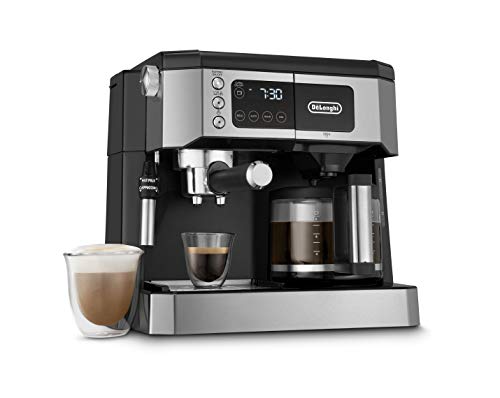
De’Longhi All-in-One Espresso & Coffee Maker — Best Classic Combo
The De’Longhi All-in-One Espresso & Coffee Maker is the archetype of this category: a 10-cup drip brewer on one side, a pump espresso machine with a milk frother on the other, and a dual heating system so the two sides do not queue for the same boiler. That last detail is the one that separates a real combo from a wide drip machine — drip for the household at breakfast, espresso for one at the same breakfast, without a waiting game. It suits households that drink both formats weekly and want ground-coffee espresso with a learning curve they are willing to climb a little. It does not suit espresso purists, who need a dedicated grinder budget beside any combo, or capsule loyalists who want zero mess.
Strengths
- Dual heating system lets drip and espresso happen in parallel — the defining combo feature
- 15-bar pump espresso side with a frother covers lattes and cappuccinos honestly
- 10-cup drip pot is a full household size, not a token carafe
Trade-offs
- Espresso quality depends on your grinder and your tamp — the machine provides pressure, you provide preparation
- Combos are wide; measure the counter before falling for the concept
- Two systems to descale and maintain — the upkeep of two appliances in one body
Key specs: 10-cup drip pot + espresso side · dual heating system · milk frother · 15-bar pump.
Living with this machine means learning two short routines instead of one, and De’Longhi’s long history with the format shows in how the sides share water and controls without confusing each other. The drip side behaves like the competent family brewer it is; the espresso side behaves like an entry pump machine, which means fresh grounds, a firm even tamp, and milk steamed in a pitcher you will wash daily.
Its worst trait is the category’s: neither side is the best in its class, and a household that drifts to drinking only one format will eventually wish it had bought that format’s dedicated machine. Bought by a household that truly uses both sides weekly, though, it is the most space-efficient honest answer in home coffee — and the benchmark the rest of this list is compared against.
Best for: households drinking drip and milk espresso drinks every week / Not suited for: espresso hobbyists and capsule-only drinkers
Check on Amazon — check price on Amazon and confirm the current configuration before ordering.

De’Longhi COM530M All-In-One Combination Coffee and Espresso Machine — Best Mid-Range Combo
The De’Longhi COM530M All-In-One Combination Coffee and Espresso Machine occupies the sensible middle of the combo ladder: the same dual-format idea as its flagship sibling, tuned for buyers who want the format without the top tier’s commitment. It suits households graduating from a drip-only life who want lattes and cappuccinos on weekends without reorganising the kitchen around a dedicated espresso station. It does not suit daily espresso devotees, whose volume and standards will outgrow any combo’s espresso side — a truth this guide states for the whole category, not this model alone.
Strengths
- The full combination format at a mid-tier step below the flagship
- Espresso side built for milk drinks, which is how most households actually drink espresso at home
- One footprint and one water routine for two drink formats
Trade-offs
- Shares the combo compromise: good at both formats, class-leading at neither
- Ground espresso preparation — dose, tamp, clean — is a daily ritual some households tire of
- Check the exact current configuration on the listing, as combo bundles and accessories vary
Key specs: Combination drip + espresso · 47 oz class carafe side.
The COM530M’s value is in the households it fits precisely: drip on weekdays, milk drinks on weekends, one machine washed and descaled on one schedule. Its espresso side asks for the standard pump-machine skills, and rewards them with drinks that make the weekend pattern feel like a café visit rather than a compromise — which is the entire emotional case for this category, delivered at its most reasonable tier.
Compare it directly with the flagship All-in-One above: the step up buys the dual-heating polish and the range-top specification, while this model keeps the format’s essence. Households unsure whether the combo life is for them should start here — it is the lowest-regret entry into owning both formats at once.
Best for: households adding weekend espresso to a drip routine / Not suited for: daily espresso drinkers ready for dedicated equipment
Check on Amazon — check price on Amazon and confirm the current configuration before ordering.

DeLonghi BCO430 Combination Pump Espresso and 10-Cup Drip Coffee Machine — Best Established Combo Value
The DeLonghi BCO430 Combination Pump Espresso and 10-Cup Drip Coffee Machine is the veteran of this list: a combination design that has served households long enough for its strengths and its quirks to be thoroughly known. A pump espresso side with a frothing wand, a 10-cup drip side, and a silver-and-black format that has become the visual shorthand for ‘combo machine’. It suits value-focused households that prefer a proven design to a new one, and buyers who like that a long-running model means well-understood maintenance. It does not suit buyers who want the newest interfaces or guided espresso features — look at the Ninja Luxe platform below for that philosophy.
Strengths
- A proven, long-running combination design with no surprises left in it
- Pump espresso with a frothing wand covers the classic milk-drink repertoire
- Full 10-cup drip side keeps the household’s weekday coffee fully served
Trade-offs
- An older design generation — controls and interface feel traditional next to guided modern rivals
- The same dual-maintenance and counter-width realities as every combo here
- Espresso results hinge on your grinder, as with all pump combos in this guide
Key specs: Pump espresso + 10-cup drip · frothing wand · silver/black.
There is a particular confidence in buying the machine a category is known by. Ownership knowledge is deep, the routines are documented everywhere, and the design’s compromises — a traditional interface, a manual wand — are the honest, learnable kind. For households that keep appliances a long time, that maturity is a feature the newest platforms cannot offer yet.
Its worst trait is simply age of design: buyers who have used a guided modern machine will feel the BCO430’s manual character as work. Buyers who have not will feel it as control. Either way, as a value entry into owning drip and espresso in one body, it remains one of the most defensible purchases in this guide.
Best for: value-focused households wanting a proven combo design / Not suited for: buyers wanting guided, modern espresso assistance
Check on Amazon — check price on Amazon and confirm the current configuration before ordering.
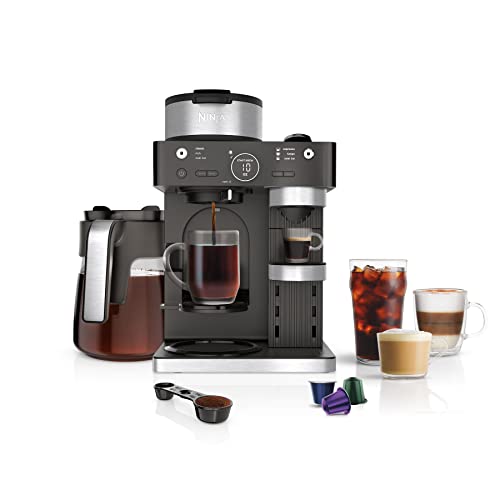
Ninja Espresso & Coffee Maker CFN601 — Best Capsule Combo
The Ninja Espresso & Coffee Maker CFN601 rethinks the combo for households that want espresso drinks without espresso skills. Its espresso side uses Nespresso-compatible capsules across three espresso styles, its coffee side brews single-serve cups, and a built-in frother handles the milk. Nobody grinds, nobody tamps, nobody knocks out a portafilter. It suits busy households, espresso-drink lovers who value repeatability over ritual, and offices. It does not suit households that drink drip by the pot — there is no carafe here — or anyone avoiding capsule costs and waste, which this format carries structurally.
Strengths
- Capsule espresso is perfectly repeatable — the same drink every time, with no technique
- Three espresso styles plus single-serve coffee covers the milk-drink menu most homes actually make
- Built-in frother removes the steam-wand learning curve entirely
Trade-offs
- Capsule cost per drink and capsule waste are the format’s permanent companions
- No drip carafe — households that drink by the pot need a different pick
- Capsule espresso, however consistent, sits below fresh-ground pump espresso at its best
Key specs: Capsule espresso (Nespresso-compatible) + single-serve coffee · 3 espresso styles · built-in frother.
The CFN601’s argument is time. A latte from this machine is a capsule, a button, and frothed milk — a weekday-feasible drink. A latte from a pump combo is a small ceremony. Households that know they will not perform the ceremony daily are not settling by choosing this; they are choosing the machine whose drinks they will actually make, which is the only honest definition of the best machine for a given home.
Its worst trait is the running-cost structure it shares with all capsule systems, flagged in this guide’s best-and-worst coverage as the category’s most expensive habit. Mitigate it where capsule choice allows, drink it knowingly, and the CFN601 is the most convenient true coffee-and-espresso combination in this list.
Best for: busy households wanting repeatable espresso drinks without technique / Not suited for: pot drinkers and capsule-cost avoiders
Check on Amazon — check price on Amazon and confirm the current configuration before ordering.
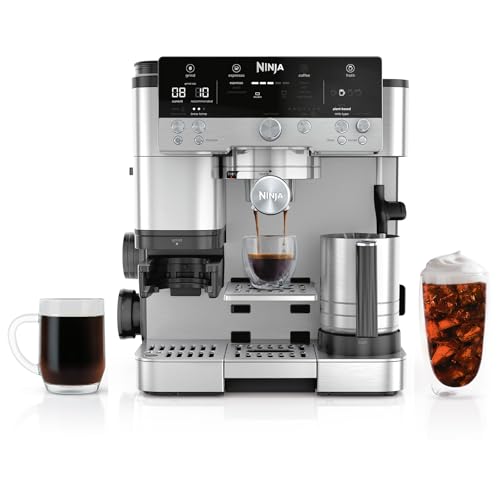
Ninja Luxe Café Premier 3-in-1 Espresso Machine ES601 — Best Guided 3-in-1
The Ninja Luxe Café Premier 3-in-1 Espresso Machine ES601 is the modern answer to the combo compromise: instead of two basic sides, it builds one guided platform — espresso, drip coffee, and cold brew — with Barista Assist technology that guides grind and dose, and a dual froth system producing hot or cold microfoam hands-free. It suits households that want café-style range without café-style skill, and drinkers who move between espresso drinks, drip, and cold coffee across a week. It does not suit minimalists, small counters, or budgets in this guide’s lower tiers — it is a premium platform and occupies space and money accordingly.
Strengths
- Guided assistance attacks the real reason home espresso disappoints: inconsistent grind and dose
- Espresso, drip, and cold brew in one platform is the widest format coverage in this guide
- Dual froth system makes hot and cold foam drinks without wand technique
Trade-offs
- Premium tier pricing and a substantial footprint — this is a counter commitment
- Guidance systems add complexity and more to clean than a basic combo
- Drip purists may still prefer a certified dedicated brewer for the pot alone
Key specs: 3-in-1 espresso/drip/cold brew class machine · Barista Assist guidance · dual froth system.
What the Luxe platform understands is that the gap between home and café espresso is mostly consistency, and consistency can be engineered. Guided dosing removes the guesswork that makes pump-combo owners give up; hands-free frothing removes the second skill. The result is the combo most likely to still be making daily espresso drinks a year after purchase — which, in this category, is the metric that separates the best from the bought-and-abandoned.
Its worst trait is commitment: counter space, purchase tier, and a cleaning routine with more parts than any other pick here. Households that will use its full range weekly will call that fair. Households that want drip plus an occasional latte should save the difference and choose a De’Longhi combo above.
Best for: households wanting guided café range in one premium platform / Not suited for: minimalists, small counters, and lower budgets
Check on Amazon — check price on Amazon and confirm the current configuration before ordering.

Ninja Specialty Drip Coffee Maker, DualBrew Pro CFP301 — Best Coffee-First Alternative
The Ninja Specialty Drip Coffee Maker DualBrew Pro CFP301 earns its place as this guide’s honesty pick. It makes no true espresso — there is no pump and no portafilter — but it brews grounds or pods across four styles and a wide size range up to a full pot, with a built-in frother for the milk drinks many households call ‘lattes’ without needing them to be espresso underneath. It suits households that want variety, pot capacity, and milky drinks without espresso’s cost or technique. It does not suit anyone who wants actual espresso — choose any pick above this one, and this guide will not pretend otherwise.
Strengths
- Widest coffee flexibility here: grounds or pods, four styles, single cup to full pot
- Built-in frother covers the milky-drink pattern most households actually want
- One machine replaces a drip brewer and a pod brewer simultaneously
Trade-offs
- Not an espresso machine — the distinction matters and this guide insists on it
- Pod mode carries pod costs whenever you choose convenience
- Specialty concentrated coffee is a substitute for espresso in drinks, not an equivalent
Key specs: Pods + grounds · 4 brew styles · wide size range up to full pot · built-in frother.
Most ‘coffee and espresso’ searches are really searches for variety plus milk drinks, and for those households this machine is quietly the right answer: a proper pot for the morning, a concentrated specialty cup under frothed milk for the afternoon, a pod when a guest wants decaf. It refuses only one request — a true espresso — and says so in its design rather than in fine print.
Its worst trait is the temptation it creates to blur language. Sellers may call its concentrated style espresso-like; this guide calls it what it is, a strong coffee base for milk drinks, and a good one. Households content with that definition get the most flexible coffee machine in this list. Households who can taste the difference should buy a pump or guided combo and never look back.
Best for: variety-first households that want milk drinks without espresso technique / Not suited for: drinkers who want genuine espresso extraction
Check on Amazon — check price on Amazon and confirm the current configuration before ordering.
Comparison Table
| Pick | Badge | Key spec | Best for |
|---|---|---|---|
| De’Longhi All-in-One Espresso & Coffee Maker | Best Classic Combo | 10-cup drip pot + espresso side · dual heating system · milk frother · 15-bar pump | households drinking drip and milk espresso drinks every week |
| De’Longhi COM530M All-In-One Combination Coffee and Espresso Machine | Best Mid-Range Combo | Combination drip + espresso · 47 oz class carafe side | households adding weekend espresso to a drip routine |
| DeLonghi BCO430 Combination Pump Espresso and 10-Cup Drip Coffee Machine | Best Established Combo Value | Pump espresso + 10-cup drip · frothing wand · silver/black | value-focused households wanting a proven combo design |
| Ninja Espresso & Coffee Maker CFN601 | Best Capsule Combo | Capsule espresso (Nespresso-compatible) + single-serve coffee · 3 espresso styles · built-in frother | busy households wanting repeatable espresso drinks without technique |
| Ninja Luxe Café Premier 3-in-1 Espresso Machine ES601 | Best Guided 3-in-1 | 3-in-1 espresso/drip/cold brew class machine · Barista Assist guidance · dual froth system | households wanting guided café range in one premium platform |
| Ninja Specialty Drip Coffee Maker, DualBrew Pro CFP301 | Best Coffee-First Alternative | Pods + grounds · 4 brew styles · wide size range up to full pot · built-in frother | variety-first households that want milk drinks without espresso technique |
How to Choose At-Home Coffee and Espresso Makers
Name your espresso honestly first. If you want true espresso — pump-extracted, fresh-ground, with crema you can judge — your shortlist is the pump combos and the guided platform. If you want espresso drinks with zero technique, the capsule combo is your format. If you want milky coffee drinks and variety without espresso at all, the coffee-first alternative saves you money and counter regret. Most combo disappointment is a household buying one of these definitions while wanting another.
Second, count the formats you will use weekly, not monthly. A combo earns its width and its price only when both sides work every week. A household that makes espresso twice a year owns a wide drip machine with an expensive ornament; a dedicated brewer plus our inexpensive guides would serve it better. Be as honest about the espresso side’s workload as about the drip side’s.
Third, plan the grinder and the milk. Pump combos need ground coffee fine and fresh enough for espresso, which in practice means a grinder budget beside the machine. And judge the frothing system by your patience: automatic frothers for weekday households, steam wands for households that enjoy the craft. The machine is a system, and the system is what you live with.
Counter Space and Maintenance: The Combo Taxes
Combination machines are wide — they contain two brewers — and they ask for two maintenance routines: descaling on both sides, a frothing system cleaned after every milk drink, and drip-side basics on top. None of this is difficult, but it is roughly double the upkeep of a single-format machine, and households should budget the minutes as honestly as the money.
Measure before you buy: width, height under cabinets with lids and bean systems open, and clearance to pull the machine forward for refilling. A combo that fits only by being wrestled daily will be resented daily, whatever it brews.
The Grinder Truth Every Combo Buyer Must Hear
Every pump combination machine in this guide ships with an unlisted dependency: the grinder. Espresso extraction is a negotiation between pressure and resistance, and the resistance comes from finely, evenly ground coffee. Pre-ground espresso coffee can work — it is ground for the format — but it stales quickly once opened and offers no adjustment when a shot runs fast or slow. A capable burr grinder beside the machine converts the espresso side from a hopeful feature into a reliable one, and combo buyers should budget for it as part of the purchase, not as a later luxury.
This is also the honest dividing line between the combo philosophies. The capsule CFN601 exists for households that will never own that grinder, and trades per-drink cost for freedom from it. The Luxe Café ES601 builds grinding and guidance into the platform, pricing the dependency into the machine itself. The De’Longhi combos assume the household will meet them halfway. None of these positions is wrong — but a household that buys a pump combo while planning never to grind for it has bought the wrong philosophy, and will blame the machine for a decision made at the checkout.
Practical middle ground exists: buy fresh espresso beans in small bags from a roaster or café that will grind them for espresso, use them within days, and accept good-not-great shots while you decide whether the hobby is yours. If it becomes yours, the grinder is the best money in your coffee life. If it does not, the capsule and guided picks in this guide were designed for exactly that discovery.
Milk Drinks, Decoded for Home Buyers
Most home espresso is actually home milk: the cappuccinos, lattes, and flat whites that dominate café orders are milk drinks with espresso inside them, and the milk system of a combo matters as much as its pump. A steam wand gives the most control and the silkiest microfoam, at the price of practice and a pitcher washed after every session. A built-in or automatic frother gives consistent, hands-free foam with no learning curve, at the price of texture ceiling and more parts to clean. A dual froth system, as on the Luxe platform, adds cold foam for iced drinks — a genuinely modern pattern that older combos simply cannot serve.
Judge your household’s real menu before judging the machines. A household drinking black espresso and drip needs no frother at all and should not pay for one. A household whose order is a weekday latte needs weekday-feasible milk, which means automatic. A household that enjoys the Saturday ritual of steaming milk by hand will find the wand a pleasure rather than a chore, and the De’Longhi combos are built for them. The best at-home coffee and espresso maker is the one whose milk system matches the drinks actually ordered in your kitchen — a sentence worth rereading before any purchase in this category.
Setting Up a Coffee Corner That Serves Both Formats
A combination machine works best when the counter around it is organised for its two lives. Keep the drip life on one side — beans, filters, the carafe’s parking spot — and the espresso life on the other: cups warmed or at least room-temperature, the tamper and a knock container if you use them, a small towel that lives at the machine for the wand. Milk belongs in the fridge door nearest the machine, because a latte interrupted by a cross-kitchen expedition is a latte whose espresso sits dying. These are thirty-second decisions made once, and they decide whether the combo feels like a café or like clutter.
Water deserves a permanent arrangement too. Combos drink more water than either single machine, between two brewing circuits and the rinsing both demand. If your machine’s reservoir is awkward to fill at the sink, a slim filling jug kept beside it removes a daily friction that owners consistently underestimate. Descaling supplies for both circuits should live in the same cupboard as the machine — a combo whose maintenance supplies are in another room is a combo that gets descaled late, and both of its formats suffer for it together.
Finally, give the setup a weekly rhythm: one short session that empties, rinses, wipes, and checks both sides. Combination machines reward this consolidated care with a reliability neither side achieves when it is maintained in scattered, forgotten fragments. Ten minutes a week is the rent a two-format machine charges, and households that pay it cheerfully are the ones still praising their combo in year three.
Espresso Drinks Order: A Home Menu That Makes Sense
New combo owners often try to replicate a café menu and exhaust themselves; the households that thrive settle a short home menu and perfect it. A sensible core is three drinks: the straight espresso or long black for the purist, one milk drink done well — cappuccino for foam lovers, latte for the milder palate — and the drip pot that carries the household’s ordinary mornings. Master those, with consistent dose and fresh beans, and your home covers ninety percent of what its drinkers actually order, at a standard cafés would respect.
Seasonal additions keep the menu alive without expanding the daily burden: an iced version of your milk drink in summer — where the Luxe platform’s cold foam earns its keep — and an affogato when ice cream is in the house and dignity is not required. The discipline is depth over breadth. A combo machine’s worst enemy is not a rival appliance; it is the owner’s abandoned ambition, the portafilter untouched since March because the routine grew too elaborate to sustain. Keep the menu short, keep the beans fresh, keep both sides working weekly — that is the entire secret of the households in this category who never go back.
Living With Two Formats: A Month in the Life
The first month with a combination machine follows a pattern worth knowing in advance, because households that expect it keep the machine and households that do not sometimes return a perfectly good one. Week one is drip-dominated: the familiar side carries the mornings while the espresso side is an experiment conducted at weekends, with shots that swing between sour and bitter as the household finds its dose and grind. This is not the machine failing; it is espresso’s universal tuition, and the guided and capsule picks in this guide exist for households who would rather not pay it.
By week three, the households that thrive have made three quiet decisions. They have settled a bean that serves both sides or accepted two bags as the cost of quality. They have fixed a milk routine — who steams, who rinses, where the cloth lives — because milk discipline, not extraction, is where combos live or die. And they have shrunk the menu to the drinks in this guide’s earlier section, made well and often. The espresso that emerges from that discipline will not beat a café’s dedicated setup, and it will beat the café’s convenience every single morning, which is the trade the category was invented to offer.
Month two is where the machine disappears — in the good sense. The routines merge, the counter corner organises itself, and the household’s coffee life runs on one appliance, one water habit, one descaling calendar. If your household reaches that state, the combo was the best purchase in this guide for you, whatever the badges said. If the espresso side falls silent by month two, let that teach you too: sell the compromise, buy the best dedicated version of the format you actually drink, and count the lesson as the tuition it was.
What ‘Good Enough’ Espresso Actually Means at Home
Home espresso discourse suffers from a comparison problem: it measures the kitchen against the best café on the owner’s best day. A fairer standard — and the one this guide used to rank its six — is whether the drink is enjoyable, repeatable, and worth its effort on an ordinary Tuesday. By that standard, every pick here succeeds in the right household, and the differences between them are differences of ceiling and ritual, not of legitimacy. The pump combos reward practice with drinks that keep improving for months. The capsule system delivers the same good drink on day one and day three hundred, which some households correctly value above a higher, harder ceiling. The guided platform splits the difference with engineering, raising the floor without removing the craft entirely.
Repeatability deserves its crown here, because it is the quality home drinkers actually run out of. A machine whose drinks swing wildly teaches its owner to stop trusting it, and an untrusted machine is an unused one — the true worst outcome in this category, worse than any single sour shot. Judge the six above by which one’s tenth drink you can picture most clearly, in your kitchen, with your patience. That pictured drink, made weekly for years, is the best at-home coffee and espresso maker for you — and this guide’s rankings are simply that picture, drawn for the six most common households it serves.
How to Set Up a Combination Coffee and Espresso Maker
A combo rewards a deliberate first week: set up each side separately, learn each routine cleanly, and only then combine them into your mornings.
- Run plain-water cycles through both the drip and espresso sides to flush the machine before any coffee touches it
- Dial in the drip side first with your everyday beans and dose — it is the routine you will use most
- For the espresso side, start with fresh espresso-grind coffee, distribute and tamp evenly, and pull a shot while timing it — adjust the grind, not your force, to steer the flow
- Steam or froth milk immediately after espresso, and purge and wipe the wand or frother at once — milk residue is the combo’s fastest route to bad flavours
- Keep a small brush and cloth at the machine; a ten-second wipe per use prevents the weekly deep-clean nobody enjoys
- Descale both circuits on the manufacturer’s schedule for your water hardness, not when the machine complains
After the first week, the two routines merge into one morning flow: drip for the household, espresso for whoever wants it, milk while the pot finishes. That flow, running smoothly, is the entire promise of the category fulfilled.
Common Buying Mistakes
Combo machines fail households in predictable ways, almost all of them set up at the moment of purchase.
- Buying a pump combo without budgeting for a grinder, then blaming the machine for thin espresso from pre-ground coffee
- Choosing a capsule combo for a pot-drinking household — the missing carafe is discovered on the first family morning
- Ignoring counter measurements, then living with a machine that cannot open fully under the cabinets
- Neglecting the milk system after drinks, so old milk flavours haunt every side of the machine
- Expecting either side to beat the best dedicated machines, rather than valuing the one-footprint compromise for what it is
- Buying the widest guided platform for an occasional latte, when a mid-range combo covered the actual pattern
Final Recommendation
For the classic combination done properly, choose the De’Longhi All-in-One. For the same format at a gentler tier, the COM530M; for a proven design at value, the BCO430. For espresso drinks without technique, the Ninja CFN601; for the guided, everything-in-one platform, the Luxe Café ES601. And if your household’s truth is variety and milk drinks rather than espresso itself, the DualBrew Pro CFP301 is the honest, flexible answer.
Whichever you choose, use both sides weekly, keep the milk system clean, and let the machine be what a combo is meant to be: not two compromises, but one household’s whole coffee life in a single footprint.
The verified shortlist, for quick comparison on Amazon: De’Longhi All-in-One Espresso & Coffee Maker, De’Longhi COM530M All-In-One Combination Coffee and Espresso Machine, DeLonghi BCO430 Combination Pump Espresso and 10-Cup Drip Coffee Machine, Ninja Espresso & Coffee Maker CFN601, Ninja Luxe Café Premier 3-in-1 Espresso Machine ES601, Ninja Specialty Drip Coffee Maker, DualBrew Pro CFP301. Check the current price on Amazon for each before you decide.
Keep exploring the cluster: Best Auto Coffee Makers Best Coffee Makers Best At Home Coffee Makers For Iced Coffee Best And Worst Coffee Makers Best Auto Drip Coffee Makers
One Last Consideration Before You Buy
Before ordering any combination machine, photograph your counter and measure the space with the machine’s listed dimensions in hand — including the height with lids, hoppers, and cup warmers in their open or raised positions, and the depth with the drip tray pulled forward for washing. More combination machines are returned for geometry than for coffee, and every one of those returns was preventable with a tape measure. Confirm the fit, confirm the exact model designation on the listing, and the machine that arrives will be the machine this guide described.
Frequently Asked Questions
Can a combination machine make espresso as good as a dedicated machine?
It can make genuinely enjoyable espresso, especially the guided platform in this guide, but a dedicated machine with a serious grinder keeps the edge in consistency and control. Combos win on footprint, shared routines, and serving households that drink both formats.
Do I need a grinder with a pump combination machine?
For the best results, yes. Espresso needs fresh, fine, adjustable grinding, and pre-ground espresso coffee limits any pump combo. Budget for a capable grinder beside the De’Longhi picks, or choose the capsule or guided options that manage this for you.
Which combo is best if I have never made espresso?
The Ninja Luxe Café ES601, because its guidance manages grind and dose for you, or the capsule CFN601, which removes technique entirely. A traditional pump combo is learnable and rewarding, but it asks for a first month of practice.
How much counter space does a combination machine need?
More than a drip brewer — these are two brewers in one body. Measure width, height with everything open, and pull-forward clearance for refilling before buying. The exact dimensions are on each listing; check them against your cabinets, not your hopes.
Is a capsule espresso combo worth it?
For busy households that value repeatable drinks over ritual, yes — provided you accept capsule cost per drink and capsule waste as the format’s standing charges. Households sensitive to either should choose a pump or guided combo.
Can these machines make drip and espresso at the same time?
The De’Longhi All-in-One’s dual heating system is designed for parallel use. On other combos, the sides may share heating or water resources, so check the listing details for the model you choose if simultaneous brewing matters to your mornings.


