Disclosure: airfryerkitchensupply.com is reader-supported. When you buy through links on our site, we may earn an affiliate commission at no extra cost to you.
Where to buy
Every grill in this guide to the best 8 grills was verified against Amazon listings before it earned a place here, and each one is sold by Amazon or an authorized seller with returns handled through Amazon. Prices on grills move constantly with the season, so this page never prints a fixed number — use the links to check the current price on Amazon on the day you buy.
- Weber Spirit E-310 Gas Grill — Best Overall. Check the current price on Amazon.
- Weber Original Kettle Premium 22-Inch Charcoal Grill — Best Charcoal Grill. Check the current price on Amazon.
- Traeger Pro 22 Wood Pellet Grill & Smoker — Best Pellet Grill. Check the current price on Amazon.
- Charbroil Performance Series 4-Burner Gas Grill — Best Value Gas Grill. Check the current price on Amazon.
- Blackstone 28-Inch Omnivore Griddle with Hood — Best Flat-Top Griddle. Check the current price on Amazon.
- Coleman RoadTrip 285 Portable Propane Grill — Best Portable Grill. Check the current price on Amazon.
Two more styles from the eight we shortlisted — kamado and full-size electric — are covered with verified picks in the buying-guide sections further down, because they serve narrower patios and rules rather than the average backyard.
Shoppers searching for the best 8 grills usually mean one of two things: a shortlist of eight great grills, or the best grills across the eight styles that actually matter. This guide does the honest version of both. We compared eight grill families — propane gas, charcoal kettle, kamado, pellet, flat-top griddle, portable, electric, and indoor — verified the leading model in each against live Amazon data, and then reviewed the six strongest buys in full below. The remaining two styles, kamado and electric, get their own sections with verified picks further down, because they answer narrower questions about insulation and apartment rules.
Why not simply list eight near-identical gas grills? Because burner count is the least interesting difference between grills. What changes your Saturday is heat style: the instant control of gas, the smoke and sear of charcoal, the set-and-forget patience of pellets, the smash-burger surface of a griddle. A household that grills twice a week needs a different machine from one that hosts twelve people twice a summer, and a list that pretends otherwise wastes your money.
One more piece of honesty up front: there is no single “best” grill here, and any ranking that claims one is selling something. There is a best grill for a small patio, a best grill for a brisket, and a best grill for a tailgate. The badges under each pick tell you which job it won, and the trade-offs are printed in the open so you can disagree with us productively.
In this guide
Quick Picks
Short on time? These are the six grills that survived the full comparison, one per major style, so you can match a pick to the way you actually cook instead of scrolling all eight categories.
- Best Overall: Weber Spirit E-310 Gas Grill — the three-burner propane benchmark — even heat, superb parts support, and a footprint that fits real patios.
- Best Charcoal Grill: Weber Original Kettle Premium 22-Inch Charcoal Grill — the 22-inch kettle, upgraded with a lid thermometer and better ash handling — charcoal flavor with training wheels removed.
- Best Pellet Grill: Traeger Pro 22 Wood Pellet Grill & Smoker — 572 square inches of wood-fired, thermostat-run cooking — brisket and ribs without babysitting a fire.
- Best Value Gas Grill: Charbroil Performance Series 4-Burner Gas Grill — a four-burner cabinet grill with a side burner that undercuts the premium brands while keeping the layout families want.
- Best Flat-Top Griddle: Blackstone 28-Inch Omnivore Griddle with Hood — 28 inches of rolled steel for smash burgers, breakfast for a crowd, and stir-fry nights no grate can match.
- Best Portable Grill: Coleman RoadTrip 285 Portable Propane Grill — three burners and 20,000 BTU on a folding stand — the tailgate and campsite benchmark.
How These Picks Were Chosen
Each candidate was checked on this site: the exact model name, burner configuration, and headline specification on the listing had to match the product we describe. Models that failed that match, or that only exist as parts listings and covers, were dropped. What remained was scored on five criteria that decide real ownership: heat control, cooking area honest for its class, build materials where it counts (grates, lid, cart), parts and accessory support, and how the grill behaves in year three rather than week one.
We weighted heat control highest. A grill that cannot hold two zones — one ripping hot, one gentle — forces you to cook everything at one temperature, which is how chicken burns while corn stays raw. Build quality came second, with cast-iron or porcelain-enameled grates preferred because they sear better and survive neglect better than thin chrome wire. Manufacturer support mattered too: burners, flavorizer bars, and grates are wear parts, and a grill whose replacements vanish from sale in two years is a disposable appliance wearing a premium badge.
Finally, we deliberately mixed price tiers. The list includes one premium-leaning pick, several mid-range anchors, and honest budget options, each framed by tier in words rather than printed prices, because grill prices swing too much by season for a printed number to stay true.
The 6 Best Grills Reviewed in Depth

Weber Spirit E-310 Gas Grill — Best Overall
If one grill has to do everything for a typical household — weeknight chicken, weekend burgers, the occasional rack of ribs — the Spirit E-310 is the safest pair of hands in this guide. Its three burners give you a true two-zone fire with a spare burner in reserve, the porcelain-enameled cast-iron grates hold sear heat the way grates should, and Snap-Jet ignition lights each burner individually instead of gambling on one sparker for the whole box.
Strengths
- Three independently lit burners make two-zone cooking easy to set and hold
- Porcelain-enameled cast-iron grates sear hard and clean up with a brass brush
- Weber parts support is the deepest in the industry — burners and bars stay available for years
Trade-offs
- No dedicated sear burner on this trim, so steakhouse crust takes a preheat and patience
- Side shelves are fixed rather than folding, which matters on narrow decks
- It sits in a higher tier than big-box house brands with similar burner counts
| Burners | 3 |
| Grates | Porcelain-enameled cast iron |
| Ignition | Snap-Jet |
| Fuel | Liquid propane |
What separates the Spirit from cheaper three-burners is not the spec sheet, it is the boring engineering underneath: a cookbox that seals well enough to hold temperature in a breeze, burner tubes that light evenly from front to back, and a grease path that actually drains instead of pooling under the fire. In practice that means fewer flare-ups on fatty chicken thighs and a grill that returns to temperature quickly after you open the lid. The Weber Works rail system on the current model accepts drop-in accessories, which is a small thing until you want a prep tray clipped exactly where your tongs live. Assembly is a genuine hour of work, but the instructions are the clearest in the class and every fastener is labeled. For most households this is the grill you buy once and stop thinking about, which is the highest praise a propane grill can earn.
Best for: most households wanting one dependable propane grill for a decade of weeknight and weekend cooking / Not suited for: cooks who need a high-heat sear station or room for twenty burgers at once
Check on Amazon — check the current price on Amazon before you buy; listings, bundles and included accessories change over time.

Weber Original Kettle Premium 22-Inch Charcoal Grill — Best Charcoal Grill
Charcoal is where grilling started, and the 22-inch Weber kettle is still its most honest expression. The Premium trim adds the two things the base kettle makes you improvise: a built-in lid thermometer so you stop guessing at fire temperature, and a hinged cooking grate so you can add coals mid-cook without lifting your food off with the other hand. For the best 8 grills shortlist, this is the charcoal seat, and it is not close.
Strengths
- Deep kettle bowl shapes airflow for both screaming sears and low indirect cooks
- Hinged grate lets you refuel during long cooks without moving the food
- Enormous accessory ecosystem — rotisseries, griddles, pizza kits, and charcoal baskets all fit
Trade-offs
- You are the thermostat: vents and coal placement replace a dial, and there is a learning curve
- No side tables or storage, so you will want a small prep surface nearby
- Ash and charcoal storage add chores that gas owners never think about
| Diameter | 22 inches |
| Fuel | Charcoal |
| Gauge | Built-in lid thermometer |
The kettle rewards skill more than any grill here, and punishes its absence less than you would fear. Bank the coals to one side and you have a sear zone and a safe zone; close the vents halfway and the same fire will hold a pork shoulder for hours. The porcelain-enameled bowl shrugs off weather and the One-Touch ash system sweeps the bowl into a catcher instead of onto your shoes. What the Premium buys over the base kettle is information — that lid thermometer — and information is what turns charcoal from folklore into repeatability. Buy a chimney starter with it, skip lighter fluid forever, and this sub-everything-else grill will out-cook machines at three times its tier for anyone willing to learn fire.
Best for: cooks who want real charcoal flavor and are happy to manage a fire by hand / Not suited for: anyone who wants push-button weeknight speed or precise dial-a-temperature control
Check on Amazon — check the current price on Amazon before you buy; listings, bundles and included accessories change over time.

Traeger Pro 22 Wood Pellet Grill & Smoker — Best Pellet Grill
The Traeger Pro 22 takes the oldest fuel in grilling — wood — and puts it under digital management. Pellets feed automatically from an 18-pound hopper, a controller holds your set temperature, and the included meat probe tells you when the brisket, not the clock, says dinner. Across the eight styles in this guide, pellet is the one that changed who cooks barbecue: people who would never tend a stick burner now serve credible smoked ribs.
Strengths
- Set-the-temperature cooking holds steady for hours of low-and-slow work
- Real wood smoke flavor that gas and electric simply cannot produce
- 572 sq. in. fits a brisket, two chickens, or a serious rack collection
Trade-offs
- Maximum temperature around 450°F means good, not great, searing — many owners add a cast-iron pan or grill grates
- Pellets are a running cost and must be kept dry or the auger jams
- It needs an electrical outlet, which rules out some patios and all campsites
| Cooking area | 572 sq. in. |
| Hopper | 18 lb |
| Max temp | 450°F |
| Probe | Meat probe included |
Judge a pellet grill by its worst hour, not its best: wind, cold, and a long cook. The Pro 22 platform has been in production long enough that its failure points are known and its parts — augers, hot rods, controllers, covers — are everywhere, which is worth more than a novelty feature. Smoke flavor is honest but gentle compared with an offset smoker; think wood-kissed rather than smokehouse-heavy, which most households actually prefer on chicken and pork. Cleanup means vacuuming ash from the firepot every few cooks, a five-minute job that owners who skip it eventually pay for in flameouts. If your grilling ambitions lean toward ribs, pulled pork, and whole birds with minimal supervision, this is your seat at the table.
Best for: low-and-slow fans who want wood flavor without fire management / Not suited for: high-heat sear purists and anyone without a covered outlet nearby
Check on Amazon — check the current price on Amazon before you buy; listings, bundles and included accessories change over time.

Charbroil Performance Series 4-Burner Gas Grill — Best Value Gas Grill
Not every household should pay Weber money, and the Charbroil Performance 4-burner is the strongest argument why not. You get the layout most families actually use — four main burners under a family-size grate, a side burner for beans or a sauce pan, and a closed cabinet that hides the propane tank — in the value tier instead of the premium one. In a list of the best 8 grills it takes the value-gas seat by covering the basics without a gimmick.
Strengths
- Four burners plus a side burner is the most-used layout in backyard cooking
- Closed cabinet keeps the tank out of sight and gear off the patio floor
- Replacement burners, heat tents, and grates are cheap and widely stocked
Trade-offs
- Thinner steel and lighter grates than premium rivals — expect a shorter cosmetic life outdoors
- Ignition and burner parts are wear items you will likely replace within a few seasons
- Assembly is longer and the instructions less polished than the premium brands
| Burners | 4 plus side burner |
| Cabinet | Closed cabinet cart |
| Model | 463253925 |
The honest way to judge a value grill is cost per season, not cost per purchase. The Performance platform sells in huge numbers, which keeps its wear parts inexpensive and available — when a heat tent rusts in year three, a replacement set costs little and swaps in minutes. Heat performance is perfectly serviceable: it sears, it roasts with the lid down, and its four burners zone well enough for burgers on one side and buns on the other. Where the savings show is in the details — stamped rather than cast components, a lighter lid, and paint that wants a cover. Buy the cover, keep it dry, and this grill returns several good seasons for value-tier money, which is exactly the deal it promises.
Best for: families who want a full-size four-burner layout on a value-tier budget / Not suited for: buyers expecting a ten-year, leave-it-uncovered heirloom
Check on Amazon — check the current price on Amazon before you buy; listings, bundles and included accessories change over time.

Blackstone 28-Inch Omnivore Griddle with Hood — Best Flat-Top Griddle
A flat-top is not a grill with the grates missing; it is a different instrument. The Blackstone 28-inch Omnivore puts a wide steel surface over two burners, and on it you can cook the foods grates handle badly — smash burgers with lacy edges, fried rice, cheesesteaks, pancakes and bacon for eight people at once. The hood on this version adds roasting and melting ability the open models lack, and the rear grease management keeps the surface workable through a long cook.
Strengths
- Huge flat surface cooks breakfast, burgers, and stir-fry for a crowd in one batch
- Two burners create a hot zone and a holding zone across the steel
- Hood version melts cheese and roasts in a way open griddles cannot
Trade-offs
- No grate marks and no direct-flame flavor — it complements a grill rather than replacing one
- The steel needs seasoning and a light oil coat after cooks to stay rust-free
- It is a single-purpose footprint: wide, and it stores like it
| Surface | 28-inch flat top |
| Hood | Included |
| Shelves | Counter-height side shelves |
The learning curve here is about heat mapping, not technique. The steel runs hotter over the burners and cooler at the edges, and good flat-top cooks use that gradient constantly — searing in the middle, holding at the sides, pushing finished food outward. Seasoning is a one-time ritual of thin oil coats burned in until the surface darkens, after which eggs slide and cleanup is a scrape and a wipe. The Omnivore plate is engineered to heat more evenly and resist warping better than older Blackstone tops, which were the platform’s known weakness. If your gatherings skew toward brunch, tacos, and burger nights, this style earns its patio space faster than any other on the list.
Best for: crowd cooks whose menu leans to burgers, breakfast, and teppanyaki-style dinners / Not suited for: smoke and char seekers, or patios that can only fit one cooking appliance
Check on Amazon — check the current price on Amazon before you buy; listings, bundles and included accessories change over time.
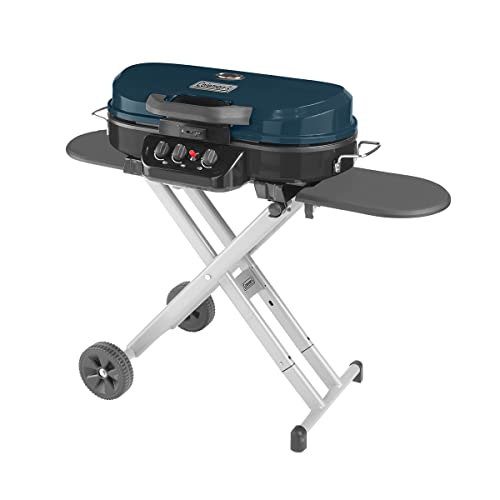
Coleman RoadTrip 285 Portable Propane Grill — Best Portable Grill
Portability usually means compromise: one burner, a grate the size of a dinner plate, and heat that gives up in a breeze. The RoadTrip 285 refuses most of that. Three adjustable burners put out 20,000 BTU under a full-size cooking surface, the stand folds and rolls like luggage, and swappable tops let it run as a grill or griddle. For the eighth-style question — what do you cook on away from home — this is the answer that has won parking lots for years.
Strengths
- Three burners give real zone control that most portables cannot offer
- Folding wheeled stand sets up in minutes and packs into a trunk
- Runs on disposable cylinders at the site or a full tank at home with an adapter hose
Trade-offs
- Heavier than tabletop portables — portable means car-portable, not backpack-portable
- Small cylinders burn fast at full power, so the adapter hose is near-mandatory for long cooks
- Lid height limits whole birds and tall roasts
| Burners | 3 adjustable |
| Output | 20,000 BTU |
| Ignition | Instastart push-button |
The RoadTrip’s trick is that it does not shrink the cooking, only the storage. At a campsite it handles burgers for six, corn alongside, and breakfast on the griddle top the next morning; at home on a small balcony it moonlights as a primary grill for couples. Instastart ignition is matchless and reliable, and the burners are independently adjustable, so one side can sear while the other keeps buns warm. The honest limits are fuel and stature: plan on the bulk-tank hose for anything beyond a single meal, and do not expect to beer-can a chicken under that lid. Within those lines, nothing else at its tier travels this well and cooks this big.
Best for: tailgaters, campers, and small-space households needing one grill that moves / Not suited for: backcountry campers or cooks who need tall-lid roasting away from home
Check on Amazon — check the current price on Amazon before you buy; listings, bundles and included accessories change over time.
Comparison Table
| Pick | Badge | Key spec | Best for |
|---|---|---|---|
| Weber Spirit E-310 Gas Grill | Best Overall | 3 — burners | most households wanting one dependable propane grill for a decade of weeknight and weekend cooking |
| Weber Original Kettle Premium 22-Inch Charcoal Grill | Best Charcoal Grill | 22 inches — diameter | cooks who want real charcoal flavor and are happy to manage a fire by hand |
| Traeger Pro 22 Wood Pellet Grill & Smoker | Best Pellet Grill | 572 sq. in. — cooking area | low-and-slow fans who want wood flavor without fire management |
| Charbroil Performance Series 4-Burner Gas Grill | Best Value Gas Grill | 4 plus side burner — burners | families who want a full-size four-burner layout on a value-tier budget |
| Blackstone 28-Inch Omnivore Griddle with Hood | Best Flat-Top Griddle | 28-inch flat top — surface | crowd cooks whose menu leans to burgers, breakfast, and teppanyaki-style dinners |
| Coleman RoadTrip 285 Portable Propane Grill | Best Portable Grill | 3 adjustable — burners | tailgaters, campers, and small-space households needing one grill that moves |
Use the table as a filter, not a verdict: eliminate the rows whose key spec fights your space, fuel rules, or headcount, and the best 8 grills decision usually narrows to two finalists whose full reviews above will settle it.
How to Choose Among the Best 8 Grills
Start with fuel, not features. Propane is the default for a reason — instant on, instant off, precise enough, and available everywhere — but it is not automatically right for you. Charcoal costs less to buy and more in time. Pellets cost more to buy and less in attention. Electric exists for rules, not preference. A griddle is a second instrument, not a first one, unless your menu says otherwise. The eight styles in this guide collapse into a simple order of questions: What am I allowed to burn? How many people do I feed? Do I want to tend the fire or ignore it?
Cooking area, translated honestly
Manufacturers quote total area including warming racks, which inflates every number in the industry. As a working rule, the main grate should fit roughly one burger per 25–30 square inches of primary space for comfortable cooking with room to move food. A couple needs little; a family of five doing burgers and corn wants a four-burner-class grate or a 28-inch griddle; regular hosts of ten-plus should look at five and six burners or accept cooking in waves, which is honestly fine if the grill holds heat well between batches.

Burners and zones beat raw BTU
BTU figures are marketing confetti. What matters is whether the grill can hold two temperatures at once and recover heat after the lid opens. Three burners is the practical minimum for real two-zone cooking on gas; two burners can fake it with a cool edge; one burner cannot. On charcoal, zone cooking is a coal-placement skill. On pellets, zones barely exist — that is the trade you make for consistency. Judge any grill first by the zones it can hold, and let BTU take care of itself.
Kamado and Electric: The Other Two Styles From the Eight
Two styles from the original eight did not take a full review seat, and both deserve a straight explanation rather than silence. Kamado cooking — a heavily insulated charcoal chamber, ceramic or steel — is the efficiency extreme of grilling: it sips charcoal, holds low temperatures for many hours, and can also run hot enough for steakhouse sears and pizza. The verified value entry is the Char-Griller AKORN 20-Inch Kamado Grill, whose triple-wall insulated steel body delivers most of the kamado effect without the weight or fragility of ceramic. Choose kamado if you want one charcoal grill that both smokes and sears better than a kettle, and you accept a smaller, round cooking surface.
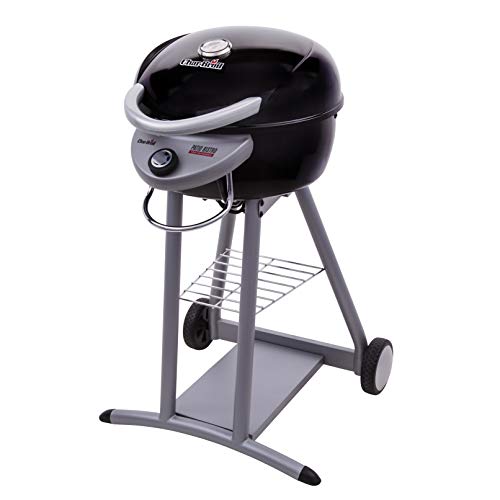
Electric is the rules-driven style: balconies with open-flame bans, condos, and patios without gas storage. Modern electric grills are far better than the hot plates of memory. The Char-Broil Patio Bistro TRU-Infrared Electric Grill uses an infrared electric element under a real grate and cooks recognizably grilled food, while compact options like the Weber Lumin Compact Electric Grill suit one or two people on a small balcony. The honest ceiling is sear intensity and smoke — there is no combustion, so there is no combustion flavor — but for thousands of households the choice is electric or nothing, and electric, done well, is genuinely good.
Where does that leave the count? Eight styles, six full reviews, two specialist sections — because depth serves you better than symmetry. If your situation points at kamado or electric, the picks above are verified and linked; if it points anywhere else, the six reviews are your shortlist.
Gas vs. Charcoal vs. Pellet: The Flavor and Effort Ledger
Every grill debate is secretly this one, so let us settle it with the ledger rather than folklore. Gas gives you the least added flavor and the least effort: food tastes like itself, lightly kissed by dripping smoke, and you are cooking five minutes after you walk outside. Charcoal gives the most classic grill flavor — part fuel, part vaporized drippings — and demands the most from you: lighting, waiting, vent management, ash. Pellet sits between on flavor, with clean wood smoke that is gentler than charcoal, and below gas on effort, because a controller does the tending.
Cost of ownership follows the same order reversed. Charcoal grills are cheapest to buy and cheapest to run if you cook often; gas grills cost more, with propane a modest ongoing expense; pellet grills cost the most up front and burn a steady stream of pellets that must stay dry. None of these is the wrong answer. The wrong answer is buying for the cook you wish you were. If weeknights are real and weekends are short, gas or pellet will feed you better than a charcoal grill you resent. If the fire is the hobby, charcoal will make you happier than any dial.
Grill Materials, Decoded: What Actually Predicts a Long Life
Strip away the styling and every grill in this guide is four materials decisions. The cookbox and lid want porcelain-enameled steel or cast aluminum — enamel laughs at weather, aluminum cannot rust, and both hold heat honestly. Bare painted steel is the budget tell: it cooks fine and corrodes on a schedule. The grates want mass: porcelain-enameled cast iron first, heavy stainless rod second, thin porcelain-coated steel third, chrome wire last. Mass is sear, and sear is the difference between grill marks and steamed stripes.
Burners and heat management parts are where gas grills live or die. Stainless burner tubes outlast aluminized ones, but replaceability outranks metallurgy — a mid-grade burner you can reorder in ten minutes beats an exotic one you cannot. Flavorizer bars, heat tents, and deflectors are sacrificial armor for the burners beneath them; treat them as consumables with a replacement rhythm and the burners below will outlive the cart. On charcoal grills the equivalents are the charcoal grate and the ash system; on pellet grills, the firepot and igniter. Every style has its sacrificial layer — the ownership skill is knowing yours and feeding it on schedule.
The cart and hardware decide how the grill feels in year five. Welded frames stay square; bolted frames can be re-tightened, which is its own virtue. Wheels matter more than dignity suggests: a grill that rolls easily gets moved under cover, leveled on the patio, and cleaned behind. Read any grill in this guide through this lens — enamel, grate mass, sacrificial parts, frame — and you can predict its decade more accurately than any feature list will tell you.
A First Month With a New Grill: The Break-In Curriculum
Week one is for burning off the factory and learning the fire. Run the grill empty at working temperature, cook something forgiving — sausages, chicken thighs — and pay attention to where the hot spots live. Every grill has a personality: a hot back-left, a lazy front edge, a lid thermometer that reads twenty high. Your only job this week is to meet it, ideally with the bread test described in the how-to section and a notebook you will consult twice and then never need again.
Week two is for the two-zone fire, practiced on food that forgives. Thighs seared over the hot side and finished on the gentle side teach the timing of your zones better than any manual. Week three is for a longer cook — a whole chicken, a rack of ribs, a shoulder on the pellet or kettle — because long cooks expose the second personality trait: how the grill holds temperature when nobody is performing for it. Week four is for a crowd, small version: six burgers, corn, and a vegetable, staggered by the zone map, served together.
By the end of the month you own something no review can sell you: calibration. You know your grill’s thermometer offset, its hot corner, its recovery speed, and its appetite for fuel. Every pick in this guide was chosen to reward that month — stable platforms whose personalities are consistent enough to learn. A grill you understand will out-cook a superior grill you are guessing at, which is the deepest truth in this entire roundup.
What to Cook First on Each Style: A Starter Menu by Grill
New grills teach fastest on the right first food, and each style here has one. On the gas grill, start with chicken thighs, skin-on and bone-in: they forgive timing errors, baste themselves, and reveal your hot spots in their browning. On the kettle, start with a whole chicken, indirect, with the vents half open — an hour of gentle convection that teaches airflow better than any burger. On the pellet grill, start with a pork shoulder and no plans: the long, patient cook is the entire point of the machine, and pulled pork forgives every wobble of a first run.
On the griddle, start with breakfast for a crowd — bacon, eggs, pancakes in waves — because the flat top’s joy is volume and sequence, and breakfast teaches both in twenty minutes. On the portable, start with sausages and peppers at the park: low stakes, high reward, and the setup-teardown routine learned where it belongs. On the kamado, start with ribs, because stability is its sermon and ribs are its scripture. On the electrics, start with vegetables and fish, the foods their even, gentle heat flatters most, and work up to steaks once the searing sequence is reflex.
Notice the pattern: every starter menu is inexpensive, forgiving, and diagnostic. Expensive steaks are a terrible first cook on any machine — the stakes are high, the feedback is muddy, and the lesson costs forty dollars. Run the starter menu, write down what the grill did, and your second cook on each style starts from knowledge instead of hope. That is how the eight styles stop being a list and become a repertoire.
Grill Safety, Siting, and Clearances: The Boring Section That Matters Most
Every style in this guide makes fire or serious heat, and the rules rhyme across all of them. Site any grill on a stable, non-combustible surface, outdoors or in genuinely open air, with clear space above and behind it — manufacturer clearances to siding, railings, and overhangs are minimums written from incident reports, not suggestions. Never grill in a garage or enclosed porch: carbon monoxide is colorless, odorless, and produced by every combustion fuel here, and the rainy-day exception is the one that fills emergency rooms. Keep a lid and a fire extinguisher rated for grease within reach, and know that water on a grease fire is an accelerant wearing a disguise.
Fuel-specific disciplines layer on top. Propane owners leak-check after every tank change and store tanks upright, outdoors, and capped. Charcoal owners treat ash as live for a full day and give it a metal container and a cooling period before any bin. Pellet owners keep the firepot vacuumed and the pellets dry, because a neglected auger tube can smolder backward into the hopper. Electric owners give the grill its own circuit and a GFCI outlet, and route cords where feet and water are not.
Children and pets get a three-foot boundary that adults enforce without exception, and hot grills get announced like pool rules — out loud, every time, because guests do not know which surfaces hold heat. None of this diminishes the pleasure of the thing. It is the frame that lets the pleasure repeat for decades, across every style on this page, without the one afternoon that rewrites a family’s story. Read it once, build the habits, and then go back to arguing about charcoal versus gas, which is the argument grilling actually runs on.
Accessories Worth Owning, by Style
Accessories should be bought the way grill styles were chosen in this guide: by the job, after the platform, in the order they pay. For gas, the first accessory is the fitted cover and the second is a griddle insert that turns one burner zone into a breakfast and smash-burger station; together they add more cooking days than any other pair of purchases. For charcoal, the chimney starter is not an accessory but a missing part of the grill itself, followed by charcoal baskets that make two-zone fires tidier and repeatable. For pellet, a quality cover and a pellet storage bin protect the two things pellets fear — weather and moisture — and a front shelf, if your model accepts one, pays for itself in the first long cook.
For the griddle, the kit is a wide spatula, a scraper, and squeeze bottles for oil and water; the technique lives in those three tools. For portables, the adapter hose for a full-size tank is the purchase that changes the running-cost math, and a fitted carry bag protects the investment in transit. For kamado and kettle alike, heat-resistant gloves and a long pair of tongs outrank every gadget with a battery. Notice the theme: the accessories that matter protect the grill, feed it properly, or put your hands safely closer to the work. Everything else in the catalog is decoration until your cooking asks for it by name — and by then, you will know exactly which item to buy and why.
How to Set Up a Two-Zone Fire on Any Grill
Whatever you buy from this list, one technique will improve your cooking more than any accessory: the two-zone fire. One side hot for searing, one side gentle for finishing and holding. It is how you serve chicken that is both crisp-skinned and cooked through, and steaks with a crust and a blushing center. Here is the setup for each fuel.
- On gas: light all burners on high for a ten-minute preheat with the lid down, then turn one side to low or off. Sear over the hot side, move food to the gentle side, and close the lid to finish with convection heat.
- On charcoal: light a full chimney, pour it over only half the coal grate, and leave the other half bare. Food starts over the coals and retreats to the empty side; the lid and vents set the finishing temperature.
- On a kettle with baskets: charcoal baskets pushed together on one side give a tighter, hotter sear zone and a cleaner indirect side than a loose pile — worth the small accessory cost.
- On a pellet grill: zones barely exist, so fake them with hardware: preheat a cast-iron pan or grill grate insert at high heat for searing, then move food to the main grate at your smoking temperature.
- On a griddle: run one burner high and one low. The steel gradient becomes your zones — sear in the hot half, hold in the cool half, and push finished food to the far edge.
- Verify with your hand and a thermometer: hover your palm six inches over the grate — two to three seconds before you must pull away means searing heat. Then confirm with an instant-read thermometer in the food, because color lies and temperature does not.
Practice the setup twice on inexpensive food — chicken thighs and sausages forgive everything — and the third time it will be reflex. Every pick in this guide was chosen partly for how well it supports this one technique, because it is the difference between grilling and merely cooking outdoors.
Common Buying Mistakes
Buying by BTU. A high BTU number on a thin, leaky cookbox produces a grill that is hot at the grate and useless in the wind. Burner count, cookbox sealing, and grate material predict performance; BTU predicts advertising.
Counting the warming rack as cooking space. Manufacturers do it, so their area numbers flatter them. Size your grill by the main grate and your real headcount, not by the brochure total.
Skipping the cover. Every style in this guide lives outdoors, and water is the enemy of burners, steel tops, pellet augers, and ignition systems alike. A fitted cover is the cheapest lifespan extension in grilling.
Never replacing wear parts until they fail mid-cook. Flavorizer bars, heat tents, igniters, and grates are consumables. Inspect them each spring; a grill that gets its wear parts replaced on schedule cooks like new for years.
Judging a grill by its first cook. Griddles need seasoning, kettles need a few fires to learn, pellet grills need a burn-in. Give any new grill three cooks before you decide what it is.
Final Recommendation
If you want one answer: the Weber Spirit E-310 Gas Grill is the grill most households should buy — controlled, durable, and supported for years. If flavor is the point and time is available, the Weber Original Kettle Premium 22-Inch Charcoal Grill cooks food no gas grill can quite match, for value-tier money. If your heart is in barbecue, the Traeger Pro 22 Wood Pellet Grill & Smoker turns ribs and brisket into a set-and-supervise routine instead of an all-day vigil.
Hosts and brunch people should look hard at the Blackstone 28-Inch Omnivore Griddle with Hood; anyone cooking away from home, at the Coleman RoadTrip 285 Portable Propane Grill; and anyone whose budget is the loudest voice in the room, at the Charbroil Performance Series 4-Burner Gas Grill, which covers the family layout honestly at a value tier. Kamado and electric shoppers are served in the guide sections above with verified picks for those narrower briefs.
Whichever seat you take, buy the cover, learn the two-zone fire, and cook on it twice before inviting critics. The best grill is the one that fits your fuel rules, your headcount, and your patience — and every pick here was verified so that the one you choose is the one that actually arrives.
Keep comparing within the same family before you decide: Best 10 Grills · Best 4 Burner Gas Grills · Best 22 Inch Charcoal Grills.
Frequently Asked Questions
What are the eight grill styles compared in this guide?
Propane gas, charcoal kettle, kamado, pellet, flat-top griddle, portable, electric, and indoor electric. Six earned full reviews; kamado and electric are covered with verified picks in the guide sections because they answer narrower needs.
Is a three-burner grill big enough for a family?
For most families, yes. A three-burner grill like the Spirit E-310 handles burgers for six to eight people in one batch and zones properly for mixed cooking. Regular hosts of ten or more should step up to four or five burners.
Which grill style has the best flavor?
Charcoal, for classic grill flavor, with pellet a close and much easier second. Gas adds the least flavor of its own, which many people prefer for delicate food like fish and vegetables.
How long should a good grill last?
A premium gas grill with replaced wear parts can pass ten years. Value-tier gas grills typically give three to five good seasons with a cover. Kettles and kamados can last far longer because they have almost nothing to break.
Do pellet grills need electricity?
Yes — the auger, fan, and controller run on household power, and they consume pellets as fuel. They cannot run off-grid without an inverter and a battery or generator.
What is the first accessory to buy with a new grill?
A fitted cover, a chimney starter if you bought charcoal, and an instant-read thermometer regardless of fuel. Those three protect the grill, light the fire, and tell the truth about doneness.
Related reading: Best 3 Burner Gas Grills · Best Affordable Bbq Grills · Best 6 Burner Gas Grills.


