Disclosure: airfryerkitchensupply.com is reader-supported. When you buy through links on our site, we may earn an affiliate commission at no extra cost to you.
Where to buy
For shoppers comparing the best 5 composting toilets, every linked model below was verified through this site’s Amazon catalog data on 2026-11-20, so the listing you land on is the configuration described. Toilets are heavy, fragile freight: confirm the rough-in, bowl shape, height basis and seat inclusion on the listing before ordering, keep the carton until the unit is test-fitted on your flange, and plan a two-person lift for any one-piece or tall model.
- Nature’s Head Self Contained Composting Toilet with Close Quarters Spider Handle — Check price on Amazon
- Separett Villa Urine-Separating Compost Toilet — Check price on Amazon
- Nature’s Head Self Contained Composting Toilet with Foot-Spider Handle — Check price on Amazon
- Separett Tiny Self-Contained Urine-Separating Compost Toilet — Check price on Amazon
- OGO Origin Compact Composting Toilet — 15in Footprint — Check price on Amazon
- Compo Closet Cuddy Composting Toilet — Waterless, Self-Contained — Check price on Amazon
A shortlist of the best 5 composting toilets has to span two genuinely different technologies, because ‘composting toilet’ covers both true composting units — which hold solids in a medium and process them in place — and urine-separating units, which bag solids for removal and skip the in-unit process entirely. Five core picks lead this page, one for each living situation the category serves, and a sixth model joins them for the common case where cutting a vent hole is impossible. Every one is waterless, sewerless and installable without a plumber.
The buying decision runs on routine, not hardware. Composting models ask for medium management and a vent run, and reward you with no consumables and long emptying cycles. Separating models ask for bags and a disposal plan, and reward you with almost nothing to learn. Vehicle and tiny-space models shrink capacities to fit the cube they are given. Read the picks by the life you will actually live with them — the best composting toilet is the one whose weekly routine you will still be doing cheerfully in year two.
In this guide
Quick Picks
- Best Overall — Nature’s Head Self Contained Composting Toilet with Close Quarters Spider Handle: the reference composting design: urine diversion, fan venting, agitator, in the close-quarters handle version
- Best for Homesteads and Cottages — Separett Villa Urine-Separating Compost Toilet: Separett’s no-mixing, bag-based Villa — the simplest routine in the category
- Best for Limited Hand Strength — Nature’s Head Self Contained Composting Toilet with Foot-Spider Handle: the Nature’s Head platform with a foot-operated agitator
- Best for Vans and RVs — Separett Tiny Self-Contained Urine-Separating Compost Toilet: Separett Tiny: built-in urine container with an emptying sensor
- Best Compact Footprint — OGO Origin Compact Composting Toilet — 15in Footprint: the OGO Origin’s 15-inch footprint for conversions and boat heads
- Best Where Venting Is Hard — Compo Closet Cuddy Composting Toilet — Waterless, Self-Contained: the Cuddy’s carbon-filter fan system in a self-contained 3.9-gallon unit
How These Picks Were Chosen
Our verification pass ran through the site’s own Amazon catalog connection on 2026-11-20. For each candidate we searched the brand and model, read the exact title the catalog returned, and only then assigned an ASIN. That discipline matters in toilets more than in most categories, because a single model family can span heights, bowl shapes, rough-ins and flush volumes that look identical in a thumbnail. Spec boxes in this guide repeat only what those verified titles state; anything else is described in general terms or left out.
From the verified shortlist we chose for coverage of the brief rather than for six near-identical boxes: different heights, different flush strategies, different formats and different tiers, so that the comparison teaches the decision instead of merely listing products. Where a maker’s listing states a claim we cannot independently test — a bulk-clearing score, an odour promise — the review says whose claim it is. That is the standard the rest of the page is written to.
The 6 Best 5 composting toilets
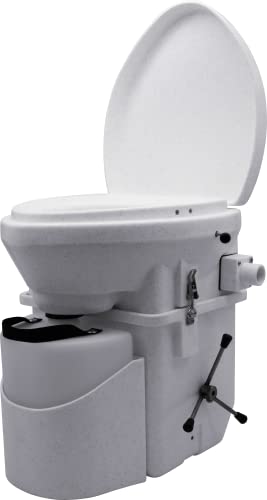
Nature’s Head Self Contained Composting Toilet with Close Quarters Spider Handle — Best Overall
The Nature’s Head is the reference design in modern composting toilets: a self-contained, urine-diverting unit with a hand-crank agitator that mixes solids into a peat or coir medium, and a small vent fan that keeps the unit odour-free and the medium drying. The close-quarters spider handle suits tight heads and van conversions where crank swing room is limited.
Strengths
- Urine diversion + vent fan: the proven odour-control formula
- Self-contained: no black-water plumbing, no water supply
- Agitator handle folds into a compact footprint
Trade-offs
- Solids chamber needs emptying on a cycle that depends on use
- Requires a vent run to outside air and a 12V or mains fan supply
- Premium tier for the category
| Specification | Detail (as verified) |
|---|---|
| Type | Self-contained composting, urine diverting |
| Water use | None — waterless |
| Ventilation | Fan-vented (vent run required) |
| Handle | Close-quarters spider handle (per Amazon title) |
Composting toilets succeed or fail on moisture management, and the Nature’s Head attacks it from both ends: urine is diverted away from the solids chamber at the bowl, and the fan continuously draws air across the medium so the compost stays aerobic. Used that way — medium kept crumbly, fan always on, urine bottle emptied before it is full — the design has an established record in boats, cabins and off-grid homes. Used carelessly, any composting toilet disappoints. Budget the learning curve honestly: the first month teaches the routine, and after that the routine is minutes a week.
In daily use, the ownership experience of this Self-contained composting toilet, urine diverting design is defined less by its headline numbers than by small repetitions: the seat that does not slam, the bowl that rinses clean on an ordinary flush, the parts your plumber already carries. Judge it on those repetitions and the specification makes sense as a whole rather than as a list.
Best for: the household its badge names — best overall — who have confirmed the measurements in this guide. / Not suited for: buyers whose room, rough-in or users contradict those measurements.
Check on Amazon — check the current price on Amazon for the exact configuration described.

Separett Villa Urine-Separating Compost Toilet — Best for Homesteads and Cottages
The Separett Villa takes the opposite philosophy to crank-and-compost units: no additives, no mixing, no agitator. Urine is separated at the bowl; solids drop into a compostable bag inside the unit and are removed with the bag. For homesteads, cottages and skoolies that want the simplest possible routine, that mechanical minimalism is the appeal.
Strengths
- No mixing, no medium, no agitator to manage
- Bag-based solids removal is a fast, clean routine
- High-capacity design aimed at cottages and homesteads
Trade-offs
- Ongoing cost and supply of compostable bags
- Solids are bagged, not composted in-unit — you need a disposal or composting plan
- Urine needs a drain, soakaway or container solution
| Specification | Detail (as verified) |
|---|---|
| Type | Urine-separating, bag-based |
| Water use | None — waterless |
| Additives | None needed (per Amazon title) |
| Positioning | High-capacity; homestead, skoolie, cottage (per Amazon title) |
The Villa is honest about what most users actually do: few people want to manage an active compost process inside a toilet. Separating urine — the source of nearly all odour when mixed with solids — and bagging the rest delivers a dry, low-odour bathroom with almost nothing to learn. The trade is consumables and downstream handling: bags are a running cost, and the bagged waste still has to go somewhere lawful. For a cottage used on weekends, that arithmetic is excellent; for a full-time household, compare the bag cost against a composting unit’s emptying routine.
Ownership, realistically, is where this Urine-separating dry toilet, bag-based solids collection model earns or loses its place. Installation is a one-afternoon event; the decade after is water level checks, a seal or valve years from now, and a bowl that either stays easy to clean or does not. The design choices described above all point the same way: toward the quiet, unremarkable reliability this category should deliver.
Best for: the household its badge names — best for homesteads and cottages — who have confirmed the measurements in this guide. / Not suited for: buyers whose room, rough-in or users contradict those measurements.
Check on Amazon — check the current price on Amazon for the exact configuration described.

Nature’s Head Self Contained Composting Toilet with Foot-Spider Handle — Best for Limited Hand Strength
This Nature’s Head variant swaps the hand crank for a foot-spider handle, letting the user agitate the compost medium with a foot motion — a small change that matters in a seated routine, in tight spaces, and for users who prefer not to reach beside the bowl. Everything else is the proven platform: urine diversion, fan venting, self-contained operation.
Strengths
- Foot-operated agitator: easier routine, less reaching
- Same urine-diverting, fan-vented platform as the classic model
- Self-contained for cabins, boats, RVs and off-grid rooms
Trade-offs
- Foot mechanism is one more moving part to keep clean
- Same emptying discipline as any composting unit
- Premium tier
| Specification | Detail (as verified) |
|---|---|
| Type | Self-contained composting, urine diverting |
| Water use | None — waterless |
| Ventilation | Fan-vented (vent run required) |
| Handle | Foot-spider handle (per Amazon title) |
Choose between the two Nature’s Head variants by watching your own routine: if the compost chamber will be agitated after each solids use — the recommended habit — the handle you will actually use is the right one. The foot-spider suits users with limited hand strength and installations where a hand crank would foul a wall or cabinet. Otherwise the platform decision is identical: vent it properly, keep the fan running, manage the urine bottle, and the unit rewards you with a bathroom that needs no water and no sewer at all.
Think of this Self-contained composting toilet, urine diverting model as a long contract rather than a purchase. Its terms are written in the trapway, the valve and the glaze — the parts that decide whether year ten feels like year one. On the evidence of its verified specification, those terms are fair ones for the household its badge describes.
Best for: the household its badge names — best for limited hand strength — who have confirmed the measurements in this guide. / Not suited for: buyers whose room, rough-in or users contradict those measurements.
Check on Amazon — check the current price on Amazon for the exact configuration described.

Separett Tiny Self-Contained Urine-Separating Compost Toilet — Best for Vans and RVs
The Separett Tiny shrinks the Villa philosophy for vans, RVs, cabins and boats: urine separation with a built-in container — no external drain needed — and an emptying sensor that warns before the container is full. That sensor solves the classic small-vehicle failure mode, the forgotten urine bottle, in a way low-tech units cannot.
Strengths
- Built-in urine container: no drain plumbing at all
- Emptying sensor prevents the classic overflow surprise
- Compact footprint for vehicles and small cabins
Trade-offs
- Container capacity means frequent emptying for full-time use
- Sensor and electronics add a failure mode gravity units lack
- Premium tier for its size class
| Specification | Detail (as verified) |
|---|---|
| Type | Urine-separating, self-contained |
| Water use | None — waterless |
| Urine handling | Built-in container with emptying sensor (per Amazon title) |
| Positioning | Vans, RVs, cabins, boats (per Amazon title) |
In a van or boat, the question is never whether a urine container will be forgotten — it is when. The Tiny’s sensor turns that human error into a dashboard warning, which is why it earns its premium over simpler separating toilets in moving vehicles. The solids side keeps Separett’s bag-based simplicity. Size your expectations by capacity: this is a superb toilet for two travellers or a weekend cabin, and a demanding one for a full-time family, purely because small containers fill at the speed of use.
In daily use, the ownership experience of this Urine-separating dry toilet, built-in urine container design is defined less by its headline numbers than by small repetitions: the seat that does not slam, the bowl that rinses clean on an ordinary flush, the parts your plumber already carries. Judge it on those repetitions and the specification makes sense as a whole rather than as a list.
Best for: the household its badge names — best for vans and rvs — who have confirmed the measurements in this guide. / Not suited for: buyers whose room, rough-in or users contradict those measurements.
Check on Amazon — check the current price on Amazon for the exact configuration described.
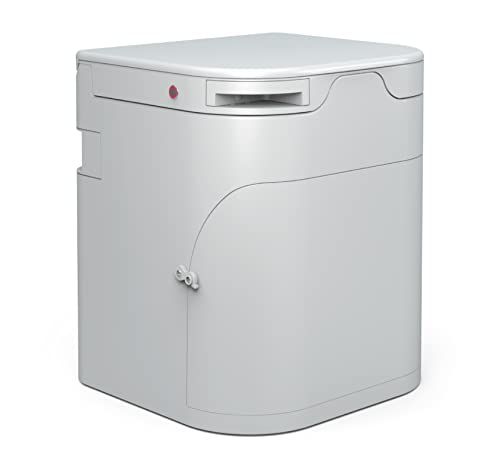
OGO Origin Compact Composting Toilet — 15in Footprint — Best Compact Footprint
The OGO Origin’s headline is a 15-inch footprint — the number that decides whether a composting toilet fits a van conversion, a boat head or a tiny-home wet room at all. Inside that small square it runs a composting routine aimed at mobile users, where space, weight and simplicity outrank every other virtue.
Strengths
- 15-inch footprint fits conversions larger units cannot
- Designed for van, RV and boat life from the start
- Waterless: no tank, no pump-out, no freeze worry
Trade-offs
- Compact chamber means a shorter emptying cycle
- Small-unit ergonomics suit smaller users best
- Confirm current listing configuration and included parts
| Specification | Detail (as verified) |
|---|---|
| Type | Compact composting |
| Footprint | 15 inches (per Amazon title) |
| Water use | None — waterless |
| Positioning | Van, RV and boat (per Amazon title) |
Mobile sanitation is a packaging problem before it is a plumbing problem. Every inch of a van conversion is contested, and a toilet that fits the allocated cube without stealing storage wins by default. The Origin is built to that brief. The discipline it asks in return is the usual composting one — keep urine and solids apart, keep the medium right, empty on schedule — compressed into a smaller chamber that fills faster. For solo travellers and couples, that cycle is manageable; for a family in a motorhome, step up to a full-size unit and find the space.
Ownership, realistically, is where this Compact composting toilet model earns or loses its place. Installation is a one-afternoon event; the decade after is water level checks, a seal or valve years from now, and a bowl that either stays easy to clean or does not. The design choices described above all point the same way: toward the quiet, unremarkable reliability this category should deliver.
Best for: the household its badge names — best compact footprint — who have confirmed the measurements in this guide. / Not suited for: buyers whose room, rough-in or users contradict those measurements.
Check on Amazon — check the current price on Amazon for the exact configuration described.

Compo Closet Cuddy Composting Toilet — Waterless, Self-Contained — Best Where Venting Is Hard
The Cuddy attacks the venting problem that stops many composting installs: instead of demanding a long vent run, it uses a 12V fan with a carbon filter to manage odour internally, in a self-contained 3.9-gallon unit with no chemicals. For renters, vehicle dwellers and anyone who cannot cut a vent hole, that is a genuinely different proposition.
Strengths
- Carbon-filter fan system eases the venting problem
- Self-contained 3.9-gallon capacity, no chemicals
- Suits RVs, vans, boats, tiny homes and off-grid rooms
Trade-offs
- Carbon filters are a consumable — plan replacements
- 12V supply required for the fan
- Odour claims depend on correct use like every composting unit
| Specification | Detail (as verified) |
|---|---|
| Type | Self-contained composting |
| Capacity | 3.9 gallons (per Amazon title) |
| Odour control | 12V fan with carbon filter (per Amazon title) |
| Chemicals | None (per Amazon title) |
Every composting toilet manages odour somehow; the honest question is with what infrastructure. Vent-to-outside designs need a hole and a run. The Cuddy’s filtered-fan approach trades that building work for a consumable filter and a 12V feed — a trade that makes obvious sense in a van, a rented cabin or a boat, and less sense in a permanent off-grid home where a proper vent is a one-time job. Its 3.9-gallon capacity sits in the practical middle for couples. As always in this category, the listing’s ‘odorless’ is a design goal your routine has to honour, not a guarantee in a box.
Think of this Self-contained composting toilet with fan and carbon filter model as a long contract rather than a purchase. Its terms are written in the trapway, the valve and the glaze — the parts that decide whether year ten feels like year one. On the evidence of its verified specification, those terms are fair ones for the household its badge describes.
Best for: the household its badge names — best where venting is hard — who have confirmed the measurements in this guide. / Not suited for: buyers whose room, rough-in or users contradict those measurements.
Check on Amazon — check the current price on Amazon for the exact configuration described.
Comparison Table
| Pick | Badge | Key spec | Best for |
|---|---|---|---|
| Nature’s Head Self Contained Composting Toilet with Close Quarters Spider Handle | Best Overall | None — waterless | the reference composting design: urine diversion, fan venting, agitator, in the close-quarters handle version |
| Separett Villa Urine-Separating Compost Toilet | Best for Homesteads and Cottages | None — waterless | Separett’s no-mixing, bag-based Villa — the simplest routine in the category |
| Nature’s Head Self Contained Composting Toilet with Foot-Spider Handle | Best for Limited Hand Strength | None — waterless | the Nature’s Head platform with a foot-operated agitator |
| Separett Tiny Self-Contained Urine-Separating Compost Toilet | Best for Vans and RVs | None — waterless | Separett Tiny: built-in urine container with an emptying sensor |
| OGO Origin Compact Composting Toilet — 15in Footprint | Best Compact Footprint | 15 inches (per Amazon title) | the OGO Origin’s 15-inch footprint for conversions and boat heads |
| Compo Closet Cuddy Composting Toilet — Waterless, Self-Contained | Best Where Venting Is Hard | 3.9 gallons (per Amazon title) | the Cuddy’s carbon-filter fan system in a self-contained 3.9-gallon unit |
Buying Guide: What to Know About best 5 composting toilets
Before choosing among these six, answer three questions in writing: where will the vent go (or will you choose the filtered design), where will emptied waste go under your local rules, and who empties the urine container and how often. A composting toilet bought without those answers is the category’s one reliable disappointment; with them, every model on this page is a proven design.
How Composting and Separating Toilets Actually Work
Every design on this page is built on one discovery: mixed human waste smells and breeds problems; separated waste mostly does neither. Urine is nearly sterile and nearly odourless on its own; solids are manageable when kept dry. So urine-diverting bowls split the streams at the source — urine to a bottle, container or drain; solids to a chamber. From there the designs divide. Composting models (Nature’s Head, OGO, Cuddy) hold solids in a medium such as coco coir or peat, where a fan keeps air moving and microbes do slow, real composting work between emptyings. Separating models (Separett) skip in-unit composting: solids are bagged and removed, which trades an ongoing consumable for near-zero process management.
Odour control is ventilation plus dryness, in that order. A fan that runs continuously, a vent path that does not leak room air, medium kept crumbly rather than wet, and a urine container emptied before it brims: honour those four and the category’s ‘odourless’ ambition is realistic. Break them — a fan unplugged to save power, urine overflowing into the solids chamber — and no brand name will save the room. Judge every model on this page by how it helps you keep those four habits: container sensors, sealed chambers, accessible cranks and honest capacities are the features that matter.
Installation is the category’s gift: no water line, no drain, no rough-in. A composting toilet needs a floor or mounting surface, a vent route (or a filtered-fan design), and in most cases a low-voltage supply for the fan. That is why these units serve boats, vans, cabins, garden rooms, emergency preparedness and off-grid homes — all the places a plumbed toilet cannot go.
Choosing a Capacity and Routine You Can Actually Keep
Capacity is the specification composting buyers misjudge most, because it interacts with household size, climate and honesty. A chamber rated generously still fills at the speed of use, and a urine container that suits a solo traveller becomes a twice-daily chore for a family. Work from your real numbers: users multiplied by days between services you will genuinely perform, in the coldest month if the unit lives unheated, because cold slows the process that warm weather forgives.
Then choose the routine before the model. If bag changes sound easier than chamber management, the separating designs exist for you; if consumables offend you, the true composters ask for medium and patience instead. Neither answer is the virtuous one — the virtuous one is the routine still being done in year two. Every disappointment in this category is a routine abandoned; every success story is a routine kept, and the models on this page differ mainly in which routine they ask for.
Rough-In, Bowl Shape and the Measurements to Take Before Ordering
Rough-in is the distance from the finished wall to the centre of the floor drain, and it comes in three common sizes: 12 inches in most homes, 10 inches in many older or tight bathrooms, and 14 inches occasionally. Measure from the wall surface — not the baseboard — to the bolts at the base of your current toilet, and order the rough-in you measured, not the one you hoped for. A toilet with the wrong rough-in either will not fit or will stand oddly far from the wall, and returning a toilet is nobody’s idea of a good week.
Bowl shape is the second measurement. Elongated bowls give adults more seating room and need roughly two extra inches of depth; round-front bowls fit small rooms and tight door swings. In a small bathroom, measure the door’s swing arc as well as the fixture space — a door that clips knees is a daily tax. Finally, check the water supply: its position on the wall, its valve type, and whether the new toilet’s skirt or tank will clear it. Five minutes with a tape measure prevents the three most common toilet-order failures in this entire category.
How to Set Up and Run a Composting Toilet
Setup is measured in minutes rather than the plumber’s hours a flush toilet needs, but the steps that exist are the ones that decide whether the unit delights or disappoints. Read your model’s manual alongside this overview, because chamber sizes and medium volumes are model-specific.
- Site it level and accessible. The unit needs a firm, level base, room to open and remove the solids chamber, and — for vented models — the shortest practical vent route to outside air, rising where possible.
- Run the vent and power. Connect the vent hose or pipe with sealed joints and fit the fan supply (typically 12V). The fan is not optional ambience: it is the odour system, and it runs continuously.
- Charge the medium. Add the maker’s specified amount of coco coir or peat medium, pre-moistened to a crumbly, wrung-sponge texture. Too dry and composting stalls; too wet and odours begin.
- Establish the routine. Agitate after solids use where the design has an agitator; check the urine container daily in shared use; empty it before it brims, rinsing with a little water and a dash of vinegar.
- Empty on schedule, not on smell. When the solids chamber reaches the maker’s fill line or the agitator stiffens, remove and empty it into your composting or disposal route, following local rules for human-waste handling, then recharge with fresh medium.
Troubleshooting follows the same logic every time. Odour almost always means moisture: check the fan is running, the vent is clear, the urine diverter is not leaking into the chamber, and the medium has not become saturated — add dry medium and agitate. Fruit flies mean an uncovered chamber or over-ripe medium: empty, clean, recharge, and keep the lid discipline. Master moisture and you have mastered the category.
Care, Cleaning and Keeping the Flush Honest
Modern toilet performance is a system: glaze, rim wash, trapway and water level in balance. Keeping it that way is mostly a matter of not sabotaging it. Hard water is the quiet enemy — scale narrows rim inlets and roughens trapways — so in hard-water homes a periodic descaling of the rim jets and a check of the tank water level against its marked line restore the flush the maker tuned. Bowl cleaners should be non-abrasive; the glaze you scratch today is the stain that will not leave next year.
Seats deserve their own sentence, because they are the part bodies actually touch. Slow-close hinges fail by being forced — teach the household to let them fall — and plastic seats eventually craze and harbour grime in the cracks no cloth reaches. Budget a seat replacement as a mid-life service item rather than a defect, and if the original was a matched factory seat, photograph its hinge spacing before ordering its successor.
What not to flush is the other half of care, and it protects the drain line as much as the fixture: wipes marketed as flushable are the leading cause of the clogs owners blame on their toilets. Every pick on this page was chosen assuming the drain receives what drains are built for. Honour that assumption and the flush volumes quoted in the spec boxes will behave as advertised for years.
Living With the Choice: The First Month and After
Every composting-toilet owner has a first month, and it teaches the same curriculum: how the medium should look, how the urine container’s weight feels when it is due, how the fan’s hum becomes background. Owners who treat that month as calibration — adjusting medium moisture, settling the emptying rhythm, learning their unit’s signals — arrive at the steady state the category promises. Owners who expect a flush toilet’s invisibility from day one sometimes give up a week before the routine would have become automatic.
The steady state itself is modest: minutes of attention on most days, a container emptied on rhythm, a chamber serviced on schedule, a medium supply kept on hand. In exchange the household gets a bathroom independent of water pressure, sewer condition and grid power — a resilience that owners in boats, vans, cabins and storm country describe less as a feature than as the point. Guests deserve a one-line briefing, kept cheerful and posted if necessary; nearly every awkward composting-toilet story involves a guest who was left to guess.
Keep spares the way boat owners keep spares: a fan, a container cap, medium, bags where the design uses them. The category’s few failures are nearly all small parts far from a supplier. With those on the shelf, the designs on this page are among the most self-reliant fixtures a home can contain.
Common Buying Mistakes
Ordering by headline height without its basis. A ’19-inch toilet’ can be 19 inches of bowl, of finished seat, or of overall marketing. The three are different products in use. Read the listing for bowl height and seat height separately — this guide quotes both where the maker states them — and run the chair test at the finished number.
Guessing the rough-in. Twelve inches is common, not universal. Older homes hide 10-inch rough-ins that eliminate most of the market, and a toilet ordered for the wrong one either will not mount or will sit oddly off the wall. Measure from the finished wall to the existing bolts before opening a single listing.
Assuming the seat is included. Seat inclusion varies within the same model family. An elongated bowl arriving seatless on installation day means a second order and a compatibility gamble. Every pick here states its seat position where the verified listing does; where it does not, confirm before checkout.
Believing a leaf icon instead of a label. WaterSense is a certification of a specific model, earned in testing. Retail pages decorate freely. Find the label on the model listing or the EPA list, and treat ‘eco’ adjectives as what they are — adjectives.
Ignoring the other users of the room. The tallest, most specialised toilet is a daily obstacle for a much shorter partner or a child. Fit the primary user, then plan honestly for the rest of the household — a step stool, a second bathroom’s different spec, or a middle height.
Skipping the flange inspection. More ‘faulty new toilet’ leaks are old flanges than new porcelain. A cracked, sunken or rocking flange defeats any wax ring. Inspect it while the old toilet is off and repair it then, when the repair costs minutes.
How to Decide When Two Picks Both Fit
Shortlists end in ties more often than buying guides admit: two models, both the right height, both credible flushes, both in budget’s neighbourhood. Break ties with ownership questions rather than specification questions, because the specifications have already done their work by getting both models onto the page. Which one’s wear parts can you buy within a day of needing them? Which one’s seat, if it cracks in year six, is a standard shape? Which maker will still answer for this model when the bathroom is next renovated?
Then break any remaining tie with the room and the routine. The toilet that fits the door swing, the cleaning habit and the household’s actual users beats the toilet that wins a spec column nobody will consult again. If the tie survives even that, choose the model whose listing documented its claims most completely — in a category full of borrowed badges and rounded numbers, the maker who states height basis, flush volumes and seat inclusion plainly has told you how they will behave as a company, and that is worth more than the last decimal of any specification.
Pre-Purchase Checklist: Ten Minutes That Prevent a Return
Work this list in order, with the listing open and a tape measure in reach. First, the rough-in, measured from finished wall to the existing base bolts. Second, the height basis: find whether the advertised inches describe the bowl alone or the finished seat, and compare that finished number with the user’s knee measurement or chair test. Third, bowl shape against the room: elongated where depth allows, round-front where the door swing or the tape says otherwise. Fourth, seat inclusion, stated in the listing rather than assumed from the photograph.
Fifth, the flush specification in full: single or dual, the full-flush volume, and — where efficiency certification matters to the purchase — the label for that exact model, confirmed on the listing or the certifier’s own product list. Sixth, the supply side: valve position and condition, and for smart or power-assisted designs, the electrical or pressure requirements stated by the maker. Seventh, delivery reality: a toilet is heavy, fragile freight, so confirm who carries it to the bathroom and keep the carton until the unit has been test-fitted on the flange.
Eighth and last, the paperwork habit that pays for itself years later: save the model number, the manual and the part numbers for the valve and seals, and photograph the internals at installation. Ten minutes of diligence across these eight points is the entire difference between this category’s satisfied majority and its returns queue — the products on this page reward buyers who do it.
Final Recommendation
For a fixed off-grid home or cabin, start with the Nature’s Head in the handle version your routine prefers; for the simplest possible ownership, the Separett Villa’s bag routine is the honest winner. Vehicle dwellers should choose between the Tiny’s sensor-equipped container and the Origin’s tiny footprint by measuring their allocated space, and anyone who cannot vent should go straight to the Cuddy. The portable end of the category is covered in our wider toilet coverage linked below.
For best overall, our pick is the Nature’s Head Self Contained Composting Toilet with Close Quarters Spider Handle. For best for homesteads and cottages, our pick is the Separett Villa Urine-Separating Compost Toilet. For best for limited hand strength, our pick is the Nature’s Head Self Contained Composting Toilet with Foot-Spider Handle. For best for vans and rvs, our pick is the Separett Tiny Self-Contained Urine-Separating Compost Toilet. For best compact footprint, our pick is the OGO Origin Compact Composting Toilet — 15in Footprint. For best where venting is hard, our pick is the Compo Closet Cuddy Composting Toilet — Waterless, Self-Contained.
Keep exploring the cluster: Best Ada Toilets; Best 2 Piece Toilets; Best 1 Piece Toilets; Best 10 Inch Toilets; Best 3 Toilets.
Frequently Asked Questions
Do composting toilets smell?
A correctly run one does not smell of waste; it smells faintly of the medium — peat or coir — because urine is diverted away and a fan continuously vents the chamber. Odour complaints trace to the same short list every time: fan off or vent blocked, urine leaking into the solids chamber, medium saturated, or a container left to brim. The designs differ mainly in how hard they make those mistakes.
How often do you empty a composting toilet?
It depends on chamber size and users, which is why honest listings talk in capacities rather than weeks. A couple using a full-size unit full-time empties the solids chamber on a cycle of weeks; a compact van unit cycles faster; the urine container is the frequent task everywhere — check it daily in shared use and empty before it brims.
What do you do with the waste?
Solids from a composting unit go to a composting system where local rules allow, or to disposal routes your local authority permits for human waste — rules vary widely, so check before you buy, not after. Bag-based separating toilets produce a sealed bag for the waste stream your area directs. Urine, diluted, is a garden fertiliser in many traditions and a drain disposal in others; again, local rules govern.
Do composting toilets need power and plumbing?
No plumbing at all — that is their purpose. Most need a small electrical supply for the vent fan, commonly 12V in vehicles and boats; the filtered Cuddy on this page uses its 12V fan with a carbon filter, and the Separett Weekend design is non-electric. Plan the fan supply as part of the install.
Can a composting toilet serve a full-time home?
Yes, with the right size and routine — full-size units like the Nature’s Head and Separett Villa are used full-time in off-grid homes and homesteads. The honest costs are the routine itself and the downstream handling plan. Households wanting a fit-and-forget fixture should stay plumbed; households wanting freedom from water and sewer accept the routine as the price.
What medium do composting toilets use?
Typically coco coir or sphagnum peat moss, pre-moistened to a crumbly texture, which covers solids, holds the right moisture and feeds the composting process. Keep a supply with the unit, add a little after heavy use if the chamber looks wet, and never add chemicals — the process you are feeding is biological.
Can you use a composting toilet in winter?
Yes, with two cautions: the composting process slows in a cold unit, so medium management matters more and emptying cycles can shorten; and any water held anywhere in the system — mainly the urine side — can freeze in an unheated space. Vehicle and cabin owners in cold climates insulate the unit’s nook and keep the fan’s airflow moving.
What happens if the power fails?
The fan stops, and with it the active odour control — which is why the urine separation matters even more in an outage: a separated, lidded unit tolerates days without power far better than a mixed one. Restore the fan when power returns and add dry medium if the chamber has taken on moisture.
Are composting toilets legal where I live?
Rules for dry toilets and for handling their output vary by country, state and municipality, from fully accepted to permit-required. Check your local health and building codes before installing one as a home’s only toilet; as a secondary, vehicle or off-grid fixture the position is usually simpler. This guide covers the products, not your jurisdiction.


